
Thiên Tín Journal · Guides
Aluminium honeycomb
Is aluminium honeycomb any good? 7 key advantages to consider before choosing
When selecting interior materials, many homeowners are not only concerned with aesthetics but also ask: Can kitchen cabinets withstand humid environments? Are wardrobes resistant to termites?
Page 28
Thiên Tín Journal · Guides
Page 29
When selecting interior materials, many homeowners are not only concerned with aesthetics but also ask: Can kitchen cabinets withstand humid environments? Are wardrobes resistant to termites? Will cabinet doors warp after years of use?
This is why aluminium honeycomb is increasingly gaining attention in modern interior design and construction. With a honeycomb core structure combined with surface material layers, this material offers distinct characteristics compared to many traditional interior boards.
So, is aluminium honeycomb any good, what are its practical advantages, and is it suitable for every space? Join Thiên Tín in exploring the nature of this material, 7 notable benefits, and the criteria to consider before making a choice.
Is aluminium honeycomb any good? Understanding it correctly before choosing
What is aluminium honeycomb? What is special about its structure?
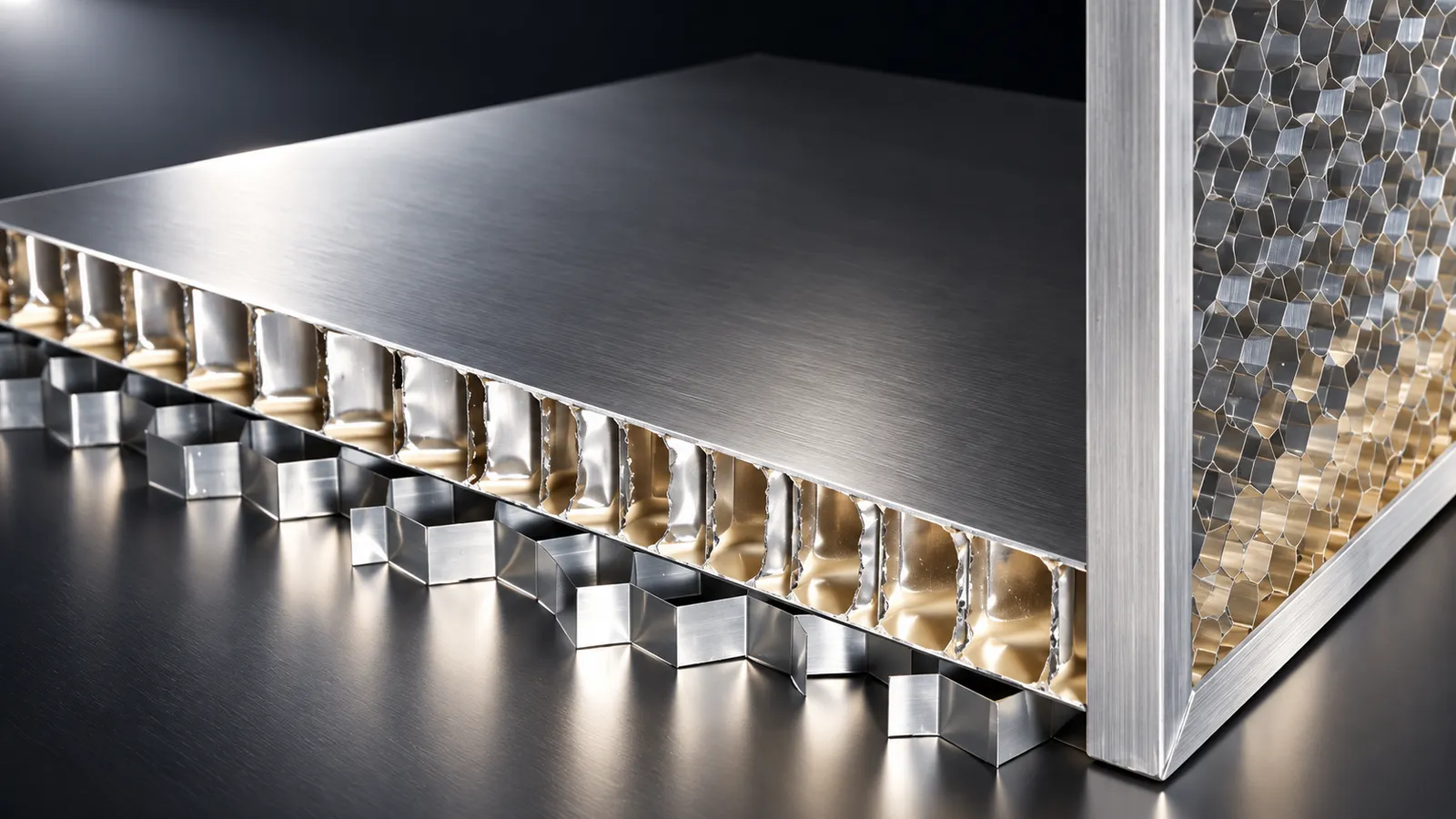
Aluminium honeycomb is a panel material with a core structure made of hexagonal cells linked together, mimicking the honeycomb structure found in nature. This design helps distribute material through a geometric system capable of effective load-bearing while controlling the panel's weight.
In the interior sector, the structure of an aluminium honeycomb panel typically includes an aluminium core, bonding material layers, and a finishing surface layer. Depending on the product line, the coating structure, thickness, processing specifications, and bonding methods may vary.
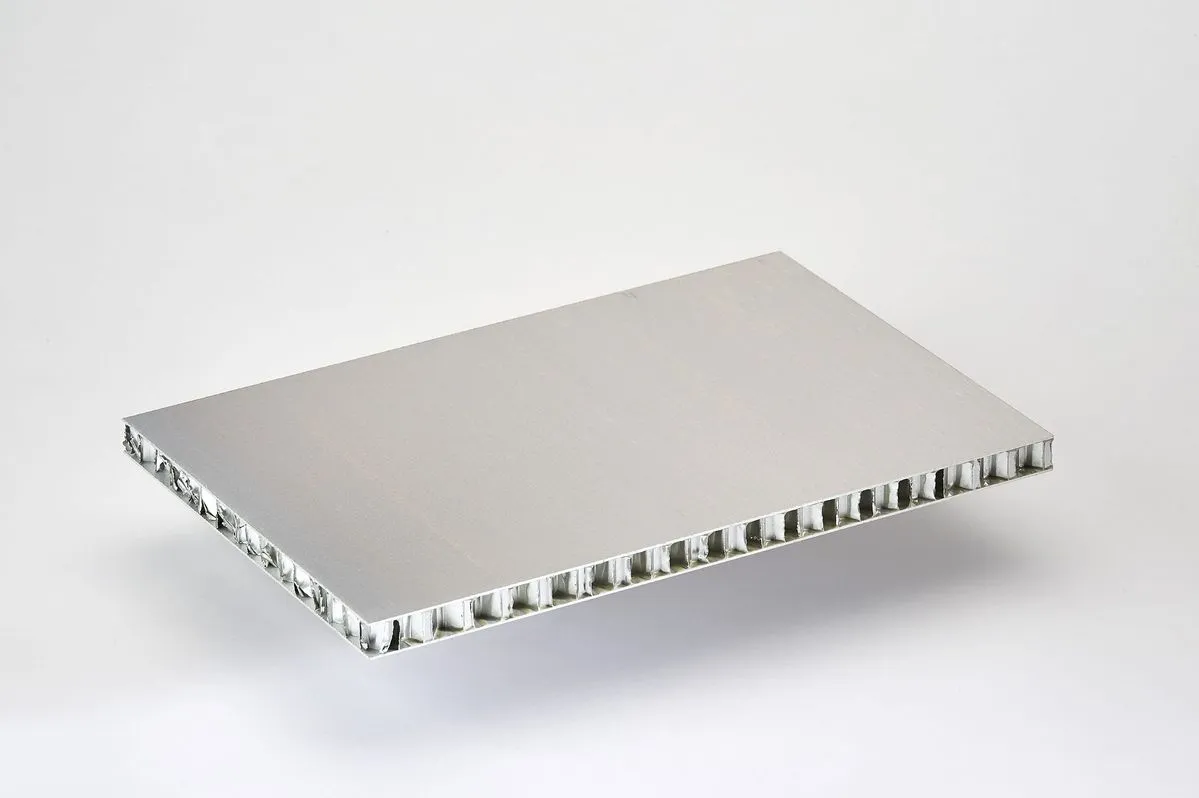
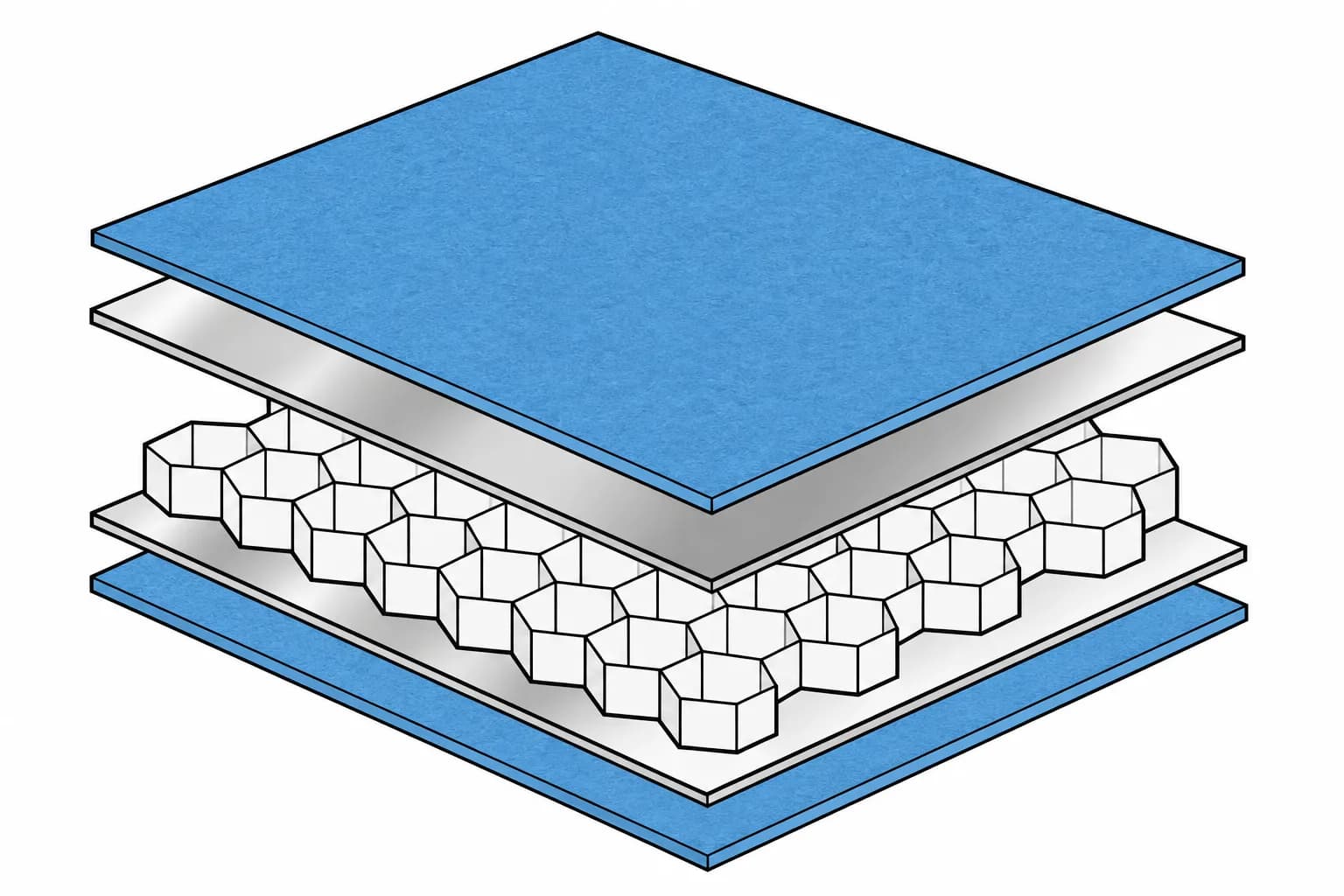
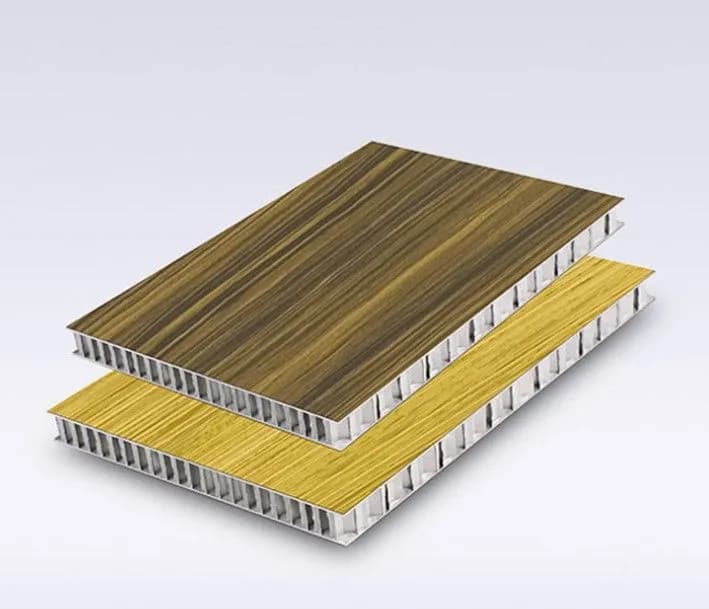
The difference with this material lies in its organized hollow core. Instead of using a completely solid block of material, the honeycomb structure creates an internal system of partitions, optimizing the relationship between weight and load-bearing capacity. However, not all aluminium honeycomb panels on the market are of the same quality. The durability of the finished product depends on the quality of the core, surface layers, bonding adhesive, panel thickness, and edge processing techniques.
Therefore, homeowners should focus on the complete structure of the product rather than just evaluating it based on images of the core.
Is aluminium honeycomb really better than traditional interior materials?
To evaluate whether a material is good or not, it must be placed in specific conditions of use. A kitchen cabinet frequently exposed to steam will have different requirements than a decorative cabinet in a living room or a wardrobe in a bedroom.
Compared to many common industrial wood boards, aluminium honeycomb has the advantage of termite resistance and limits issues caused by moisture affecting the core. These are factors worth considering for homes in hot and humid climates.
Furthermore, the material can be finished with various decorative surfaces, meeting design needs ranging from warm wood grain styles to modern, minimalist spaces. Even so, aluminium honeycomb is not a complete replacement for all materials. Finishing quality, screw-holding capacity, accessory attachment, investment costs, and processing requirements all need to be considered before deciding.
Aluminium honeycomb is a choice worth considering when homeowners prioritize durability, adaptability to humid environments, and consistency in interior design. The practical value of the material is best realized when paired with the right construction and technically sound installation processes.
Advantages of aluminium honeycomb in interior design and construction
Water resistance, suitable for high-humidity environments
Moisture is one of the causes of deterioration in many interior products, especially in kitchens, bathrooms, and areas frequently exposed to water.
With an aluminium core structure, honeycomb material does not experience swelling due to moisture absorption like some common industrial wood boards. This is a notable advantage when used in high-humidity environments.
For example, the cabinet space under the sink frequently faces water leaks from pipes, moisture, and splashes during daily use. Using a material with a non-absorbent core helps limit the risk of moisture-related deformation in this area.
However, it is necessary to distinguish the water resistance of the core from the water resistance of the entire product. Joints, connection lines, coatings, and accessories still need to be handled with proper techniques to maintain long-term quality.
For home interiors, this advantage is especially valuable for kitchen cabinets, vanity units, and areas with more demanding conditions than bedrooms or living rooms.
Termite resistance, limiting internal damage
Termites are a concern for many families when using wood-based interiors, especially in damp areas or buildings at risk of termite infestation from foundations and walls.
Termites usually seek food sources containing cellulose. Therefore, the aluminium core is not a food source for them, creating an advantage over materials containing wood components. This helps limit the risk of the panel core being destroyed by termites, which could hollow out the structure or reduce quality during use.
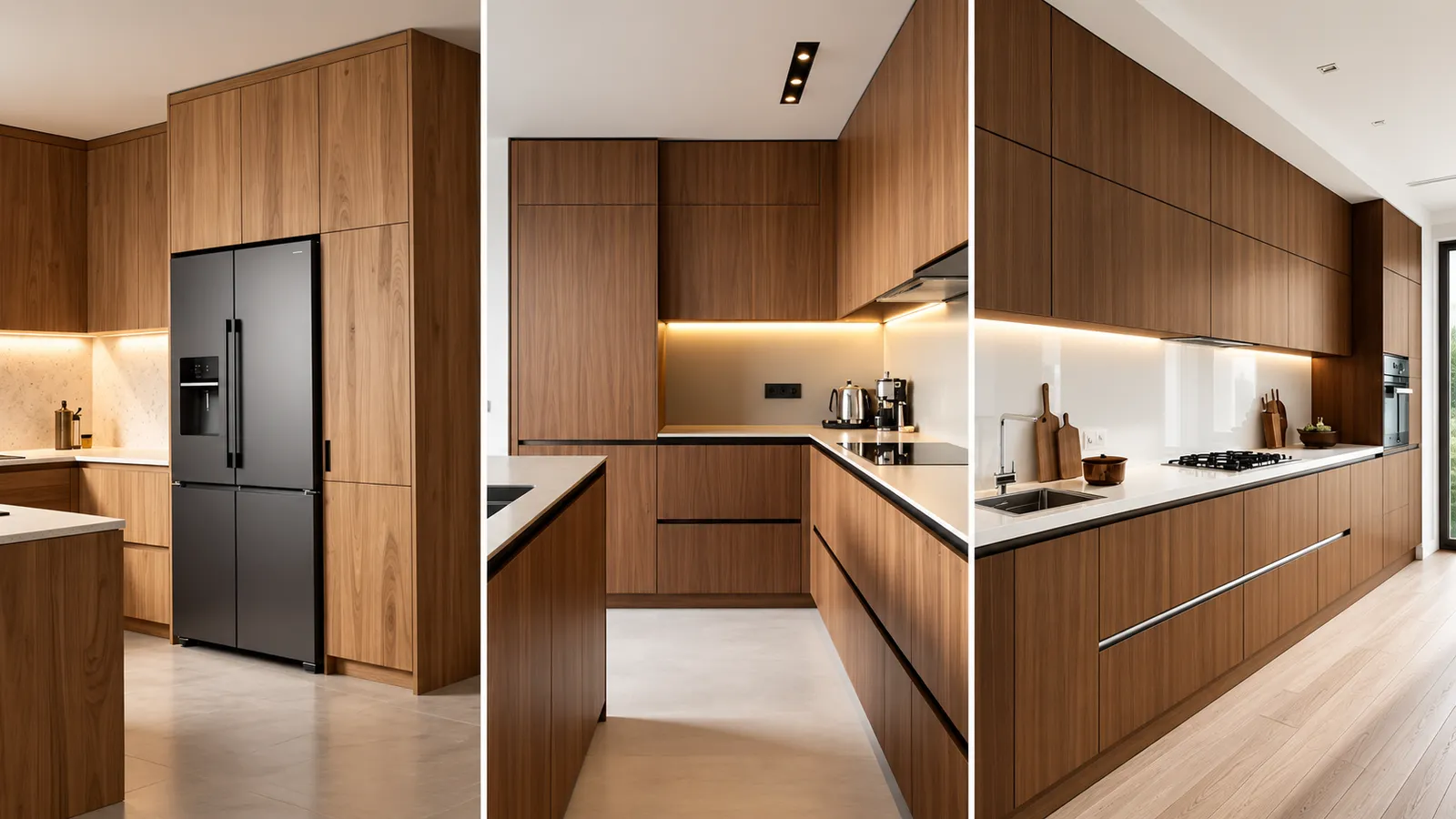
With kitchen cabinets or wardrobes, the termite resistance of the material helps homeowners reduce one of the causes of interior damage. However, it should be understood that using aluminium honeycomb does not mean the entire house is protected from termites. Other wood components, auxiliary materials, and building structures can still be affected if not treated appropriately.
This is why termite resistance should be viewed as a characteristic of the material, rather than a complete replacement for termite prevention measures for the building.
Limiting warping, maintaining the stability of cabinet systems
A beautiful cabinet when first installed is not enough to judge its quality. The important thing is whether the doors, cabinet faces, and storage compartments maintain their shape during use.
Thanks to the aluminium core structure combined with surface layers, honeycomb panels can create a relatively stable structure when designed and manufactured to the correct specifications. Unlike wood-based materials that are easily affected by moisture absorption and release, the aluminium core does not experience shrinkage through a similar mechanism.
This characteristic is significant for cabinet systems with large doors, floor-to-ceiling cabinets, or surfaces that need to maintain flatness. Resistance to warping is not an absolute trait. Panel thickness, door size, connection methods, operating temperature, and production quality can all affect the stability of the finished product.
When constructing large cabinet systems, the manufacturer needs to calculate dimensions, reinforcement structures, and appropriate accessory positions, rather than relying solely on material properties to ensure quality.
Weight optimized by the honeycomb core structure
One of the standout features of aluminium honeycomb is its organized hollow core structure. The hexagonal cells help reduce the amount of material needed compared to creating a solid metal panel of the same external dimensions.
As a result, the sandwich structure can achieve a good ratio between weight and stiffness when designed appropriately. This is also a principle researched and applied in many engineering fields.
For interiors, controlling weight is significant during transport, installation, and the operation of moving parts such as cabinet doors or drawers. For example, a floor-to-ceiling wardrobe needs to be calculated so that the doors operate stably without creating a load exceeding the capacity of the hinges and accessory system.
However, it should not be understood that every aluminium honeycomb panel is lighter than every type of industrial wood. The actual weight depends on core thickness, surface layers, reinforcement frames, and finished construction.
Therefore, when choosing materials for large cabinet systems, homeowners should ask the contractor for advice based on specific dimensions and structures rather than just comparing the weight of individual materials.
Load-bearing capacity and structural durability when used correctly
The honeycomb structure not only helps optimize weight but also contributes to the stiffness of the material panel.
In a sandwich structure, the surface layers and the core work together to bear loads. When subjected to bending forces, the surface layers take on most of the tensile and compressive stress, while the core helps maintain the distance between the two layers and transmits shear forces. This principle gives aluminium honeycomb panels potential for application in many interior details such as cabinet doors, decorative partitions, tabletops, and storage systems.
However, load-bearing capacity needs to be evaluated according to construction and intended use. A vertical cabinet door does not bear the same load as a long shelf holding many heavy items. For shelves, the position of the load, span length, support methods, and reinforcement structures all affect usability.
In addition, positions for installing hinges, drawer slides, and mechanical connections need technical solutions appropriate for the hollow core structure. Homeowners should prioritize units capable of providing advice and producing synchronized finished products, because the durability of a cabinet comes not only from the material panel but also depends on the entire structural system.
Diverse surfaces, meeting many interior styles
Besides technical characteristics, aesthetics are an important factor when choosing materials for living spaces.
Aluminium honeycomb can be combined with many types of finishing surfaces, creating flexibility in color design and style. In interior design, surface groups such as PET, SPC, HYBRID, CPL, Acrylic, or Melamine can be considered depending on the material system and production specifications.
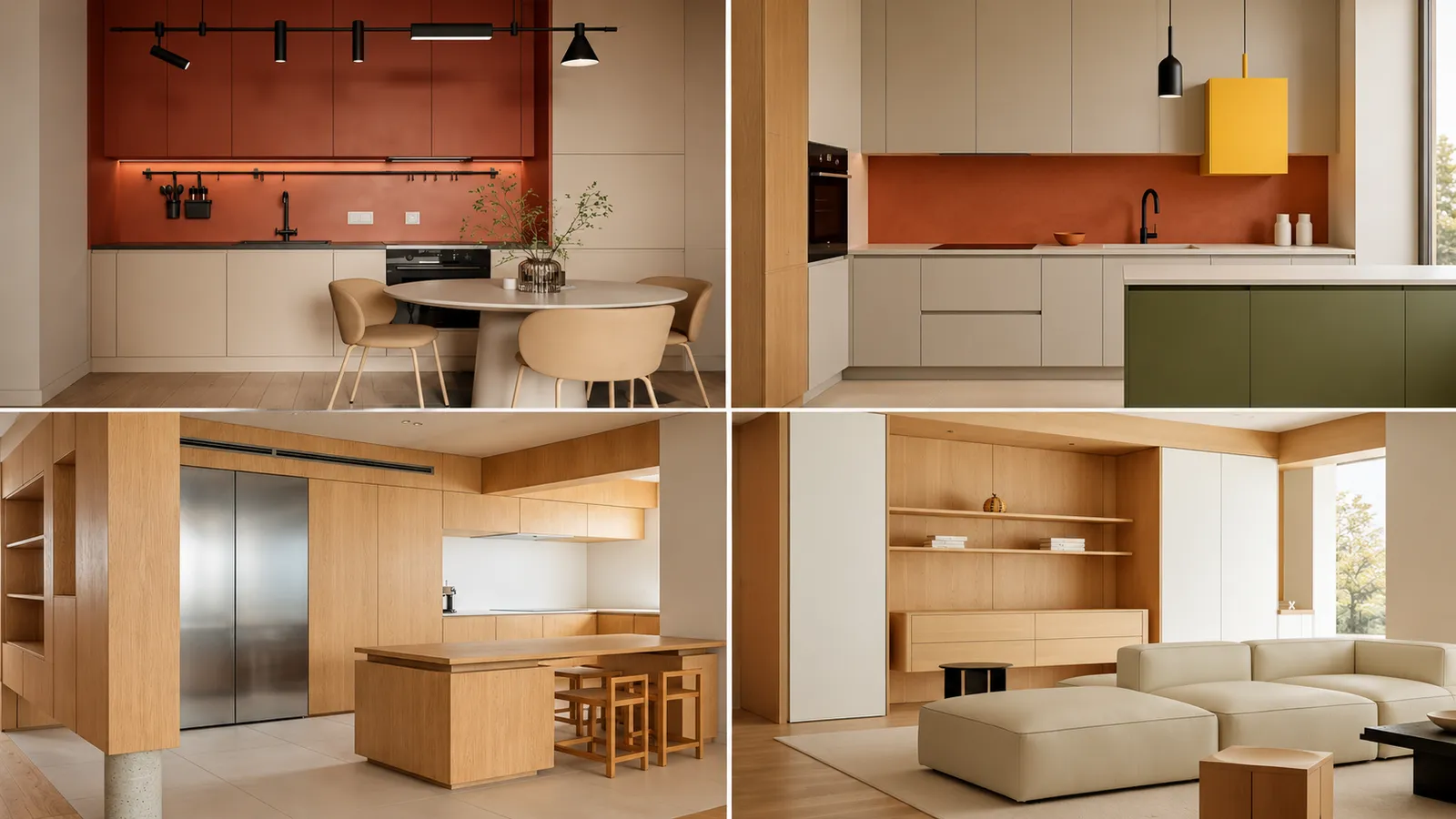
Each type of surface has its own characteristics regarding color, gloss, scratch resistance, and maintenance methods. Therefore, it is necessary to choose based on actual conditions of use rather than just focusing on appearance.
For example, family kitchens where cooking happens frequently should prioritize surfaces that are easy to clean, while living room cabinets can focus more on aesthetic effects and consistency with the architecture.
For projects using the same material system for multiple areas, unifying colors and surfaces also helps the space have a clearer sense of connection.
Easy to clean, convenient for interior maintenance
In daily life, interiors are frequently exposed to dust, grease, fingerprints, and moisture.
With aluminium honeycomb systems finished with appropriate surfaces, cleaning can be done with a soft cloth and cleaning solutions according to the manufacturer's instructions. Especially in the kitchen area, flat surfaces with few complex decorative details make wiping more convenient.
However, the ability to resist stains or scratches depends mainly on the finishing coating, not just the aluminium core alone. Users should avoid using sharp objects, strong chemical cleaners, or abrasive tools when the surface characteristics have not been determined.
Beyond regular cleaning, maintenance should focus on hinges, drawer runners, handles, and all connection points. A cabinet system may feature high-quality materials, but inferior hardware can still lead to sagging doors, stiff operation, or reduced stability over time.
Therefore, selecting materials with appropriate durability must be paired with sound design and proper maintenance to ensure a long-lasting user experience.
Which interior applications are best suited for aluminium honeycomb?
Kitchen and vanity cabinets – prioritising moisture resistance
The kitchen and bathroom are two areas that require special attention regarding a material's ability to withstand moisture.
In the kitchen, cabinets under the sink are frequently exposed to steam, water splashes, and potential leaks from plumbing. Vanity cabinets must also function in environments with constantly fluctuating humidity. For these areas, materials with an aluminium core are a compelling choice, as they do not suffer from the swelling caused by water absorption typical of wood-based panels.
However, to achieve a durable cabinet system, one must also consider edge treatment, drilling and cutting points, hardware, and junctions with walls, floors, or sanitary fixtures. For kitchen cabinets specifically, homeowners should also consider the heat resistance of the surface finish in areas near hobs, ovens, and other heat-emitting appliances.
If visual consistency is a priority, the same material system can be used for upper cabinets, base cabinets, and storage units, with the structure adjusted according to the specific function of each area.
Wardrobes, shoe cabinets, and decorative storage
In the bedroom, the key factors are not only durability but also the ability to organise storage space and maintain harmony with the overall design. Aluminium honeycomb can be applied to wardrobes, floor-to-ceiling cabinets, or designs featuring large-format doors.
The termite-resistant nature of the core is a significant advantage for families looking to minimise the risk of internal damage. Meanwhile, shoe cabinets are often located near entrances, where they are easily exposed to dirt, rainwater, and moisture from footwear. Using suitable materials combined with ventilated designs helps improve practicality and makes cleaning easier.
For the living room, aluminium honeycomb can be used in decorative cabinets, shelving, and integrated architectural wall units. However, long shelves or areas intended for heavy items must have their load-bearing capacity calculated individually. Using a consistent material system for wardrobes, shoe cabinets, and decorative units also helps unify the colours, finishes, and design language throughout the home.
Interior doors and pre-installation considerations
Beyond cabinetry, aluminium honeycomb can also be explored for use in suitable interior door constructions.
For bedroom doors, internal doors, or large-format door systems, weight, stability, and hardware quality must be calculated simultaneously. A complete door set includes the door leaf, frame, hinges, locks, seals, and connection systems. Therefore, one cannot judge the quality of a door based solely on the core material.
When using a honeycomb structure, the manufacturer must design reinforcement points for installing locks, hinges, and other load-bearing details. Additionally, requirements for sound insulation, heat resistance, and fire safety must be assessed for each type of door. One should not assume that a door with an aluminium honeycomb core meets fire-resistant standards without corresponding test results and certification.
For homeowners completing a cohesive interior, choosing the same material system for both cabinets and doors can create uniformity in colour and style.
However, each item still requires its own technical construction to ensure functionality and durability.
Experience in selecting aluminium honeycomb and interior solutions from Thiên Tín
Limitations to consider before choosing aluminium honeycomb
Despite its many advantages, aluminium honeycomb is not a suitable material for every need or budget. To make an informed choice, homeowners need to understand the factors that can affect the quality of the finished product.
First is the requirement for technical processing. Due to its hollow core structure, the material requires proper edge treatment and specific design for connection points. Details such as hinges, drawer runners, or load-bearing screw points should not be installed arbitrarily into the core.
Second is the quality of the bond between material layers. If unsuitable adhesive is used or the pressing process is inadequate, the finished product may suffer from delamination, affecting both durability and aesthetics.
Third is the investment cost. The price of aluminium honeycomb furniture depends on the panel construction, surface type, dimensions, hardware, and the complexity of the design. Therefore, homeowners should compare quotes based on the finished configuration rather than just comparing material costs per square metre.
Finally, it should be noted that an aluminium core does not mean the entire material panel is absolutely fireproof. The fire-reaction characteristics of the finished product depend on the surface coating, bonding adhesive, and actual construction.
A durable piece of furniture requires synergy between materials, design, hardware, and construction techniques. This is a more important criterion than simply choosing a material based on its advertised benefits.
Criteria for selecting an aluminium honeycomb interior supplier and installer
When deciding to use aluminium honeycomb, homeowners should prioritise companies that can provide clear information regarding materials and installation methods. First, it is necessary to verify the origin of the material panels, their construction, product specifications, and surface options. Viewing samples in person helps customers assess colour, finish quality, and tactile feel rather than relying solely on images.
Next is design and production capability. An experienced provider should be able to advise on the appropriate structure for each item, from kitchen cabinets and wardrobes to large cabinet systems or interior doors. In particular, homeowners should request clarification on edge treatment methods, hardware connection points, and reinforcement solutions for load-bearing details.
Furthermore, the warranty policy should be transparently stated in the contract, including the scope of coverage for materials, hardware, manufacturing defects, and applicable conditions. Customers should also refer to completed projects to evaluate the quality of finish, surface consistency, joints, and the handling of technical details.
These factors help ensure that the choice of furniture is based on the quality of the finished product, rather than just initial appearances or pricing.
Thiên Tín – Cohesive cabinet and door solutions using aluminium honeycomb panels
So, is aluminium honeycomb any good? With seven advantages including water resistance, termite resistance, minimal warping, weight optimisation, structural durability, aesthetic appeal, and ease of cleaning, it is a material worth considering for homeowners who prioritise long-term value. However, the actual effectiveness lies not only in choosing a good material but also in how it is applied in each space. With this focus, THIÊN TÍN is a pioneer in providing cohesive cabinet and door solutions using next-generation aluminium honeycomb panels in Vietnam.
Thiên Tín develops interior solutions with a cohesive approach, from material consultation, design, and production to the completion of cabinet and door systems, helping customers choose options that suit their functionality, architectural style, and budget. Instead of just supplying individual materials, Thiên Tín focuses on the combination of product construction, installation techniques, and aesthetics within the living space. From kitchen cabinets, wardrobes, and shoe cabinets to vanity units and decorative storage, each item is considered according to actual usage conditions to maximise the material's effectiveness.
If you are looking for a durable, easy-to-maintain, and cohesive interior system for your home, please contact Thiên Tín for consultation, to view material samples in person, and to receive design proposals and quotes based on your actual requirements.
Thiên Tín Journal · Guides · Page 30