Thiên Tín Journal · Guides
Aluminium honeycomb
Is aluminium honeycomb furniture suited to Vietnam’s hot, humid climate?
The hot and humid climate in Vietnam is one of the key factors directly affecting the durability of interior furnishings.
Page 2
Thiên Tín Journal · Guides
Page 3
The hot and humid climate in Vietnam is one of the key factors directly affecting the durability of interior furnishings. High humidity, prolonged damp spells, and temperature fluctuations can cause certain materials to swell, warp, or deteriorate if not properly selected and expertly crafted.
In this context, aluminium honeycomb furniture has drawn considerable interest from homeowners due to its metal core structure, which does not absorb water like wood fibres and provides no food source for termites.
However, are these properties sufficient to claim that aluminium honeycomb is suitable for every space? To answer this, one must consider material construction, operating conditions, and the overall quality of the finished product.
How does a hot, humid climate affect various furniture materials?
Vietnam experiences regional climate variations, yet high temperatures, high humidity, and extended rainy periods are common factors to consider when choosing interior materials. In the North, high atmospheric humidity can cause condensation on floors, walls, and certain surfaces. Meanwhile, many central and southern regions face prolonged rainy seasons or sustained high humidity throughout much of the year.
These conditions do not affect all materials in the same way. With solid wood, humidity shifts cause expansion and contraction according to species characteristics. If raw materials are inadequately seasoned or product design fails to accommodate dimensional changes, furniture may warp, crack, or suffer open joints.
Engineered wood has a different composition from solid wood but still requires attention to humidity. Depending on core type, bonding agents, and surface coatings, moisture resistance varies considerably across board ranges. In particular, unsealed panel edges or drill holes can become vulnerable points when exposed to water.
Meanwhile, stainless steel and aluminium honeycomb are metallic choices that do not absorb water or swell like wood fibres. However, this does not mean all metal fabrications offer absolute corrosion resistance or immunity to environmental factors.
With stainless steel, corrosion resistance depends on the steel grade, exposure conditions, and maintenance routines. Environments exposed to salt, household chemicals, or prolonged standing water require closer evaluation.
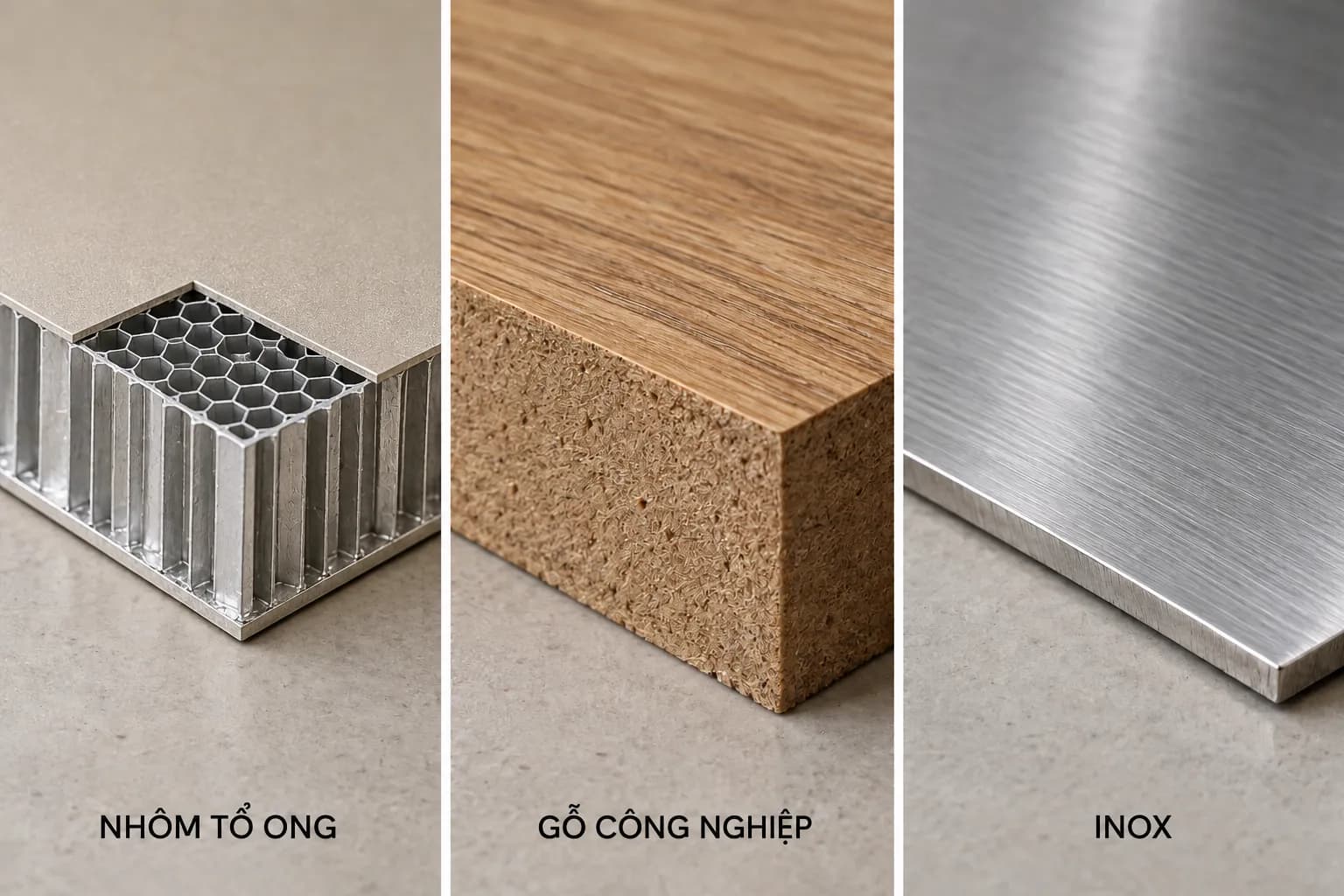
Aluminium honeycomb is a panel material featuring a hexagonal aluminium core bonded between surface sheets. This structure sets it apart from engineered wood and solid sheet metal, though the performance of the finished piece depends on surface finishes, bonding methods, and edge detailing.
It is crucial to understand that the moisture resistance of the core material does not equate to absolute water resistance for the entire cabinetry system. A cabinet unit may utilise suitable materials yet still experience issues if hardware is incompatible, plumbing leaks occur, or interface joints are improperly fitted.
Therefore, selecting materials for Vietnam's climate should be based on real-world usage rather than relying solely on marketing claims such as 'waterproof', 'termite-proof', or 'warp-free'.
5 criteria for evaluating aluminium honeycomb furniture in hot, humid climates
Operating environment and moisture resistance
Moisture resistance is the primary criterion to evaluate when choosing furniture for homes in Vietnam. However, a distinction must be drawn between atmospheric humidity, surface condensation, and direct water contact, as each imposes a different level of stress.
With aluminium honeycomb, the aluminium core does not absorb water or swell like wood fibres. This is a distinct advantage in high-humidity environments, particularly in kitchen units, shoe cabinets, or bathroom vanities.
However, a product’s water resistance also depends on surface layers, bonding adhesives, edge detailing, and hardware. If water penetrates unsealed areas, the quality of the finish may suffer over time.
For example, sink base cabinets in kitchens frequently face the risk of plumbing leaks. In such cases, choosing a metal-core material provides a clear advantage, yet the cabinetry must still be designed for easy inspection and cleaning.
In bathrooms, vanity units should be positioned away from direct water splashes where space allows. Joints connecting to basins, walls, and plumbing pipes must also be properly detailed.
Therefore, when selecting aluminium honeycomb furniture, homeowners should enquire specifically about product construction around water-exposed areas rather than focusing solely on raw panel characteristics.
Structural durability and stability
The durability of furniture in hot, humid conditions relates not only to water resistance but also to structural design and how the product responds to everyday use.
Solid wood expands and contracts with humidity changes. Engineered wood likewise has specific requirements regarding moisture resistance, edge sealing, and core quality.
Aluminium honeycomb does not swell due to moisture absorption like wood fibres, yet cabinet stability still depends on panel specification, component dimensions, and joinery methods.
For instance, a tall wardrobe door requires careful calculations regarding weight, hinges, and smooth operation. Meanwhile, a long media console shelf must be engineered to support the weight of equipment placed upon it.
Crucially, fixing points for load-bearing hardware must be engineered to complement the honeycomb core structure. Standard screw-fixing methods used for engineered wood should not be assumed to apply directly to aluminium honeycomb.
Additionally, temperature fluctuations can affect material dimensions and structural joints. Product design must therefore adapt to specific installation and usage conditions.
A durable cabinetry system requires not only quality materials but also functional structural design, suitable hardware, and consistent manufacturing quality.
Aesthetics and spatial harmony
A common concern when choosing metal-core furniture is whether the product will feel clinical or lack the tactile warmth of wood.
In practice, the appearance of aluminium honeycomb furniture depends heavily on the surface finish. Depending on panel specifications, pieces can feature solid colours, timber-grain effects, or sophisticated neutral shades suited to modern interiors.
In homes with beige, off-white, or light timber palettes, aluminium honeycomb cabinetry can be designed in matching shades for seamless continuity. Meanwhile, spaces featuring walnut or darker tones can incorporate tailored finishes to add visual depth.
However, aesthetics should not be judged solely on loose material samples. In a finished piece, door divisions, cabinet proportions, edge profiles, and shadow gaps all shape the overall appearance.
For large installations such as floor-to-ceiling wardrobes or extensive kitchen runs, visual consistency and line division are vital. A piece with an attractive finish but poor proportions can still make a space feel heavy.
Homeowners should view material samples under lighting conditions close to those of the actual room. It is also wise to consider colour harmony across all joinery items rather than selecting individual pieces in isolation.
Cleaning and maintenance in hot, humid environments
In hot, humid climates, cleaning and maintenance are just as vital as initial material selection.
Moisture combined with dust can make neglected spots difficult to clean. Cabinets with numerous crevices, hidden corners, or enclosed compartments can also make inspection and maintenance less convenient.
For aluminium honeycomb furniture, cleaning methods must suit the specific surface finish. It should not be assumed that all cleaning agents can be used across all material configurations.
In kitchen areas, pay close attention to zones near sinks, worktops, and cooking appliances. For shoe cabinets, providing adequate ventilation helps limit moisture accumulation from footwear.
In bathrooms, vanity units should be designed for easy access to supply and drainage pipes. Early detection and resolution of leaks will help minimise impact on the furniture.
Beyond surface finishes, hardware such as hinges and drawer runners must be selected to suit usage conditions. These components directly affect smooth operation over the long term.
Therefore, when ordering bespoke furniture, homeowners should ask for clear cleaning guidelines, hardware replacement options, and warranty coverage for each item.
Total investment and long-term value
When comparing aluminium honeycomb to engineered wood or stainless steel, many homeowners naturally look at the initial price tag first.
However, the cost of a complete interior scheme involves more than just raw materials. Dimensions, construction, surface finishes, hardware, fabrication complexity, and installation conditions all impact the total investment.
For example, a kitchen layout with multiple drawers and pull-out fittings carries a different cost structure from basic hinged cabinetry, even when using the same material group. Similarly, floor-to-ceiling wardrobes or media units integrated with wall panelling require different fabrication standards compared to freestanding pieces.
Beyond initial costs, homeowners should consider cleanability, ongoing maintenance, and hardware replacement. Cabinetry designed appropriately for its operating environment is far easier to care for and repair when needed. When receiving quotes, ensure they clearly outline material specifications, panel structure, finishes, hardware, and installation scope. When comparing options, evaluate them under identical spatial and functional criteria.
A sensible choice is not necessarily the lowest-priced option, but rather the solution that fulfills operational needs within a manageable budget.
Which interior spaces are best suited to aluminium honeycomb furniture?
In Vietnamese homes, each room presents distinct operational conditions. Material selection should therefore start from the actual environment rather than applying a single solution across the entire home.
For kitchen cabinetry, aluminium honeycomb is a compelling choice for moisture-sensitive areas, particularly the under-sink unit. While the metallic core will not swell from water absorption like timber fibres, junctions connecting to pipework, worktops, and appliances still require appropriate sealing and finishing.
Engineered wood effectively fulfils kitchen cabinetry requirements when selecting the correct core, surface finish, and craftsmanship techniques. Stainless steel is also a suitable option for homeowners who prefer a metallic structure, though steel grade, fabrication quality, and aesthetic expectations should be carefully evaluated.
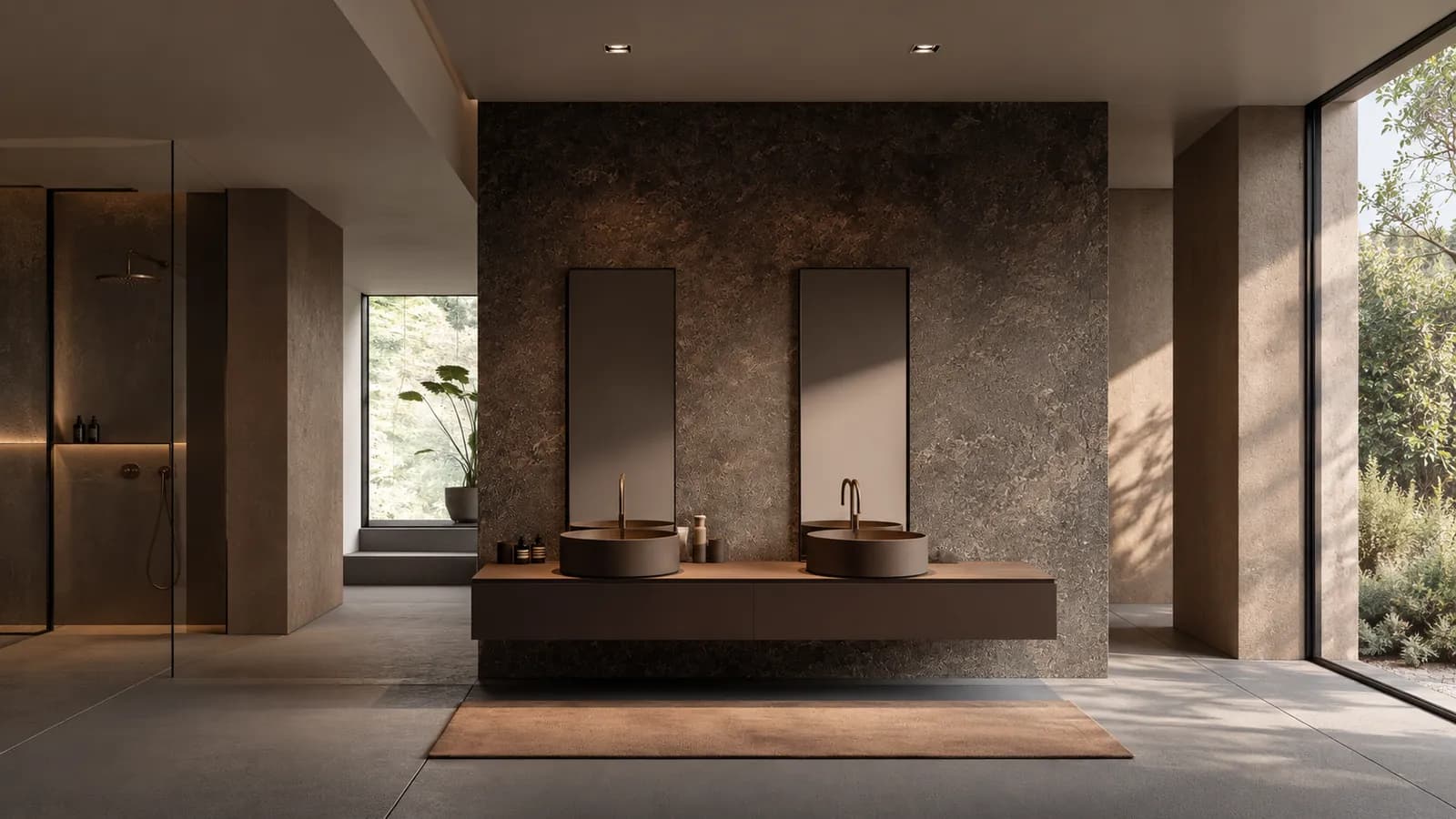
For vanity units, operating conditions are typically more demanding due to frequent steam and splashing water. Aluminium honeycomb offers core structural advantages, yet the finished piece must be tailored to its installation location, edge finishing, and hardware systems.
Should the bathroom lack distinct wet and dry zones, homeowners ought to pay greater attention to cabinet layout and ease of cleaning. Moisture-resistant materials should never be regarded as a substitute for proper waterproofing or ventilation.
For wardrobes, key considerations typically include storage capacity, door leaf stability, and aesthetics. In dry bedroom environments, solid wood or engineered wood both serve as suitable choices, depending on budget and architectural style.
Aluminium honeycomb may be considered when a metallic core is desired or to maintain cohesion with other interior elements. Nevertheless, floor-to-ceiling cabinetry and large doors demand precise structural calculations, appropriate hinges, and engineered joining systems.
For shoe cabinets, moisture from footwear and dust are key factors to consider. Whilst aluminium honeycomb offers core material benefits, effective ventilation and considered internal division are what truly define the daily user experience.
A fully sealed cabinet may still trap odours if damp shoes are stored immediately after wear. Therefore, material selection should be paired with ventilated compartment design and sensible care practices.
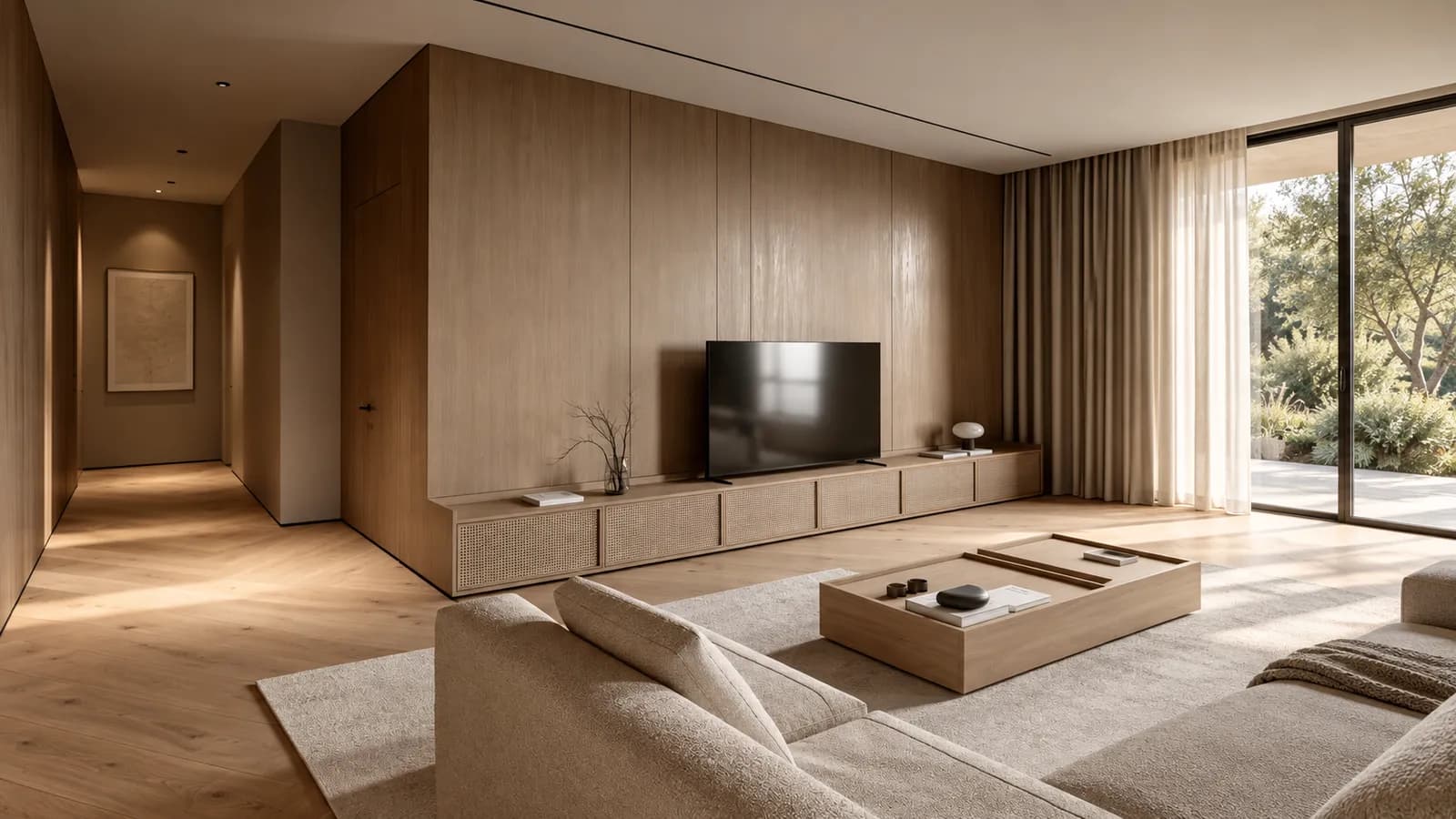
For TV units and display cabinetry, moisture resistance is generally less critical than in kitchens or bathrooms. Here, aesthetics, load capacity, and seamless AV integration take precedence.
Solid wood, engineered wood, and aluminium honeycomb are all viable options depending on the design direction. Wall-mounted shelving requires careful evaluation of fixing systems and wall conditions, whereas floor-standing units demand precise load-bearing calculations for each shelf.
For interior doors, performance relies heavily on door leaf construction, subframes, hinges, and ironmongery. Aluminium honeycomb can be incorporated in appropriate configurations, though cabinet-door specifications must never be assumed suitable for full-size architectural doors.
Overall, aluminium honeycomb is a noteworthy option in Vietnam’s hot and humid climate, particularly for homeowners seeking to mitigate core-level risks associated with humidity and termites.
However, aluminium honeycomb need not be specified universally across every item. Combining material families according to functionality, environment, and budget often yields a more refined, tailored solution.
Selecting the ideal aluminium honeycomb furniture with Thiên Tín
When selecting furniture for humid climates, discerning homeowners should prioritise specialists capable of advising on materials based on practical exposure, rather than merely presenting generic product advantages.
Prior to commissioning bespoke pieces, it is advisable to inspect material samples, examine panel construction, and review jointing techniques. With aluminium honeycomb, details such as surface layers, edge banding, and hardware fixing methods directly dictate the calibre of the final product.
Furthermore, clients are encouraged to examine finished pieces to assess reveal gaps, edge lines, and mechanical operation. These details offer a far truer appreciation of craftsmanship than architectural renderings alone.
Quotations should be fully transparent regarding materials, dimensions, surface finishes, hardware, and installation scope. Where alternative structural specifications exist, clear distinctions should be made to align with project budgets.
Warranty policies and maintenance guidelines ought to be clarified beforehand. Clients should fully understand how warranty coverage applies to core materials, hardware, and finished details.
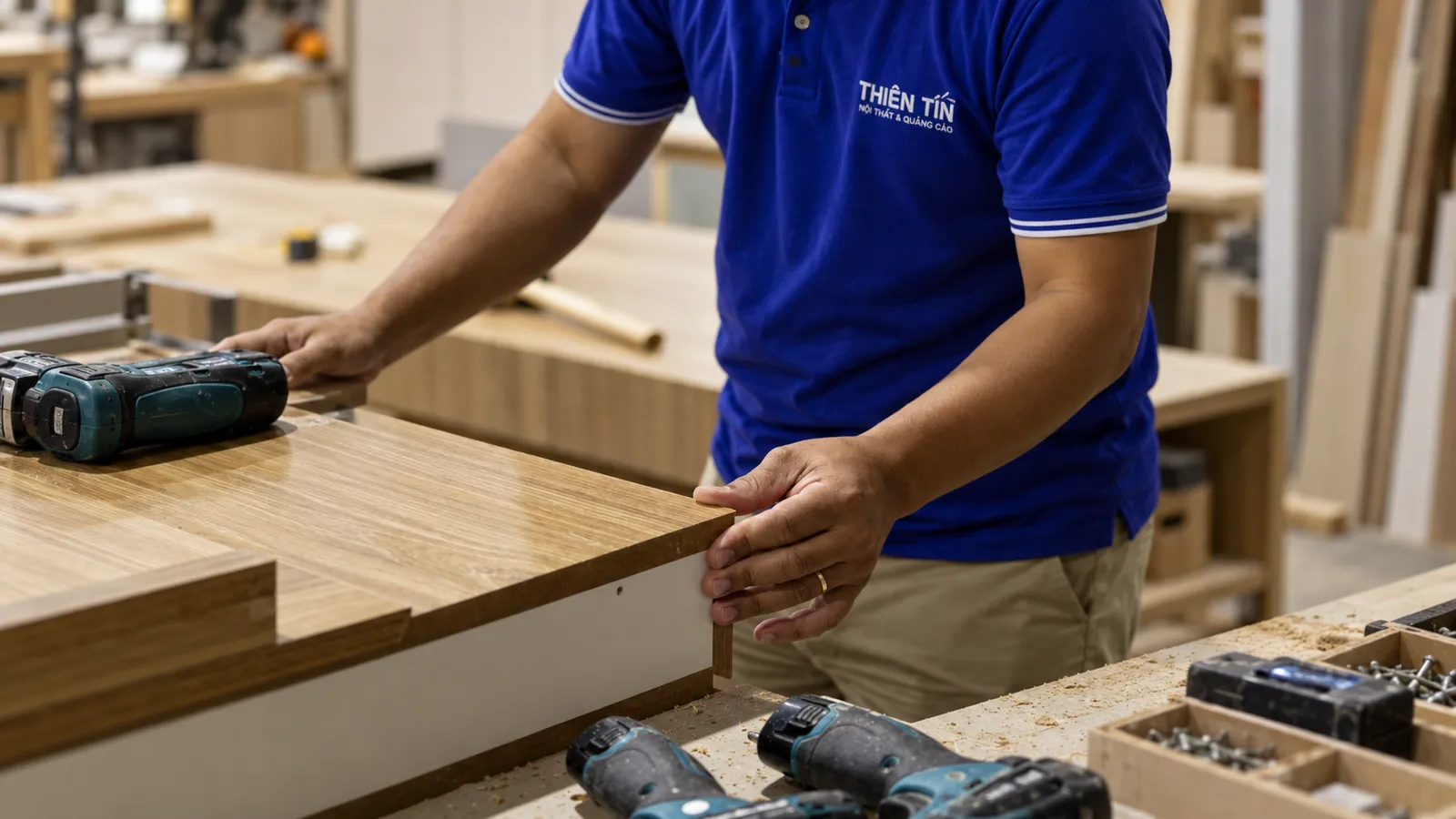
At Thiên Tín, our consultancy process spans from understanding client requirements and conducting site surveys to material selection and bespoke design development. Components are then precision-crafted, assembled, and finished to meet the specific demands of each project.
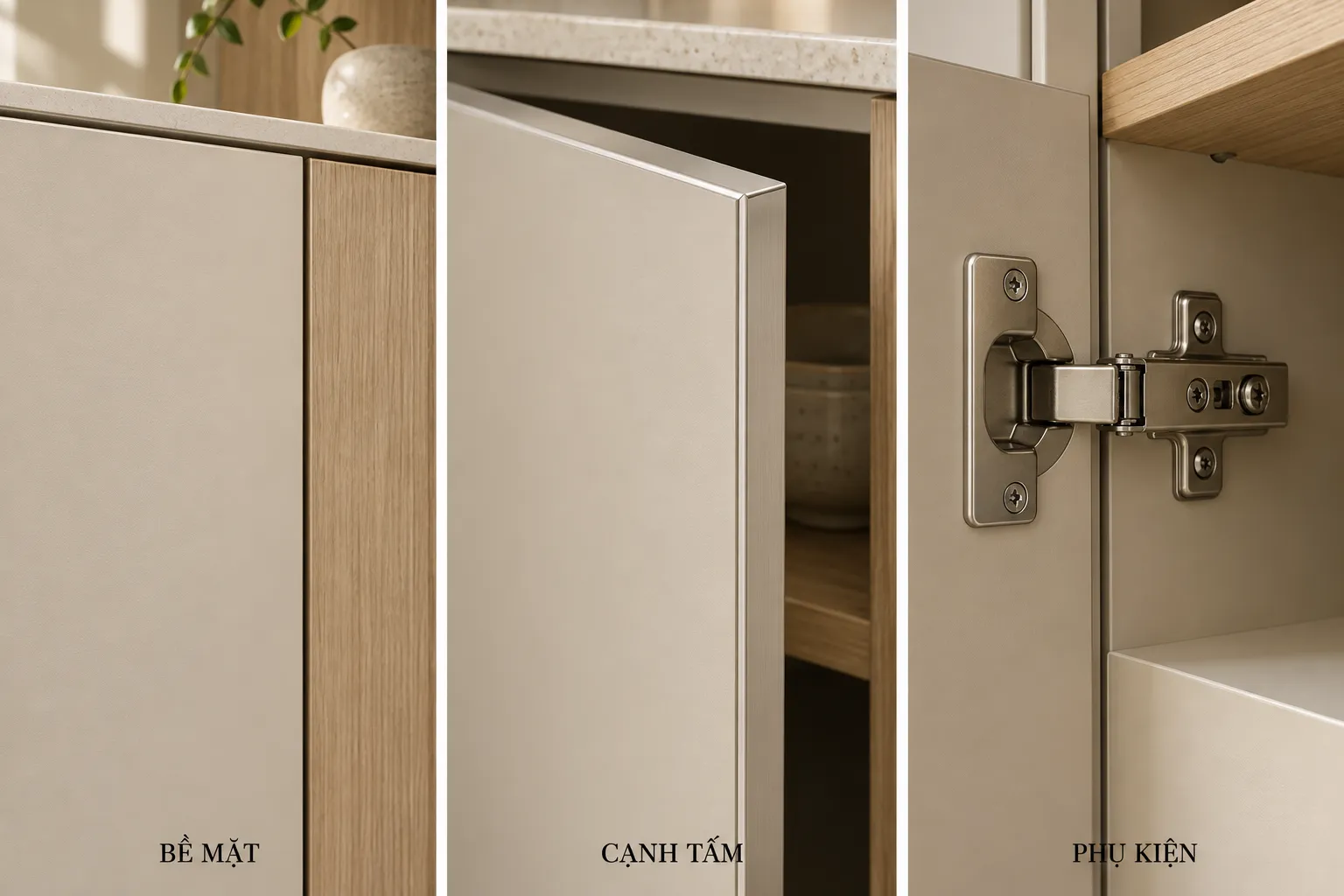
Utilising aluminium honeycomb panels, Thiên Tín creates integrated cabinetry and door solutions that combine robust metallic cores with exquisite surface finishes tailored to your interior aesthetic.
However, generic attributes of aluminium honeycomb should not be assumed as universal specifications for every product. Specific data concerning panel configuration, load-bearing capacities, or quality standards should be referenced against the corresponding product documentation.
Alongside aluminium honeycomb, Thiên Tín offers tailored interior solutions utilising engineered timber, stainless steel, and other premium materials, enabling clients to evaluate the ideal approach for each space.
THIÊN TÍN – A pioneer in delivering integrated cabinetry and door solutions using next-generation aluminium honeycomb panels in Vietnam.
Whether preparing for new construction or residential renovation, clients are invited to visit Thiên Tín to inspect physical material samples, examine panel construction, and discuss practical environmental requirements.
Based on your space, requirements, and intended investment, Thiên Tín provides tailored interior advice prior to developing detailed designs and formal quotations.
Thiên Tín Journal · Guides · Page 4