
Thiên Tín Journal · Guides
Products
Are aluminium honeycomb vanity units waterproof? Are they suitable for bathrooms?
The bathroom is an environment where furniture is constantly exposed to moisture, water splashes and temperature fluctuations.
Page 8
Thiên Tín Journal · Guides
Page 9
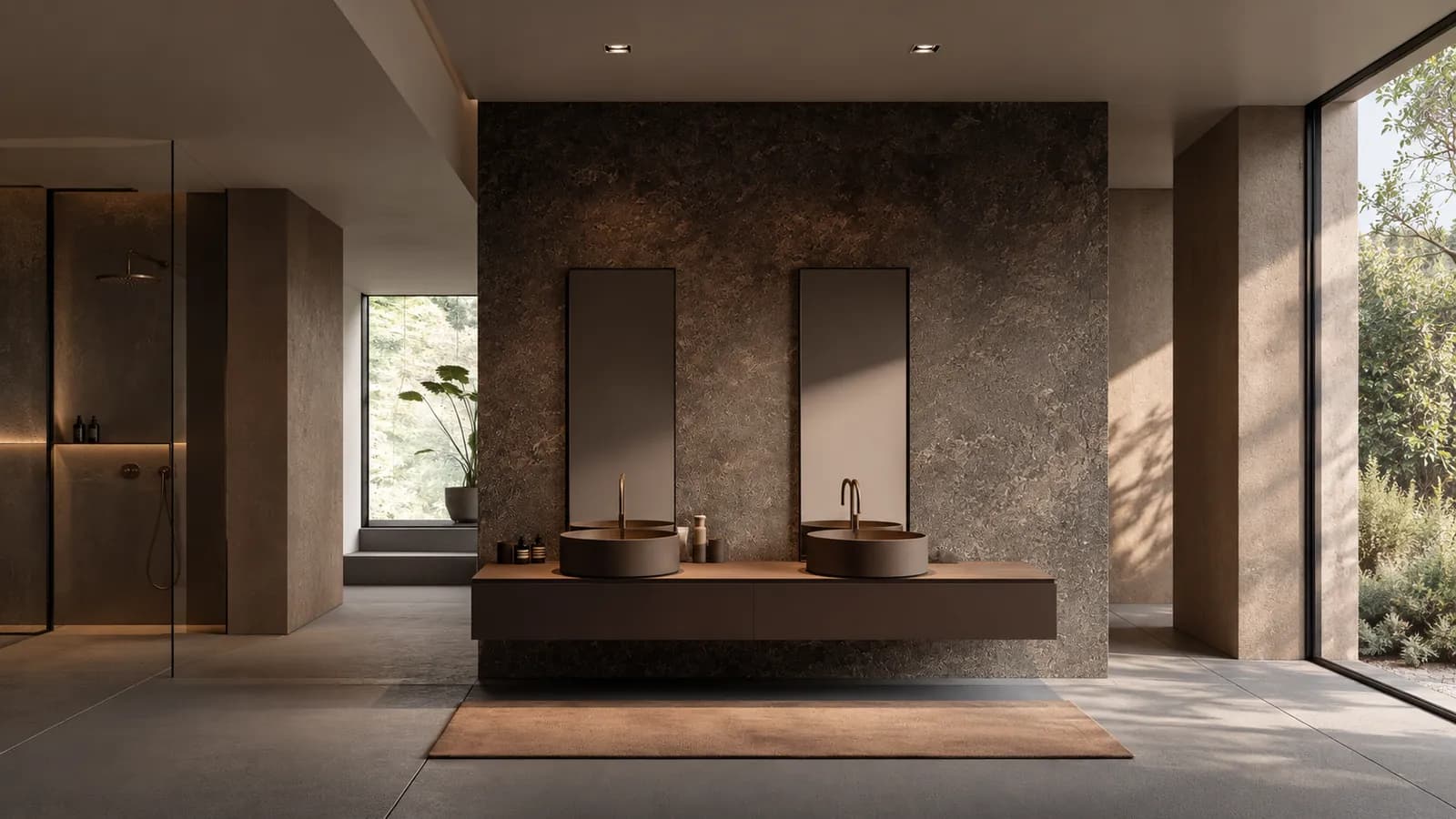
The bathroom is an environment where furniture is constantly exposed to moisture, water splashes and temperature fluctuations. Therefore, when choosing a vanity unit, many homeowners consider not only the design but also whether the material can withstand this environment over the long term.
Aluminium honeycomb vanity units are among the solutions considered thanks to their metallic core structure, which does not swell from moisture absorption like wood-fibre materials and does not provide a food source for termites.
So, are vanity units made from aluminium honeycomb truly waterproof? Are they suitable for bathrooms with frequent high humidity? The article below outlines the material properties, key limitations to consider, and how to select the right cabinetry system before placing a bespoke order.
Are aluminium honeycomb vanity units waterproof?
Structure of aluminium honeycomb vanity units and material properties
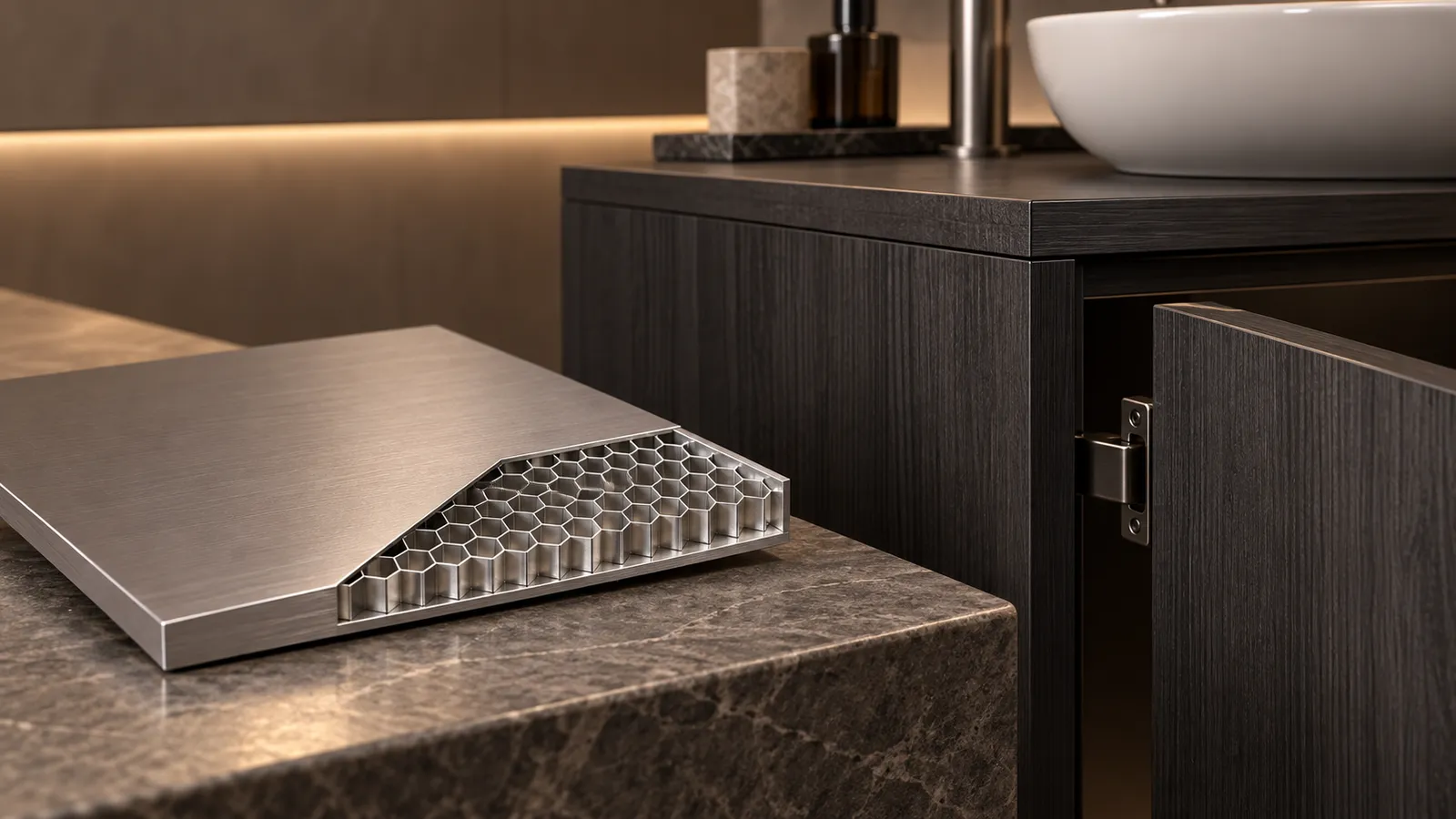
An aluminium honeycomb vanity unit is a cabinetry system manufactured from panels with an aluminium honeycomb core structure, combined with surface layers to form furniture components. Depending on the design, this material can be used for the cabinet carcass, doors, or other appropriate elements.
The core is formed of hexagonal cells sandwiched between bonded facing sheets. This structure differs from engineered wood, natural timber, or conventional metal cabinets fabricated from single sheet metal.
A key feature of the aluminium core is that it does not absorb water and swell as wood fibres do. Aluminium also contains no cellulose, so it does not become a food source for termites like wood-derived materials.
As a result, aluminium honeycomb offers distinct advantages for furniture items specified for high-humidity environments, including vanity units. However, a complete cabinet consists of more than just its core material. The overall quality also depends on the surface layer, edge banding, component joinery, hinges, and interfaces with sanitaryware.
Therefore, when exploring aluminium honeycomb vanity units, clients are advised to examine both the material cross-section and the finished construction details, rather than relying solely on surface samples.
Understanding the true waterproofing capabilities of aluminium honeycomb vanity units
The short answer is: aluminium honeycomb offers excellent moisture resistance at its metallic core, but one cannot assume every vanity unit made from this material is entirely waterproof.
To understand this correctly, one must distinguish between the moisture resistance of the raw material and the waterproof performance of the finished product.
At the material level, the aluminium core does not swell from moisture absorption like wood. This characteristic is ideal for bathroom environments where moisture is constantly present.
However, water can affect various other areas of a cabinet, such as joints, panel edges, hardware, basin junctions, or improperly sealed installation areas. If standing water remains in gaps over prolonged periods, the finish and hardware may be compromised depending on the construction, materials, and usage conditions.
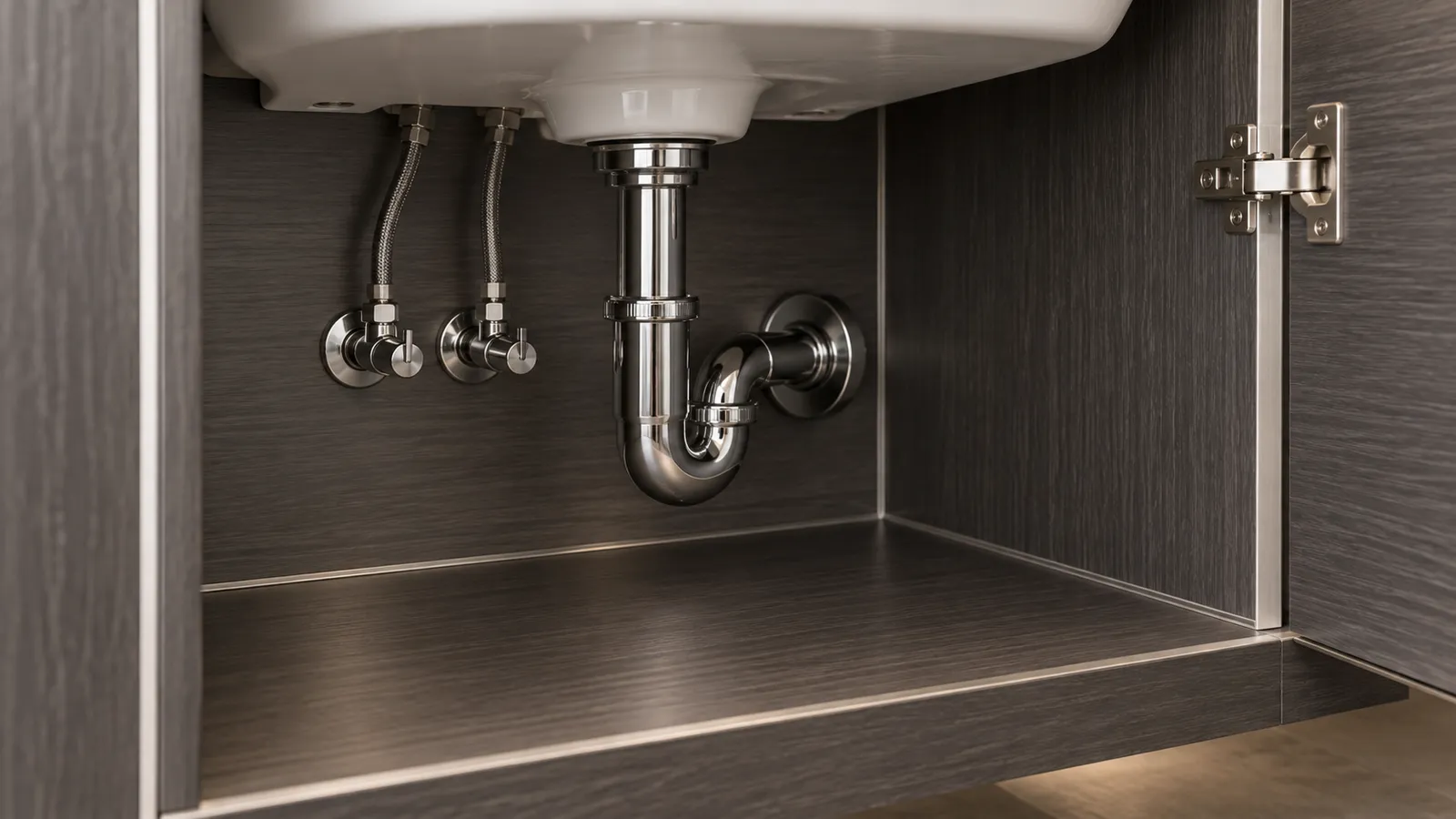
Thus, when selecting a vanity unit, homeowners should inquire about how water-prone areas are detailed. In particular, the area beneath the basin, around pipework, and along wall junctions should be designed to facilitate easy inspection and cleaning.
Furthermore, using a highly moisture-resistant material does not mean floor tanking, repairing leaky pipes, or bathroom ventilation can be overlooked.
A durable cabinetry system requires the right combination of materials, construction methods, and installation conditions.
Are aluminium honeycomb vanity units suitable for bathrooms with frequent moisture?
For high-humidity bathrooms, aluminium honeycomb vanity units present a compelling option thanks to the properties of their metallic core and the availability of suitable surface finishes.
However, suitability also depends on cabinet placement. A unit positioned in a vanity area separated from the shower experiences vastly different conditions from one installed directly adjacent to a walk-in shower subject to constant splashing.
In bathrooms with distinct dry and wet zones, placing the cabinet in an area with minimal direct water contact proves far more advantageous for daily use and ongoing maintenance.
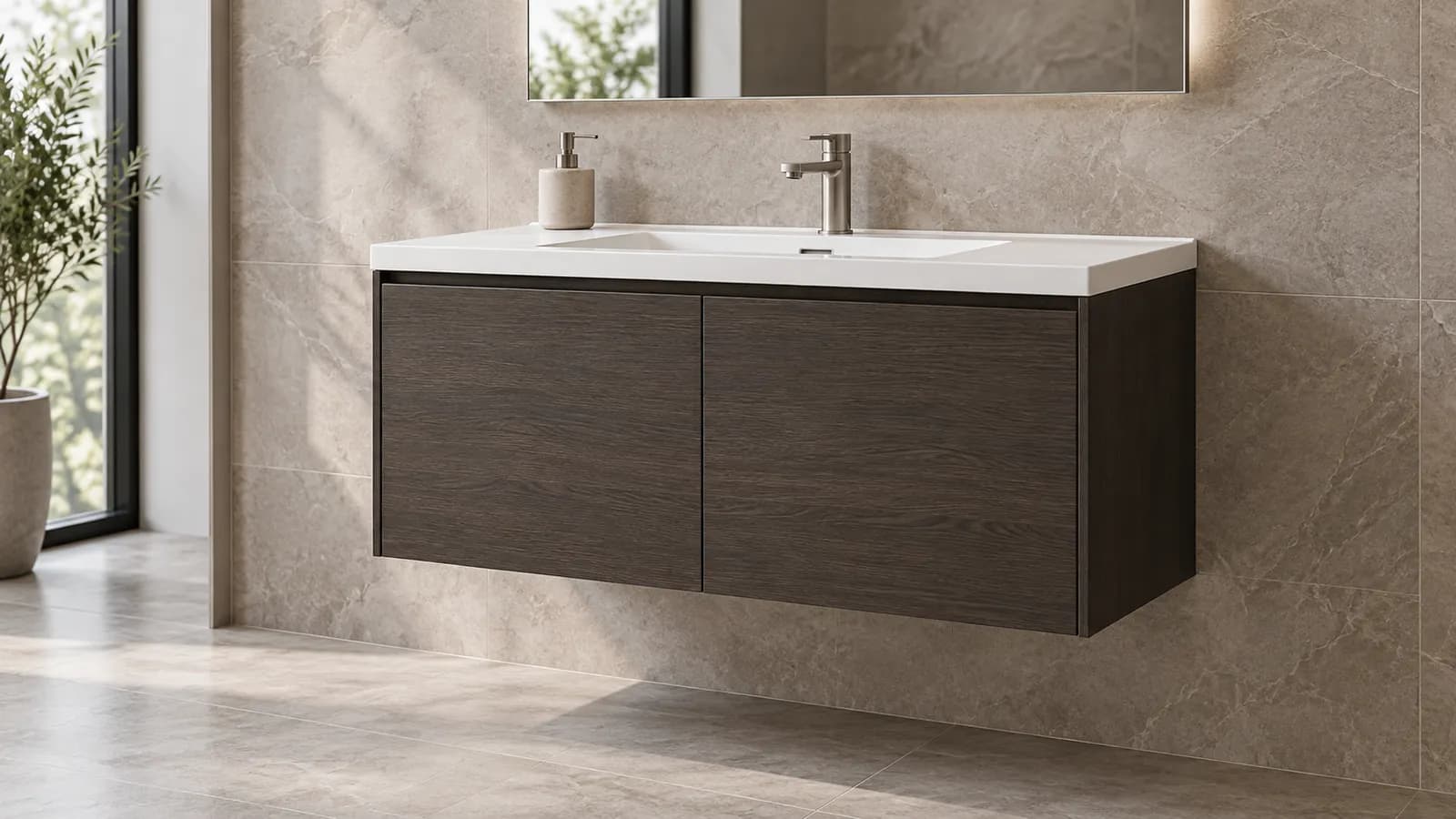
In compact bathrooms without enclosures or where steam frequently collects, greater attention must be given to edge detailing, hardware specification, ground clearance, and ventilation.
Homeowners should also assess the condition of the walls and plumbing before installation. If walls suffer from dampness or pipes pose a leakage risk, these issues must be rectified structurally beforehand.
Aluminium honeycomb does not replace the necessity of proper waterproofing and ventilation systems.
Therefore, rather than asking simply whether the material is waterproof, the more pertinent question is how the cabinetry is engineered and finished to suit the specific bathroom environment,
Benefits of aluminium honeycomb vanity units in practical use
Mitigating risks from moisture and termites
In the bathroom, moisture arises not only from basin use but also accumulates from bathing, showering, and the room's ventilation conditions.
For cabinetry crafted from wood-based materials, moisture absorption, panel stability, and coating quality are factors requiring careful evaluation.
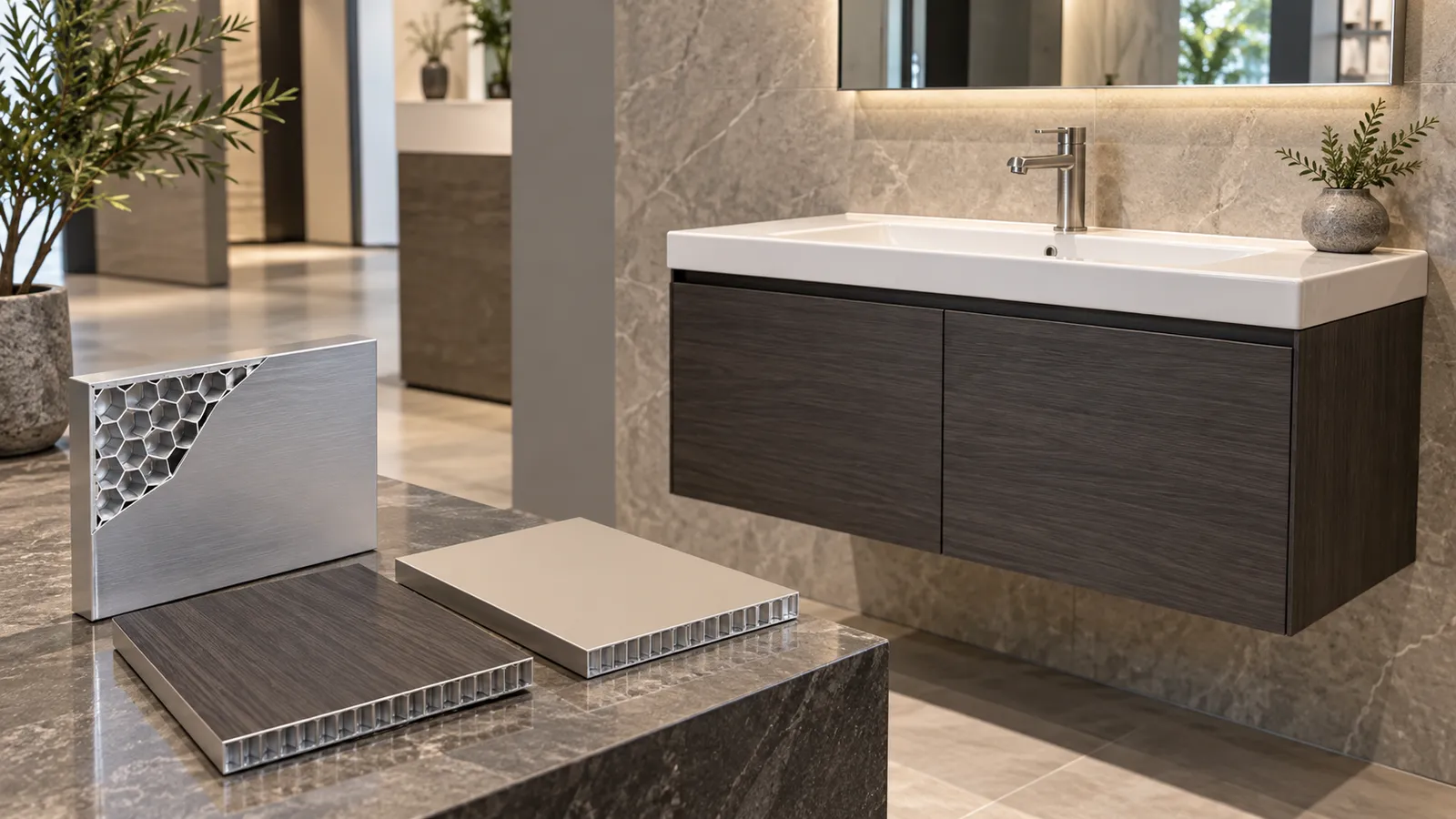
Aluminium honeycomb benefits from a metallic core that does not swell like wood fibres. Additionally, the aluminium core offers no sustenance to termites, eliminating a specific category of material risks. This makes aluminium honeycomb vanity units ideal for homeowners seeking metal-core solutions in persistently damp areas.
Even so, overall durability remains contingent upon finishing details. Hinges, handles, drawer runners, and other hardware components must be specified appropriately for the operating environment.
Furthermore, vanity units should not be designed as completely sealed enclosures if moisture frequently accumulates inside or if pipework requires routine inspection. Maintaining good ventilation, wiping away standing water, and promptly addressing leaks remain essential.
Versatile finishes suited to various bathroom styles
Alongside humidity resistance, aesthetics play a crucial role when selecting a vanity unit.
In contemporary bathrooms, vanity units are integrated with mirrors, basin tops, stone cladding, sanitaryware, and architectural lighting. Consequently, the cabinet colour and surface finish must harmonise with the overarching scheme.
Aluminium honeycomb can accept various surface finishes depending on the product range, from solid colours to wood-grain effects. As a result, a metallic core material need not feel cold or overtly industrial.
For instance, a bathroom featuring light-toned stone and white sanitaryware pairs beautifully with a beige, taupe, or light wood-grain vanity unit. Conversely, spaces defined by crisp, modern lines may suit grey or deeper tones.
However, when selecting a finish, clients should not rely solely on 3D renderings. Physical samples ought to be evaluated under lighting conditions similar to those of the bathroom, as colours can shift noticeably between natural daylight and artificial lighting.
Beyond colour, the execution of edge detailing, door gaps, and handles significantly influences the perceived quality of craftsmanship.
A refined, understated design with balanced proportions and clean lines often yields far superior aesthetic impact than overly decorative details in a compact space.
Optimising storage space and ease of cleaning
A vanity unit serves more than just to conceal pipework beneath the basin; it is a primary storage area for towels, toiletries, personal care items, and everyday bathroom essentials.
However, the space underneath a basin is often constrained by plumbing and drainage systems. Without thoughtful internal compartmentalisation, much of the volume can become impractical to use.
When specifying bespoke aluminium honeycomb vanity units, homeowners can tailor the internal layout to accommodate plumbing locations and specific storage needs.
For example, frequently used items should be placed within easy reach, whilst surplus supplies can be stored in deeper compartments—provided they do not impede access for technical maintenance.
In smaller bathrooms, a wall-hung vanity unit creates accessible floor space for effortless cleaning. However, wall-mounted designs require careful calculation of structural loads, wall composition, and fixings.
In more generous bathrooms, floor-standing vanity units or designs with integrated drawer systems offer maximum storage capacity.
Regardless of the style chosen, the design must prioritise ease of cleaning and clear access to areas prone to water leaks.
Which aluminium honeycomb vanity unit design should you choose for your bathroom?
Wall-mounted vanity units – the choice for modern bathrooms
Wall-mounted vanity units are favoured by many homeowners for their compact design and the clearance underneath, which makes the bathroom floor easier to clean. In apartments with compact or medium-sized bathrooms, this style also creates a greater sense of openness compared to floor-standing units.
When using aluminium honeycomb, the carcase and door fronts can be crafted with surface finishes tailored to the overall aesthetic. Flat-panel doors in neutral tones or subtle wood grains pair effortlessly with basins and mirrors.
However, wall-mounted systems require precise structural considerations. Load-bearing capacity depends not only on the cabinet materials, but also on the mounting brackets, fixings, and the structural integrity of the wall itself.
This is particularly critical when installing heavy countertop basins or stone worktops, where structural solutions must be engineered to support the anticipated total weight. Furthermore, plumbing routes must be carefully planned to avoid compromising storage capacity and future maintenance access.
A wall-mounted vanity unit is ideally suited to homeowners who favour contemporary design, value effortless floor cleaning, and possess wall conditions capable of supporting structural installation.
Floor-standing vanity units – maximising storage space for the home
Unlike wall-mounted designs, floor-standing vanity units utilise the full height from beneath the basin down to floor level to provide generous cabinet space.
This configuration suits households requiring substantial storage, or those seeking balanced proportions to complement larger vanity basins.
Depending on available space, the cabinetry can be configured with hinged doors, drawers, or a combination of both. Careful internal planning ensures seamless integration around water supply and drainage systems.
In a humid bathroom environment, plinths and floor contact points demand careful consideration. If standing water is frequent, the design of the base, support mechanisms, and cleaning protocols must be addressed from the outset.
While aluminium honeycomb benefits from a core that does not absorb moisture like timber, managing standing water around cabinet feet and jointing details remains essential. Aesthetically, floor-standing units can be seamlessly coordinated with vanity tops, mirrors, and complementary cabinetry to create a unified interior scheme.
Homeowners should consider this style when generous storage is a priority and the bathroom offers sufficient floor space to avoid a cluttered feel.
Vanity units integrated with drawers and matching auxiliary cabinetry
For many households, a single under-basin cabinet may not accommodate all daily essentials. Incorporating integrated drawers, mirror cabinets, or matching side units provides a far more structured and efficient storage solution.
Drawers are ideal for smaller items needed daily. However, because the area below the basin houses plumbing services, drawer construction must be custom-engineered around the technical pipework.
Mirror cabinets or wall-hung side units offer additional storage without taking up valuable floor area. Nonetheless, their placement must be ergonomic and unobtrusive during daily use.
When specifying aluminium honeycomb across multiple elements, consistent surface finishes establish a harmonious colour palette. Neutral shades and refined wood-grain effects complement stone, glass, and sanitaryware effortlessly.
However, over-furnishing a compact bathroom should be avoided. A well-considered design preserves clear circulation space for comfortable movement, cleaning, and daily functionality.
An exceptional vanity system ensures every item has a designated place for effortless access and neat storage, while maintaining an open, uncluttered ambiance.
Selecting the ideal aluminium honeycomb vanity unit with Thiên Tín
Key factors to review before commissioning a bespoke vanity unit
Before selecting a design, homeowners should determine the exact basin placement and evaluate the practical environment of the bathroom.
If the cabinet is positioned near a walk-in shower or exposed to frequent splashing, edge detailing, hardware, and joint seals require meticulous attention. In bathrooms with distinct wet and dry zones, placing the unit in a dry area promotes long-term durability.
Dimensions are equally critical. Precise measurements of width, depth, and usable spatial clearance must be taken, along with exact mapping of water supply and drainage pipes.
For wall-mounted units, assessing wall strength and structural anchorage options is essential. Where stone countertops or vessel basins are specified, total load requirements must be factored in.
Regarding materials, clients are advised to inspect cross-sections of the aluminium honeycomb panel, surface laminates, and edge banding. These details provide complete clarity on build quality prior to finalizing a specification.
Upon receiving a quotation, clarify whether the scope encompasses the carcase, door fronts, drawers, hardware, countertop, basin, and installation fees.
Furthermore, warranty terms should clearly outline coverage across materials, ironmongery, and finishing components.
These verification steps empower homeowners to select a truly suitable product rather than relying solely on initial renderings or entry pricing.
What factors influence the price of an aluminium honeycomb vanity unit?
The cost of aluminium honeycomb vanity units can vary significantly between design schemes, even when overall dimensions are comparable.
The primary consideration is structural complexity. A standard hinged-door unit involves different fabrication methods compared to an intricate system featuring multiple drawers or matching side modules.
Next is the surface finish. Depending on material specifications, solid colours, wood-grain textures, or custom decorative finishes will impact overall pricing.
Hardware and fittings also form a major part of the quotation. Hinges, drawer runners, handles, and connecting elements must be engineered for humid bathroom environments as well as structural compatibility.
Additionally, establish whether the quote includes the basin, stone worktop, brassware, mirrors, or integrated lighting, as these elements can substantially alter total investment.
Site conditions also dictate installation methodology. Bathrooms with complex plumbing, out-of-square walls, or bespoke site adjustments may require additional precision tailoring.
Therefore, when comparing quotations, homeowners should evaluate proposals with matching dimensions, specifications, and scope of supply side by side.
A transparent quotation not only maintains budget control but also serves as the benchmark for evaluating finished product quality.
Aluminium honeycomb vanity solutions by Thiên Tín
For the bathroom, selecting the material is merely the first step. A truly bespoke vanity system must be engineered around basin placement, water exposure levels, and specific storage requirements.
At Thiên Tín, our consultancy process begins with a spatial survey and functional assessment. From here, our design team recommends wall-mounted, floor-standing, or modular auxiliary configurations perfectly proportioned to your bathroom.
Utilising aluminium honeycomb panels, Thiên Tín delivers advanced cabinetry solutions based on metallic core structures, paired with bespoke surface finishes and tailored manufacturing techniques.
Our production workflow encompasses technical drawings, component machining, edge detailing, assembly, and final finishing. Critical joints, panel reveals, and interfaces with sanitaryware receive meticulous attention to ensure durability under demanding conditions.
Alongside vanity units, homeowners can explore our fitted kitchens, wardrobes, shoe cabinets, and interior doors to achieve a unified palette of materials and colours throughout the residence.
THIÊN TÍN – The pioneer in delivering synchronized cabinetry and door solutions using next-generation aluminium honeycomb panels in Vietnam.
If you are seeking an aluminium honeycomb vanity unit tailored to your home, we invite you to visit Thiên Tín to inspect material samples, explore design concepts, and discuss your bespoke requirements.
Based on your precise dimensions, installation site, and target budget, Thiên Tín will advise on the optimal configuration before preparing detailed designs and quotations.
Thiên Tín Journal · Guides · Page 10