
Thiên Tín Journal · Guides
Materials
Popular interior materials today: aluminium honeycomb, wood, plastic, stainless steel
When designing interior spaces, many homeowners spend considerable time selecting colours and styles, yet make decisions on materials rather hastily.
Page 18
Thiên Tín Journal · Guides
Page 19
When designing interiors, many homeowners spend considerable time selecting colours and styles, yet decide on materials rather quickly. This factor warrants careful consideration, as for the exact same design, choosing aluminium honeycomb, wood, plastic, or stainless steel can create significant differences in usability, moisture resistance, aesthetics, and investment level.
There is no single material suited to every area of the home. Kitchen cabinetry must withstand water and grease, wardrobes prioritise storage capacity and aesthetics, while vanity units constantly operate in humid environments.
Understanding the characteristics of each material group enables homeowners to make the right choice from the outset, rather than relying solely on price or surface appearance.
Understanding interior materials correctly before making a choice
What does an interior material determine in a product?
Material does not merely define the external appearance of cabinetry. It directly influences structural integrity, machinability, hardware installation, cleaning methods, and suitability for each specific environment.
A material that performs exceptionally well in the bedroom is not necessarily the optimal choice for the under-sink module. Conversely, a material highly resistant to water is not essential for every decorative shelf in the living room.
This is why the selection process should begin with operating conditions, rather than the material's name.
For instance, kitchen cabinets must contend with water, humidity, heat from appliances, grease, and heavy loads. Wardrobes rarely face direct contact with water, yet require substantial storage capacity, multiple doors, and smooth, reliable operation. For vanity units, exposure to moisture and water splashes is typically greater than in both of the former areas.
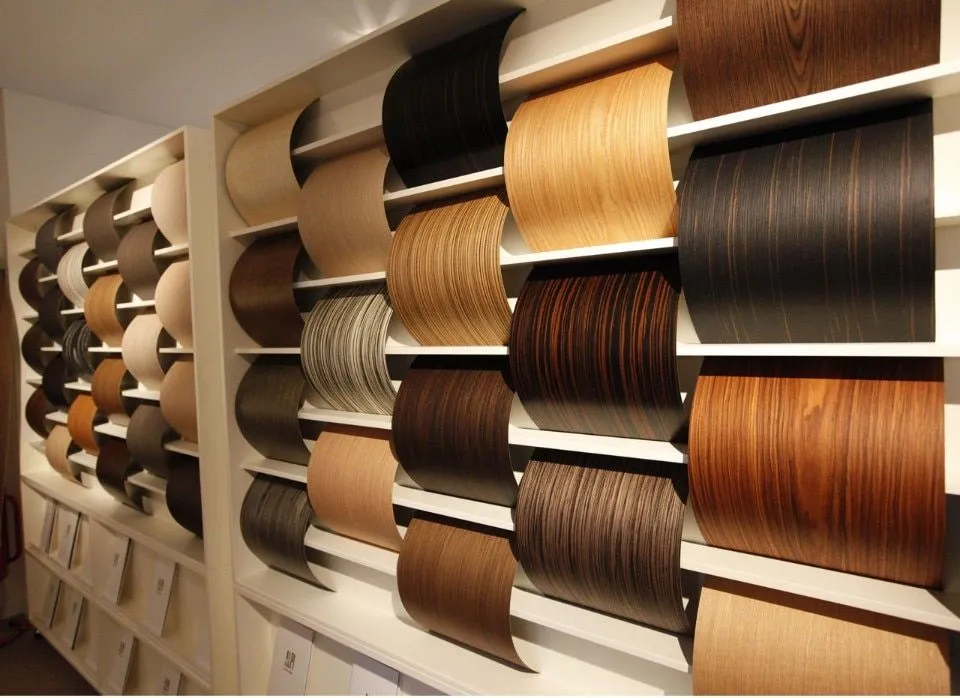
Aesthetics are also a vital part of the equation. Certain materials boast natural surfaces, whilst others rely on finishes to achieve colour and grain. Therefore, homeowners should not evaluate quality simply by looking at a single cabinet door sample.
A sound decision requires balancing functionality, environment, aesthetics, craftsmanship, and budget.
Aluminium honeycomb – a metal-core material group for interiors
Aluminium honeycomb is a panel material featuring a core formed from a network of aluminium cells joined in a honeycomb structure. This core is subsequently combined with surface layers and bonding systems to create panels for furniture manufacturing.
The key distinction lies in the metallic nature of the core. Aluminium does not absorb water and swell like timber fibres, nor does it contain cellulose—the primary food source for termites. Consequently, this material is highly favoured for applications requiring minimal risk from moisture and pest damage.
From a design perspective, aluminium honeycomb does not mean a monotonous metal surface. Depending on the product range, panels can be finished in various colours, textures, and decorative effects for application in kitchen cabinets, wardrobes, shoe cabinets, vanities, or internal doors.
The honeycomb core structure also presents specific manufacturing requirements. Mounting points for hinges, drawer slides, and load-bearing hardware must be precision-engineered. Therefore, the quality of the finished product must be evaluated on both the material itself and the fabrication technique.
Solid timber and engineered wood – two distinct categories to understand
Wood remains one of the most familiar materials in interior design. When discussing 'wooden furniture', it is essential to distinguish between solid timber and engineered wood, as their structure, properties, and investment levels differ significantly.
Solid timber is harvested and processed directly from logs. The value of the material typically lies in its natural grain, tactile warmth, and workability. Each wood species possesses distinct characteristics regarding hardness, colour, dimensional stability, and response to environmental conditions.
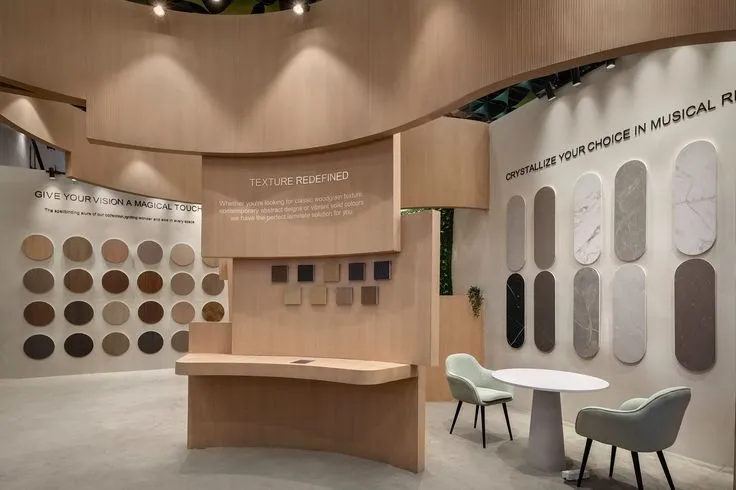
Engineered wood encompasses a broad category of technical boards, such as MDF, HDF, particleboard, and other configurations. The core substrate is commonly finished with Melamine, Laminate, Acrylic, or Veneer to achieve its final appearance.
The advantage of engineered wood lies in its rich palette of colours and finishes, ease of fabrication, and versatility across budget levels. Moisture resistance varies considerably across board types; thus, one should not generalise that all engineered wood will fail upon contact with water.
For both categories, raw material quality, manufacturing precision, and operating conditions exert a significant influence on product durability.
How do plastic and stainless steel differ from aluminium honeycomb in interior applications?
Plastic – a solution worth considering for high-humidity areas
Interior plastic is another material group often considered when homeowners wish to reduce reliance on wood-based materials.
The market offers numerous types of plastic panels with varying compositions and quality standards. Consequently, the term 'plastic' should not be used as a blanket benchmark for durability. The specific panel type, internal structure, surface finish, and fabrication technique are the key factors to evaluate.
The most evident advantage of plastic materials is complete immunity to termite infestation and excellent performance in humid environments across various applications. This explains why plastic is frequently specified for vanity units, kitchen cabinets, and certain domestic cabinetry systems.
The weight and fabrication methods of each product line also deliver distinct user experiences. For large cabinetry runs or load-bearing locations, designers must select an appropriate structural configuration rather than applying a one-size-fits-all solution.
In terms of aesthetics, modern surface treatments provide plastic panels with a wide choice of colours and decorative textures. Clients are advised to inspect physical samples to appreciate the tactile quality, edge detailing, and overall harmony with their home.
When compared to aluminium honeycomb, the fundamental difference lies in the core material: one utilises a polymer system, whilst the other relies on a metal core. Selection should be based on specific product specifications rather than mere nomenclature.
Stainless steel – strength in stability and specialised environments
Stainless steel is extensively used in kitchen zones, appliances, fittings, and applications demanding a metallic surface with high resilience to operating environments.
The properties of stainless steel depend on the steel grade, product construction, and finishing methods. Therefore, claims regarding corrosion resistance or quality must be tied to a specific grade rather than generalised across all products labelled 'stainless steel'.
In residential interiors, stainless steel can be specified for cabinet carcasses, frames, hardware, or combined with glass and decorative surfaces. Certain stainless steel kitchen designs leverage the strengths of metal in zones exposed to water, grease, and frequent cleaning.
A common aesthetic consideration for clients is visual warmth. If exposed stainless steel surfaces are used extensively, the space can feel overly industrial or metallic. Contemporary solutions often combine stainless steel with glass doors, decorative surfaces, or complementary materials to achieve visual balance.
Compared to aluminium honeycomb, stainless steel and aluminium are two distinct metallic systems with differing structural properties, weight, and fabrication methods. One cannot conclude which is superior without defining the intended application, finished assembly, and design requirements.
A quick overview of interior materials by application criteria
When comparing material groups side by side, the essential goal is not to declare a 'winner', but to identify the distinct strengths of each option.
| Criteria | Aluminium honeycomb | Engineered wood | Interior plastic | Stainless steel |
|---|---|---|---|---|
| Base material | Honeycomb-structured aluminium core | Engineered timber board | Varies by polymer/plastic grade | Stainless steel |
| Humid environments | The core does not swell due to water absorption like wood fibre | Depends on core type, surface finish, and edge treatment | Numerous ranges suitable for humid areas | Suitable for a variety of moisture-prone applications |
| Termite resistance | Aluminium core is not a food source for termites | Requires consideration of material ranges and termite prevention measures | Not a food source for termites, unlike wood | Not a food source for termites |
| Surface finishes | Numerous options depending on the finishing system | Exceptionally versatile | Varied depending on the range | Metal or a combination of materials |
| Fabrication | Requires techniques suited to the core structure | Standard fabrication methods | Depends on panel structure | Requires specialised metalworking equipment and techniques |
| Key recommended applications | Cabinets, doors, humid areas, and cohesive interior systems | Wardrobes, tables, shelving, kitchen cabinetry, and numerous joinery elements | Kitchen cabinets, vanity units, and residential cabinetry | Kitchen cabinets, frameworks, accessories, and bespoke elements |
This table serves as a general guide. Within each category, there are multiple product ranges differing in quality and price. A premium engineered wood panel should not be compared to a standard plastic board based solely on the material name; similarly, aluminium honeycomb must be evaluated based on its specific construction and finished quality.
Which interior materials should be chosen for each area of the home?
Kitchen cabinetry: Prioritise the living environment and ease of cleaning
The kitchen is an area where materials should be selected based on practical conditions before considering trends.
The base unit beneath the sink faces potential water exposure. The cooking zone often encounters grease, steam, and heat from appliances. Wall cabinets must store tableware, food, and various items of differing weights.
Aluminium honeycomb, polymer, and stainless steel are all popular choices for this area due to their moisture-resistant properties. Engineered wood can still be utilised provided the correct material specification is chosen, edges are properly sealed, and water-prone areas are effectively managed.
The true difference lies in the construction of the finished piece. A kitchen set also comprises worktops, sinks, hardware, hinges, runners, appliances, and numerous connection points. Simply altering the cabinet carcass material while overlooking these elements is insufficient to create a high-functioning kitchen.
Homeowners need not use a single material for the entire kitchen system. Depending on your needs, designers can recommend a tailored configuration for each area, provided technical precision and aesthetic consistency are maintained.
Wardrobes and display cabinets: Aesthetic appeal and functionality take priority
Bedrooms and living rooms present different operating conditions from kitchens. Water is not a constant risk, whereas storage capacity, colour, proportion, and spatial feel become far more crucial criteria.
Solid timber suits clients who appreciate tactile texture and authentic grain. Engineered wood offers an extensive palette of finishes, ideal for custom colour schemes. Aluminium honeycomb provides an extra option for those desiring a metallic core, particularly for wall-fitted joinery or projects focused on damp and pest control.
For full-height wardrobes, materials must also address structural considerations. Oversized doors, long hanging sections, drawers, and shelving must all be calculated to match the hardware specifications.
Display units, on the other hand, can place greater emphasis on surface and form. Combining glass, integrated lighting, wood grain, or solid tones elevates the piece into an architectural feature rather than mere storage.
Therefore, selecting materials for the bedroom or living room should not rely solely on durability. A well-considered solution must achieve a balance between functionality, tactile experience, and overall design.
Vanity units, shoe cabinets, and doors: Each element requires tailored evaluation
Vanity units operate in high-humidity areas subject to frequent water splashes. When choosing materials, suitability for this environment should take precedence. The detailing around the basin, plumbing, and joints must also be crafted for easy cleaning and maintenance.
Shoe cabinets rarely face direct water contact, yet they house footwear carrying outdoor moisture and dust. Beyond material selection, ventilation systems and compartmentalisation significantly influence the user experience.
Interior doors present a different set of requirements. Door leaves undergo frequent operation; thus, the material, frame, hinges, locksets, weight, and overall structural stability must be evaluated together.
Aluminium honeycomb can be specified across various cabinetry and door systems for projects requiring a unified metallic core system. Timber, polymer, or stainless steel also have their place depending on the design.
Rather than asking “which material is best for interiors?”, a more useful question is: what conditions will this specific element endure throughout its lifecycle?
Once that question is answered, material selection becomes less reliant on marketing claims and more grounded in real-world practical value.
Selecting suitable materials and interior solutions at Thiên Tín
5 criteria to evaluate before specifying interior materials
Faced with choices such as aluminium honeycomb, wood, polymer, or stainless steel, homeowners can easily get caught up comparing individual benefits. A more effective approach is to evaluate all materials against a single set of criteria.
The first factor is the operating environment. Determine whether the item is situated near water, exposed to frequent humidity, subject to heat, or fitted against walls. This initial step helps rule out unsuitable options right from the outset.
Next is functionality and structure. Light storage units differ from kitchen systems with heavy drawers; a small cupboard door behaves differently from a full-height door or panel. Materials must be paired with joining solutions tailored to the intended load capacity.
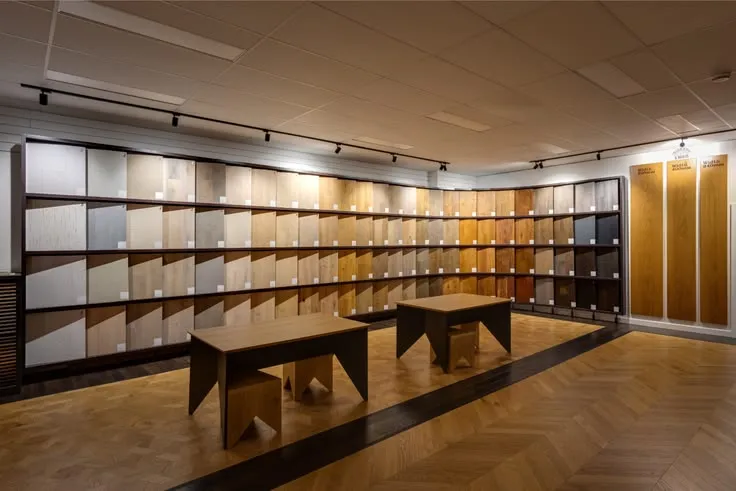
Aesthetics form the third criterion. Homeowners should view physical finish samples alongside other interior materials in the home rather than deciding based solely on imagery.
Budget considerations follow. Quotations should be evaluated based on equivalent finished specifications, encompassing materials, surface finishes, hardware, and installation scope.
Finally, consider the manufacturer's production capabilities and warranty. The same material processed with different fabrication techniques, fitting precision, and finishing standards can yield vastly different end products.
Should a single material be used throughout the entire home?
Not necessarily.
A home encompasses many different living environments; therefore, forcing every element to use the same material does not always offer a return commensurate with the investment.
Homeowners may choose to prioritise moisture-resistant materials for kitchens and vanity units, whilst selecting alternative solutions for desks or areas subject to less wear. This tailored allocation ensures the budget is focused precisely where it matters most.
Conversely, adopting a unified material system brings distinct advantages when a project seeks harmony in surfaces, structural composition, and maintenance routines. This approach is ideally suited to homes seeking to seamlessly integrate kitchen cabinetry, wardrobes, shoe storage, display units, and doors.
The final decision should always rest on the specific priorities of each project. If moisture and termites are the primary concerns, metal-core or non-cellulose materials warrant greater consideration. If the ambition focuses on a natural tactile quality, timber holds its own distinct value.
A well-considered solution does not attempt to prove one material superior to all others; it simply employs the right material in the right place.
Harmonised cabinetry and door solutions crafted from aluminium honeycomb panels at Thiên Tín
Today’s interior market offers a broader choice than ever, ranging from solid wood, engineered timber, synthetics, and stainless steel to innovative material systems such as aluminium honeycomb. Whilst advantageous to clients, this abundance can make selection challenging when relying solely on brief summaries of features.
At Thiên Tín, materials are considered in relation to the living space and practical requirements. Factors ranging from installation location, function, and environmental conditions to design aesthetics are thoroughly evaluated before determining the product's engineering structure.
With aluminium honeycomb panels, Thiên Tín provides a harmonised application across cabinetry and door systems. The metal core offers compelling advantages in humid environments and against the threat of termites, whilst the versatile surface finishes allow the material to adapt seamlessly to diverse design aesthetics.
THIÊN TÍN – A pioneer in delivering harmonised cabinetry and door solutions crafted from next-generation aluminium honeycomb panels in Vietnam.
The true value of a solution extends far beyond simply supplying a material panel. The entire process—from material consultation and design to manufacturing and final installation—must be seamlessly connected so that the material performs its intended role in the finished creation.
Thiên Tín Journal · Guides · Page 20