
Thiên Tín Journal · News
Thiên Tín
Bespoke aluminium honeycomb interior execution: from design to completion at Thiên Tín
A cabinetry design that looks exquisite on paper will not necessarily deliver an exceptional user experience if the crafting and installation are executed improperly.
Page 2
Thiên Tín Journal · News
Page 3
A cabinetry design that looks exquisite on paper will not necessarily deliver an exceptional user experience if the crafting and installation are executed improperly. With specialized structural materials such as aluminium honeycomb, the quality of the finished piece also depends heavily on edge treatment, hardware integration, and tailored structural design for each item.
Therefore, when exploring aluminium honeycomb interior installation, homeowners should look beyond mere aesthetics or raw material costs. What truly warrants evaluation is how a maker transforms raw panels into fully integrated cabinetry and door systems tailored for daily practical living.
The following guide outlines the essential stages of design, crafting, and finishing at Thiên Tín, whilst detailing the key criteria clients should review before commissioning bespoke work.
How does aluminium honeycomb interior crafting differ from conventional materials?
Aluminium honeycomb is a composite panel engineered with a sandwich structure, comprising a hexagonal aluminium core bonded between two protective skins. This architecture differs fundamentally from engineered timber boards and stainless steel sheets, requiring specialized crafting techniques tailored to its specific properties.
With engineered wood, product quality hinges on substrate density, veneer or laminate facings, edge-banding precision, and hardware anchoring. Stainless steel, conversely, relies on cutting, folding, welding, or structural assembly to build cabinetry systems. Each material demands bespoke structural engineering and refined surface finishes.
In the case of aluminium honeycomb, the metallic core neither absorbs moisture to swell like wood fibres nor provides sustenance for termites. However, these inherent traits do not guarantee that all aluminium honeycomb creations are of equal quality.
Load capacity, structural stability, and longevity ultimately depend on panel configuration, element dimensions, surface facings, edging systems, and joining techniques. In particular, mounting points for hinges, drawer runners, and heavy-duty fittings must be engineered specifically for compatibility with the panel's internal architecture.
This is why aluminium honeycomb interior crafting must be tailored to each specific architectural element. A kitchen unit door, a floating media console shelf, and an interior door serve distinct operational demands; thus, a single structural formula cannot be applied universally.
What is aluminium honeycomb? Structure, properties, and interior applications
At Thiên Tín, our interior realization process is meticulously organized, spanning on-site surveys and material consultations through to custom design, precision crafting, assembly, and final installation. These stages are intrinsically connected: any inaccuracy in the initial survey inevitably compromises both shop drawings and final fitment.
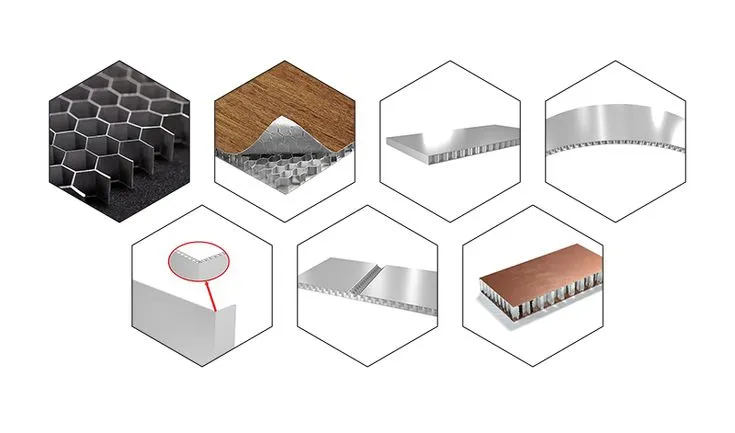
Figure 1.1 Anatomy of an aluminium honeycomb panel
Prior to crafting, the physical site undergoes rigorous measurement and inspection, taking into account walls, structural columns, service risers, electrical conduits, and plumbing. For kitchen cabinetry, precise appliance dimensions, sink positioning, and ergonomic cooking zones must be mapped out. For wardrobes or shoe cabinetry, bespoke storage layouts are derived directly from the family's lifestyle and storage requirements.
Based on survey data, detailed design proposals are developed to illustrate exact dimensions, structural assemblies, panel divisions, and hardware placement. Only upon client approval of the final design are individual components itemized for production.
This structured workflow minimizes unnecessary mid-production revisions while providing clients with complete confidence that the custom pieces will perfectly fulfill their expectations prior to on-site installation.
5 key criteria that define the quality of aluminium honeycomb interior execution
Operating environment and material moisture resistance
The operating environment is the paramount consideration when selecting materials and construction techniques. A wardrobe in a dry bedroom demands vastly different performance criteria than under-sink kitchen units or bathroom vanity cabinets subject to constant moisture and humidity.
Aluminium honeycomb excels due to its metallic core, which will not swell from moisture absorption unlike natural wood fibres. Nevertheless, the total water resistance of the finished piece depends equally on surface laminates, edge seals, joinery precision, and hardware selections.
For instance, in under-sink kitchen modules, potential water exposure stems not only from ambient moisture but also from plumbing leaks. If the internal design impedes inspection and cleaning, standing water can eventually compromise fine finishes or structural hardware over time.
Consequently, during installation planning, spatial placement and protective sealing for high-risk moisture zones must be carefully evaluated. For vanity units, this includes floor clearance, pipe alignment, and precision sealing at sanitaryware junctions.
Homeowners are advised to request detailed technical explanations regarding structural details in moisture-prone zones, rather than relying solely on generic 'waterproof' claims that ignore real-world conditions.
Is aluminium honeycomb furniture waterproof and termite-proof?
Structural durability and hardware integration techniques
A paramount factor governing interior quality is the method used to join individual structural components. This is especially vital for large-format wardrobe doors, expansive shelving, or heavy-load cabinetry.
Owing to its internal cellular core, aluminium honeycomb exhibits mechanical characteristics distinct from solid wood panels or single sheet metals. Consequently, structural load capacity cannot be judged merely by external panel thickness.
During manufacturing, precise mounting locations for hinges, drawer runners, shelf supports, and key stress points must be mapped out. These load-bearing points must be engineered to align with panel architecture, product dimensions, and anticipated weight capacities.
For instance, a full-height wardrobe door requires precise mass calculations and optimized hinge configurations for effortless operation. Meanwhile, a long-span media unit requires reinforced internal support systems tailored to support heavy electronics and decorative objects.
For interior doors, structural demands extend to the sub-frame, heavy-duty hinges, locksets, and high-frequency usage cycles. One should never assume that joining techniques suitable for cabinet doors can be applied directly to full-size architectural doors.
Upon final handover, clients are encouraged to evaluate tactile door closure, structural rigidity, and seamless component alignment. These practical markers offer a true reflection of craftsmanship quality beyond surface aesthetics.
Aesthetics and stylistic cohesion across interior elements
A finely crafted interior suite must not only adhere to precise measurements but also harmonize seamlessly with the overall architectural space.
Aluminium honeycomb accommodates a wide range of decorative surface finishes depending on specification, from refined neutral tones to authentic wood grain textures. Consequently, this material adapts effortlessly to contemporary, minimalist, or warm, inviting interiors.
However, aesthetic coherence extends far beyond employing a uniform colour palette. Door proportions, compartment divisions, edge detailing, handle selections, and reveals between components all dictate the overall perception of quality.
For instance, in an open-plan apartment combining living and dining areas, the kitchen cabinetry and media unit can utilize complementary tones to establish visual continuity. Overloading the space with uncoordinated surfaces or colours risks creating a fragmented aesthetic.
Throughout the design phase, clients are encouraged to examine physical material samples rather than relying solely on 3D renderings. Colours and surface textures can alter significantly under different lighting conditions.
Upon completion, details such as uniform reveals, pristine edge seals, and flawless surfaces serve as key quality benchmarks. These refined elements distinguish mass-produced, surface-level items from bespoke interior systems crafted with meticulous attention to detail.
Ease of cleaning and post-installation maintenance
Bespoke furniture is crafted for daily life; thus, it must remain effortless to clean and maintain long after the initial handover.
In kitchen design, zones such as sink cabinets, deep cookware drawers, and areas adjacent to cooking appliances require frequent cleaning. Shoe cabinets are prone to accumulating dust and moisture, while bathroom vanities require convenient access to plumbing systems.
Therefore, spatial layout, joint reveals, and accessible cleaning points must be considered right from the initial design phase. Cabinetry featuring hard-to-reach recesses or complex dismantling procedures can prove inconvenient, regardless of how low-maintenance the surface material is.
For aluminium honeycomb, cleaning protocols must suit the specific surface finish applied. One should not assume that all cleaning agents are suitable across every panel configuration.
Furthermore, hardware components such as hinges, drawer runners, and lift mechanisms may require periodic adjustment over time. Selecting premium hardware with clear specifications and available replacement parts is therefore essential.
Homeowners should request detailed care instructions, troubleshooting advice, and clear warranty terms from their fit-out specialist. A superior interior solution accounts for the entire lifecycle after handover, rather than merely the day of completion.
Total capital investment and long-term value
The investment required for aluminium honeycomb interior execution is not determined solely by the raw panel price. The overall cost reflects dimensions, structural engineering, surface finishes, hardware selection, and the architectural complexity of each item.
For instance, a feature kitchen fitted with integrated drawers, appliance housings, and pull-out hardware requires far more intricate crafting than basic hinged cabinetry. Similarly, full-height fitted wardrobes or media walls with integrated panelling demand higher structural complexity than standalone furniture.
When comparing quotations between aluminium honeycomb, engineered timber, and stainless steel, clients should evaluate proposals sharing identical specifications, functionality, and hardware tiers. Relying solely on square-metre material pricing can lead to misleading conclusions.
Beyond upfront costs, long-term maintenance needs and hardware modularity should be factored in. Intelligently engineered, easy-to-clean cabinetry delivers far greater convenience and enduring value throughout its lifespan.
When reviewing estimates, clients are advised to insist on comprehensive itemization covering materials, finishes, hardware models, dimensions, delivery, and installation scope. Transparency here prevents discrepancies between initial concepts and delivered joinery.
The optimal choice is rarely the lowest bid, but rather the bespoke solution that aligns perfectly with your practical requirements within a controlled budget.
The aluminium honeycomb interior execution process from design to completion at Thiên Tín
An effective interior execution workflow begins with a deep understanding of client requirements. At Thiên Tín, our initial phase involves detailed spatial surveys and consultations across all planned elements—from kitchen modules and wardrobes to shoe cabinets, media units, and interior doors.
During the site survey, existing dimensions and structural technicalities are thoroughly documented. For kitchen installations, details regarding sink positions, hobs, electrical appliances, and plumbing lines directly shape the architectural layout. For fitted wardrobes, height, depth, compartment counts, and door opening mechanisms are calibrated to suit the room's proportions.
Following the site survey, we advise on materials and develop design proposals. This stage involves selecting surface finishes, arranging functional layouts, and specifying the details required to ensure each piece meets its intended purpose. Not every element requires the same material specification; solutions ought to be tailored to practical conditions.
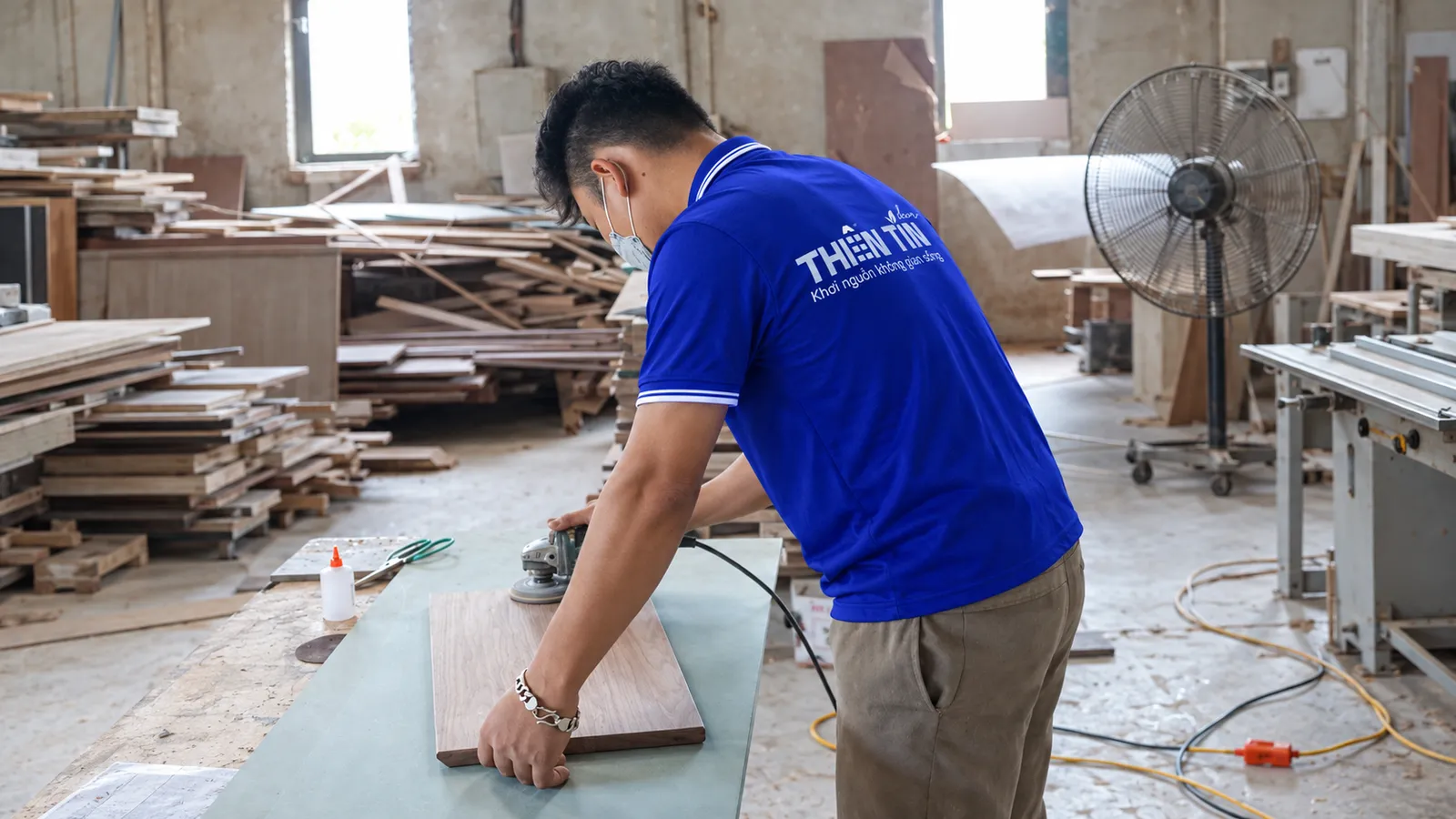
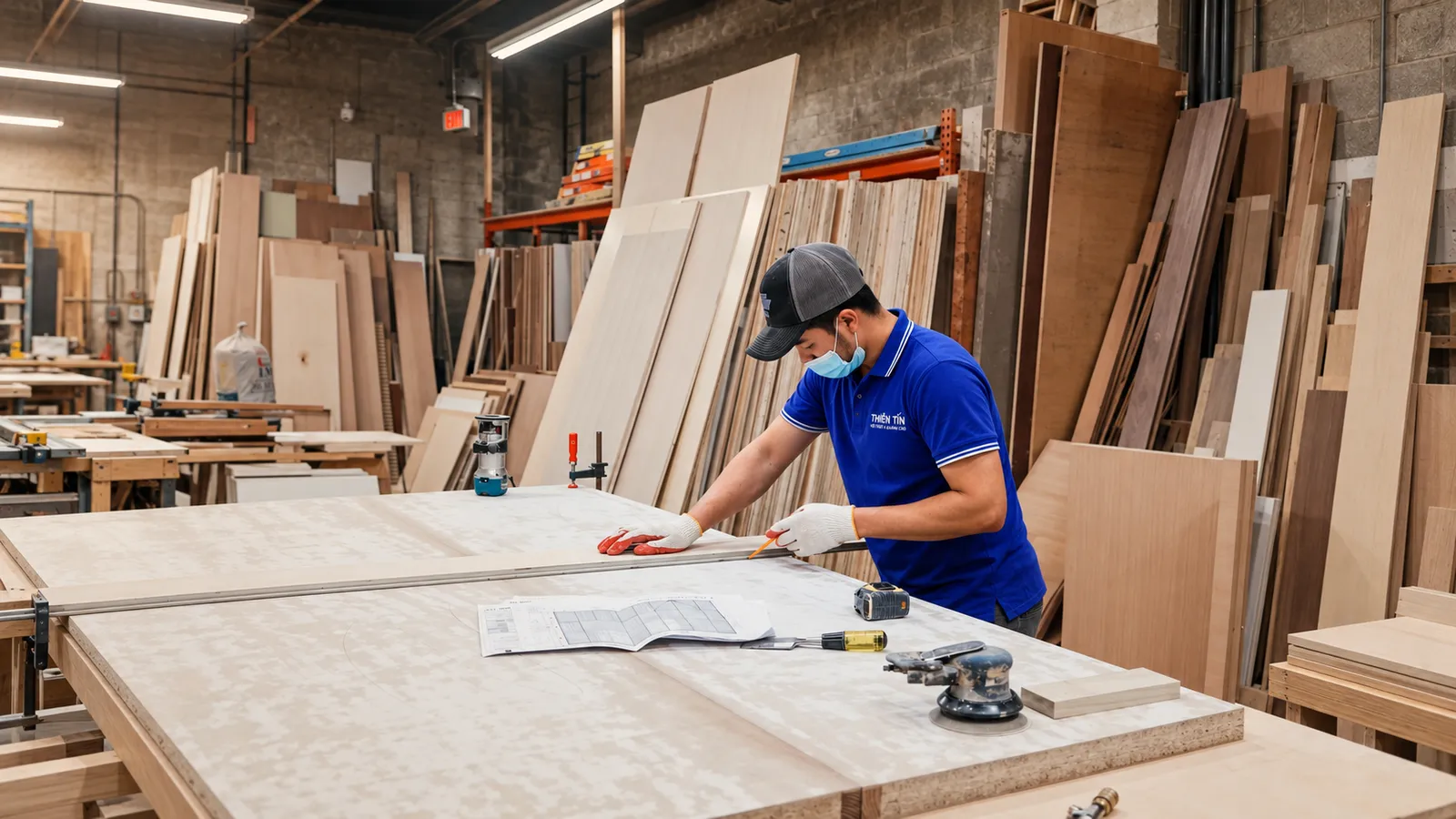
Once the design is agreed upon, individual components are itemised by dimensions for manufacturing. At the Thiên Tín workshop, advanced machinery—including twin-table CNC routers, PUR edge-banders, and sensor-guided drilling equipment—supports processes tailored to each material group and product structure.
For aluminium honeycomb, selecting machining methods and edge treatments must be based on the actual panel configuration. Hardware installation points and concentrated load-bearing areas must be calculated according to technical designs, rather than automatically applying standard methods suited to conventional boards.
Following fabrication, components proceed to assembly and finishing. It is at this stage that details such as door gaps, hinge positioning, surface uniformity, and smooth hardware operation are meticulously inspected.
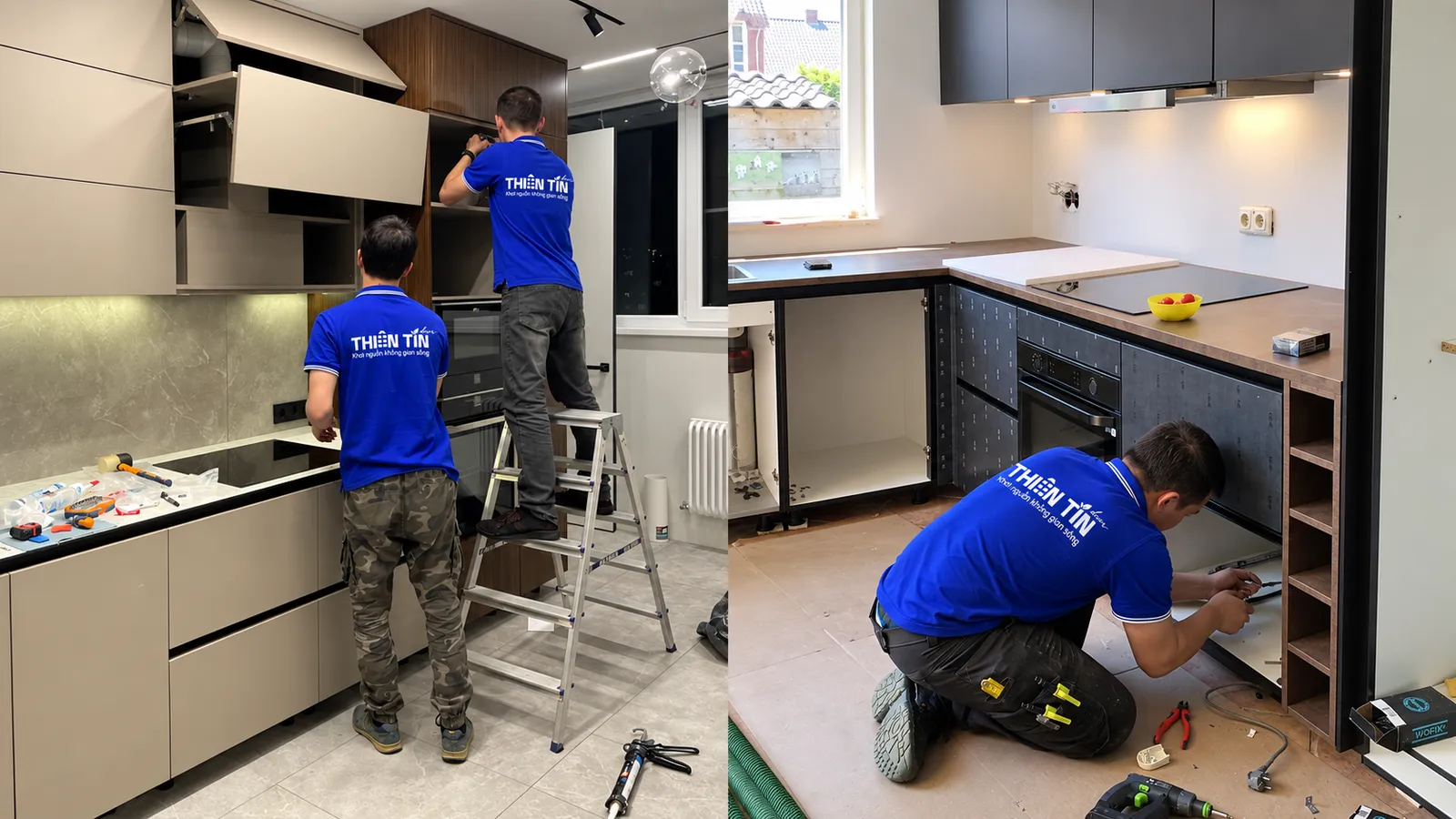
During site installation, products must be aligned to actual site conditions. Walls, floors, and ceilings are rarely perfectly square; thus, precise handling of joinery interfaces directly influences the final quality of the finish.
For wall-mounted cabinetry or load-bearing units, fixing systems must align with the building structure. For cabinetry integrating appliances, adequate clearance must be provided for operation and maintenance according to each appliance's specifications.
Post-installation checks should focus on both aesthetics and functionality. Cabinet doors must operate smoothly, drawers run seamlessly, surfaces display no visible flaws, and joint connections satisfy structural demands.
In terms of application, aluminium honeycomb kitchen cabinetry is ideal for homeowners seeking a metal-core material in moisture-prone areas. However, heavy-load compartments, appliance zones, and sink units still require dedicated structural solutions.
For vanity units, managing interfaces with basins, pipework, and water-exposed zones is essential. For wardrobes, focus shifts toward internal compartmentalisation, door dimensions, and opening mechanisms.
Shoe cabinets require designs that facilitate ventilation and easy cleaning, whereas media units must accommodate storage, device integration, and cable management. For interior doors, frames, hinges, and locks must match the door construction and frequency of use.
This demonstrates that aluminium honeycomb interior fit-outs are not simply a matter of replacing one material with another. Each item must be engineered around specific functional, structural, and installation requirements.
Choosing an aluminium honeycomb interior contractor and solutions at Thiên Tín
When selecting a contractor, homeowners should begin by examining material samples and finished products. A beautiful surface swatch helps visualise colour, but is insufficient to evaluate the internal construction and craftsmanship of the cabinetry.
With aluminium honeycomb, one should request to inspect panel cross-sections, surface layers, and edge detailing. Hinge connections, runner mountings, and load-bearing hardware points should also be clearly explained based on the proposed product configuration.
Furthermore, clients are encouraged to inspect finished pieces to assess door reveals, edge joints, movement smoothness, and surface consistency. These tangible details can be verified directly, rather than relying solely on promotional claims.
Quotations must also be presented transparently. Crucial details include dimensions, material specifications, surface finishes, hardware selection, installation scope, and exclusions. Where multiple material options exist, they should be compared under identical functional and hardware quality benchmarks.
In addition, warranty policies and maintenance guidelines must be clarified prior to contract signing. Clients should understand how warranty coverage applies to materials, fittings, and finishes, alongside designated contact channels for support.
At Thiên Tín, our approach to bespoke interior solutions spans material consultancy, architectural design, manufacturing, and complete cabinet and door installation. Utilizing aluminium honeycomb panels, Thiên Tín creates products tailored structurally to each application, achieving seamless surface consistency and stylistic harmony.
Material selection should never be divorced from practical requirements. A kitchen, bedroom, or bathroom each present unique demands; therefore, suitable solutions must be formulated around the actual space and the client's budget.
THIÊN TÍN – The pioneer of integrated cabinetry and door solutions crafted from next-generation aluminium honeycomb panels in Vietnam.
Should you be exploring aluminium honeycomb interior fit-outs for your home, you are cordially invited to visit Thiên Tín to inspect material samples, examine product construction, and discuss your design aspirations.
Based on site specifications, functional requirements, and intended investment, Thiên Tín provides tailored advice before advancing to detailed technical drawings and transparent quotations.
Thiên Tín Journal · News · Page 4