Thiên Tín Journal · Guides
Aluminium honeycomb
Are aluminium honeycomb interiors water and termite resistant?
Water, humidity, and termites are three factors that directly affect the lifespan of many interior elements.
Page 26
Thiên Tín Journal · Guides
Page 27
Water, humidity, and termites are three factors that directly affect the lifespan of many interior elements. Issues such as kitchen cabinet bases swelling after leaks, damp wall-mounted wardrobes, or internal structural damage from termites often only appear after a period of use, when repairs have become costly.
That is also why aluminium honeycomb is attracting interest from many homeowners looking for a more stable interior material in hot and humid environments.
So, where does this material's water and termite resistance come from? Does choosing aluminium honeycomb furniture mean you can be completely worry-free regarding water and termites? To answer accurately, one must look from the material's composition to how a finished piece of furniture is manufactured and used.
Why does aluminium honeycomb have an advantage against water and termites?
The metal core structure makes the difference in aluminium honeycomb
The first thing to know about aluminium honeycomb is not the wood grain or the visible exterior colour, but the internal structure of the material panel.
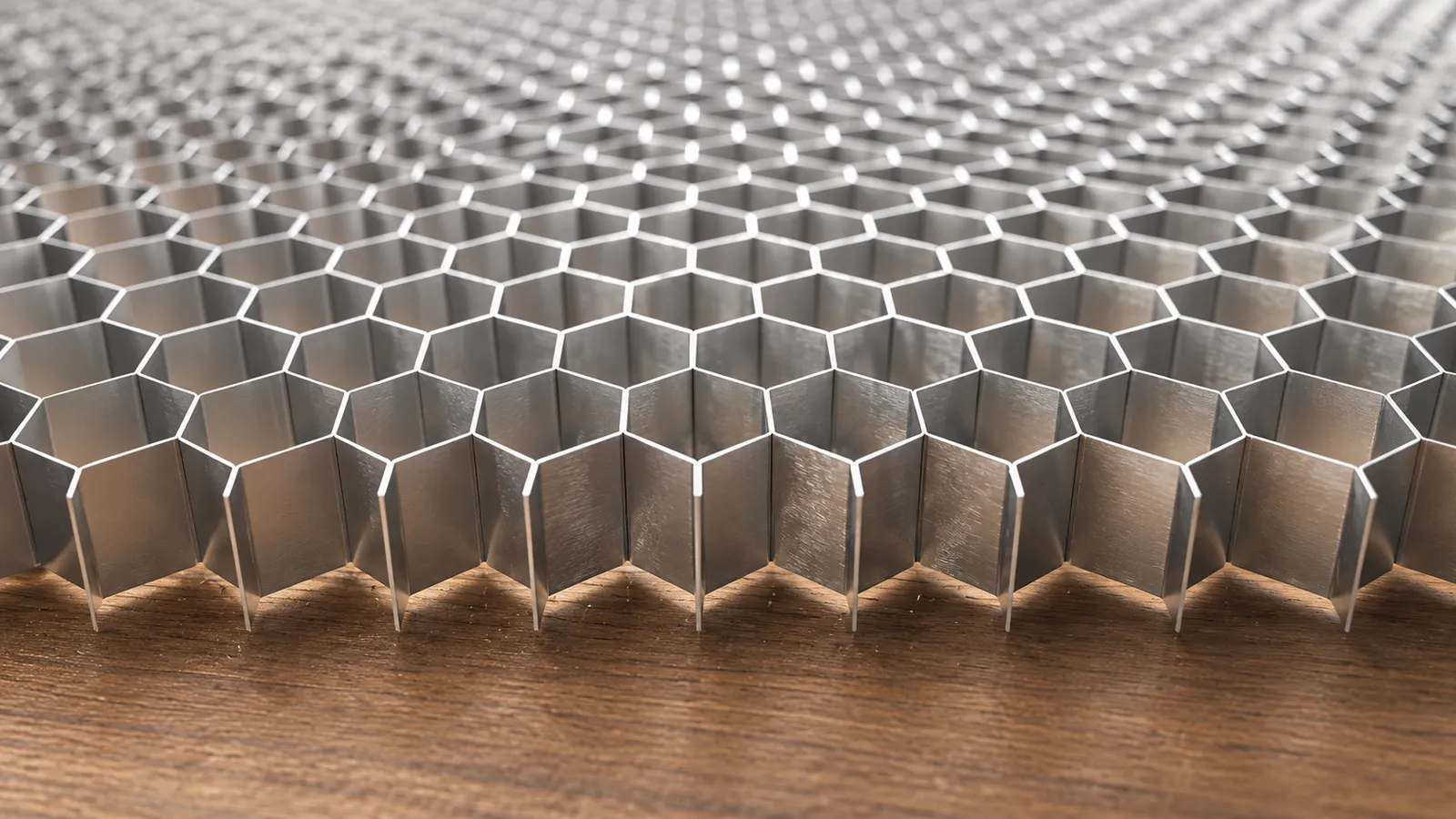
The core is formed from a system of interconnected honeycomb-shaped aluminium cells. This structure helps create rigidity for the panel while optimising the amount of material used. When applied to interiors, the honeycomb core is combined with surface layers and connection systems to form the finished panel.
The notable difference compared to wood-based materials lies in the nature of the aluminium core. Aluminium does not absorb water through the mechanism of wood fibres, nor does it contain cellulose (also known as fibre) – the food source that termites can exploit. Consequently, two causes that often lead to interior deterioration, moisture affecting the core and termites destroying the material from within, are mitigated right from the material's fundamental properties.
However, a complete piece of furniture is not just a core. Quality also depends on the surface layer, adhesives, pressing techniques, edge treatment methods, and manufacturing specifications. Therefore, when evaluating an aluminium honeycomb product, the right question is not just “what is the core made of?” but also looking at how the entire panel is constructed and finished.
[Internal link: what is aluminium honeycomb? Composition, characteristics, and applications in interiors ]
How should water and termite resistance be correctly understood?
These two concepts are often used quite broadly in interior material advertising, leading to the expectation that a “waterproof” product can be submerged in water under all conditions or that “termite-resistant” means the house will be free of termites.
With aluminium honeycomb, water resistance primarily comes from the fact that the aluminium core does not swell due to water absorption like wood-based materials. This is a distinct advantage in areas with high humidity.
Termite resistance also stems from the nature of the material. Termites cannot use aluminium as a food source, so the metal core is not eaten away by them in the way that can happen with cellulose-containing materials.
The two characteristics above must be separated from the quality of the entire piece of furniture. A cabinet set still has hinges, runners, adhesives, joints, and many other details. If water remains stagnant for a long time or the building has a termite infestation, the surrounding components may still be affected.
Understanding it this way is more practical: aluminium honeycomb significantly reduces risks originating from the material core itself, while the final durability depends on the product construction and the quality of workmanship.
How water and termite resistant is aluminium honeycomb furniture?
When encountering water, how does the aluminium honeycomb core react?
Let's take the cabinet compartment under the sink as an example. This is a location frequently prone to pipe leaks, water splashes, or moisture accumulation during use.
With some moisture-absorbent materials, water seeping through the panel edges or drilled holes can affect the core. When this situation persists, the material risks changing dimensions, affecting the surface and the cabinet structure.
The aluminium core does not operate by that mechanism. When in contact with water, it does not absorb water and swell like wood fibres. This is the practical value that makes aluminium honeycomb a point of interest for kitchen cabinets, vanity units, and areas near water sources.
Although the core has an advantage, this should not be equated with the “absolute water submersion” capability of the entire cabinet set. Stagnant water can still affect fittings, joints, surface layers, or other materials used in the product.
Therefore, a good cabinet system needs to be designed to both use suitable materials and limit water ingress and accumulation. Edge treatment, pipe layout, joints, and ease of cleaning are all details that need to be considered from the design stage.
Why can't termites destroy the aluminium core like wood-based materials?
Termites damage interiors because they have the ability to use cellulose as a nutrient source. This is a component found in wood and many plant-based materials.
Aluminium does not contain cellulose. Therefore, considering the metal core alone, termites have no food source to destroy the material structure.
This advantage is significant for wall-mounted cabinets, ground-floor cabinets, kitchen cabinets, or buildings that have recorded termite issues. Instead of just treating the surface to prevent termites, changing the nature of the material helps reduce a cause of damage right from the product's construction.
It is also necessary to distinguish between “material that is not eaten by termites” and “a building that is free of termites”.
If the floor, walls, or surrounding wooden items have termites, they can still exist and move through the installation area. Using aluminium honeycomb does not replace termite treatment for the entire building.
For new builds or renovations, a reasonable approach is to combine low-risk materials with termite control solutions from the foundation and structure. When both factors are handled correctly, the safety of the interior system will be much higher than relying solely on an external protective layer.
Do water and termite resistance mean the interior will be durable?
This is the point most easily misunderstood when choosing materials.
A cabinet set may not be eaten by termites and may not swell due to water, but it can still deteriorate if the doors are too large, the hinges are unsuitable, the shelves are overloaded beyond their design, or the surface layer is used in the wrong conditions.
Interior durability is always the result of an entire system consisting of materials, structure, fittings, manufacturing techniques, installation, and usage.
With aluminium honeycomb, the hollow core structure also poses its own requirements at points of concentrated load. Positions for hinges, runners, locks, or connection details need appropriate processing plans. This is the part that clearly demonstrates the capability of the manufacturer, because with the same type of panel, different structural processing methods can create very different finished product qualities.
Therefore, water and termite resistance should be seen as two important advantages of the material, not the sole guarantee for the product's lifespan.
When choosing interiors, homeowners should ask more about the cabinet construction, fittings, connection methods, and warranty policy. This information reflects actual quality better than a general introduction stating that the material is “super durable”.
Which areas should be prioritised for aluminium honeycomb furniture?
Kitchen cabinets – where moisture resistance proves its true value
If you must choose one area to prioritise materials with high water and moisture tolerance, kitchen cabinets are the first priority to consider.
During daily use, kitchen cabinets are subjected to multiple stressors: steam from cooking, grease, temperature fluctuations, and water from the sink area. The cabinet space beneath the sink, in particular, houses plumbing, meaning the risk of leaks is always present.
The aluminium honeycomb core does not swell from water absorption, thereby mitigating one of the most common risks in this area. For families who cook frequently or homes in high-humidity climates, this is a practical advantage that goes beyond mere technical specifications.
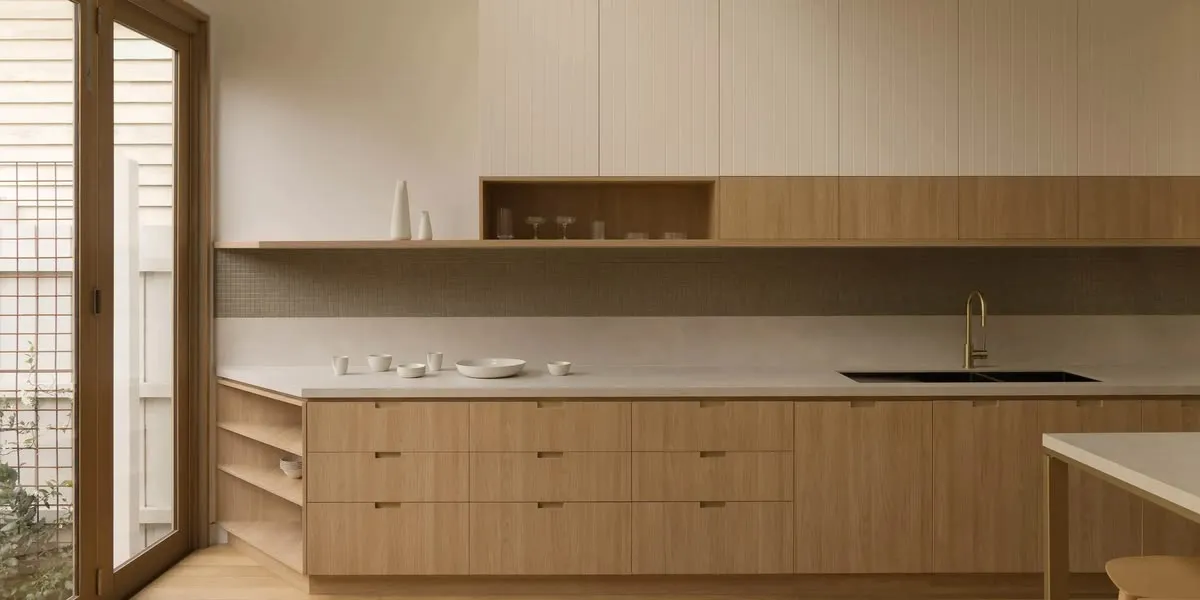
Kitchen cabinets are also complex systems integrating various appliances such as hobs, dishwashers, ovens, and sinks. Each position has different thermal, load-bearing, and moisture conditions. Therefore, cabinet construction should be designed compartment by compartment rather than applying a one-size-fits-all approach to the entire kitchen system.
A durable set of cabinets is not simply about choosing the right material. The way the sink area, appliance placement, ventilation, and hardware are handled are the factors that truly allow the material's advantages to be fully realised.
Vanity units and shoe cabinets – often overlooked when choosing materials
Vanity units may be smaller in scale, but they operate in much harsher environments than many other cabinets in the home.
Water splashes from the basin, bathroom humidity, and internal plumbing mean the material is constantly exposed to moisture. This is why the non-swelling property of the aluminium honeycomb core becomes so useful.
When designing vanity units, Thiên Tín recommends not only focusing on the cabinet carcass but also ensuring a seamless integration with the basin, countertop, walls, and plumbing system. Good design must facilitate quick water drainage, easy cleaning, and convenient access for maintenance.
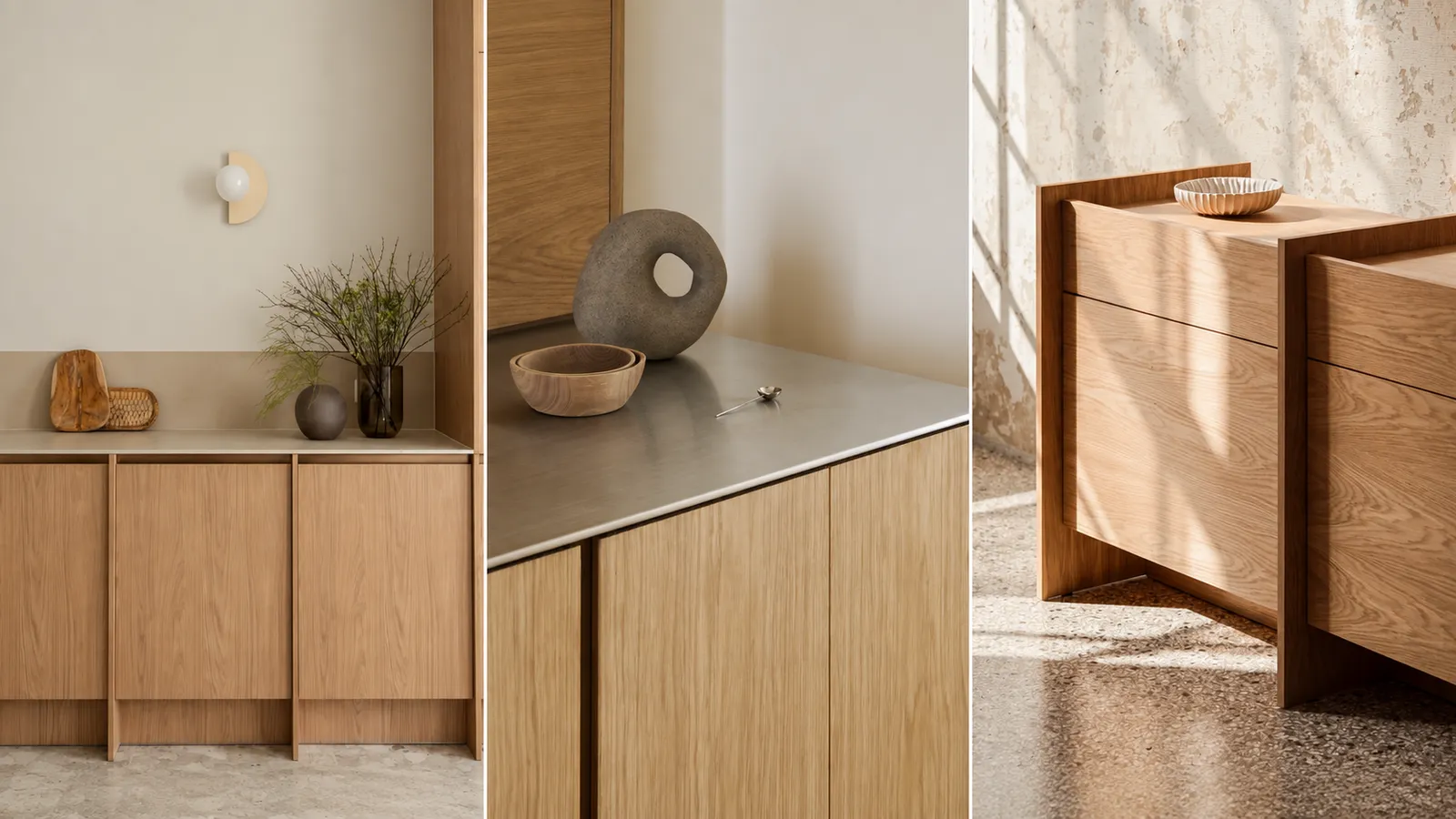
Shoe cabinets present a different challenge. Footwear brings in rainwater, dust, and moisture from the outside into an enclosed space. The metal core helps reduce risks from moisture and termites, but ventilation must still be addressed through design.
In other words, good material cannot replace good design. For areas with specific usage conditions like vanity units or shoe cabinets, the value of aluminium honeycomb is best realised when the product construction is tailored to the actual environment.
Wardrobes, display cabinets, and doors – prioritising the stability of interior systems
Bedrooms and living rooms are less exposed to direct water than the kitchen, but they demand high standards of long-term stability and aesthetics. Modern wardrobes are often designed floor-to-ceiling, using large doors and multiple storage compartments. For homes with damp walls or prolonged periods of high humidity, choosing a material that is not dependent on moisture like wood is a sensible direction.
The termite-resistant nature of the core is also significant for cabinet systems intended for long-term use. Homeowners are not just investing in the initial appearance but also looking to prevent damage that is difficult to detect behind or inside the cabinets.
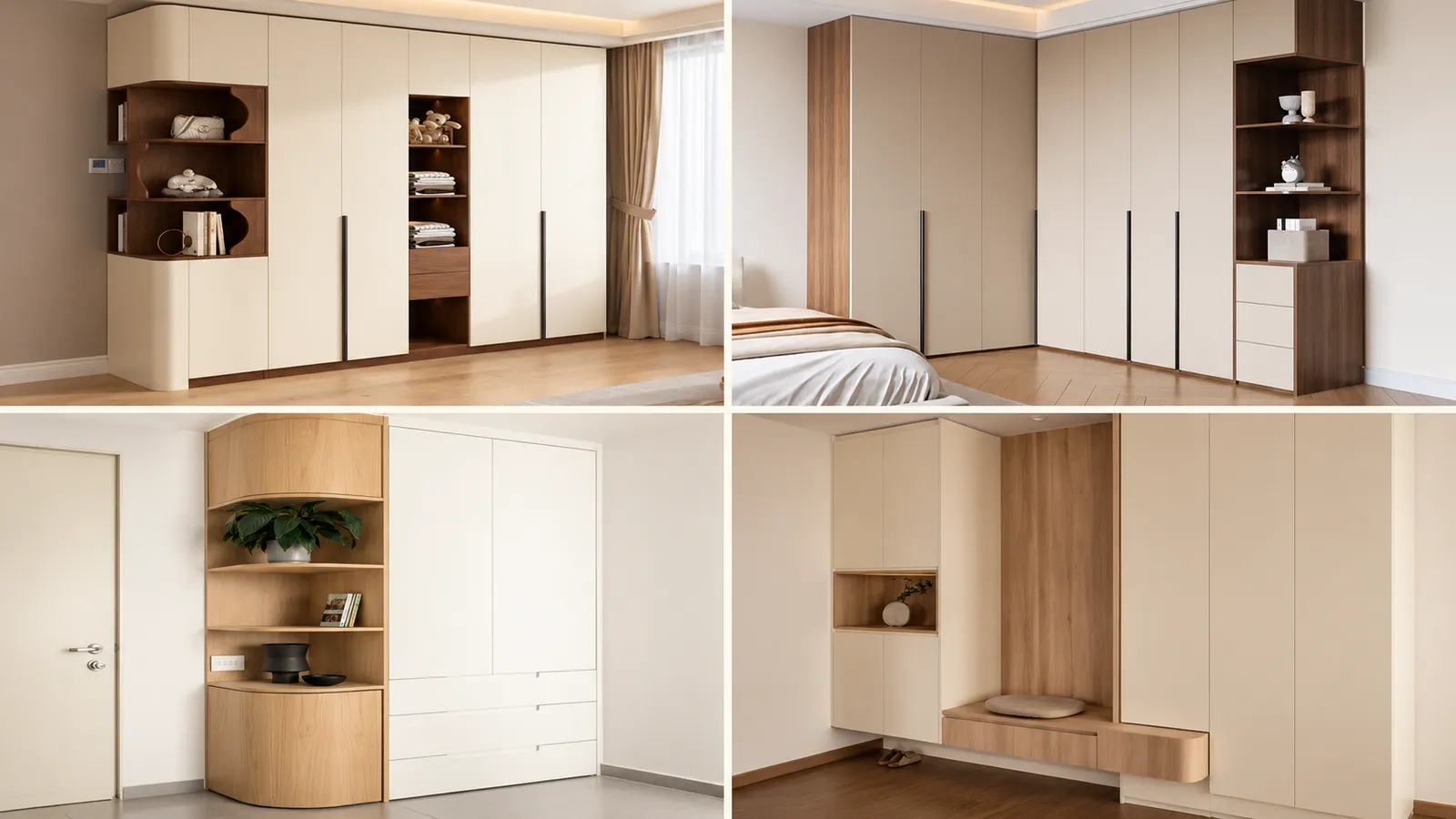
For display cabinets, aesthetic factors can be addressed through surface finishes that suit the design style. Wood grains, neutral tones, or other surface effects ensure that metal materials do not necessarily feel cold or overly industrial.
Interior doors require different calculations than cabinets. The door leaf, frame, hinges, locks, and reinforcement points must function as a unified system. Therefore, if choosing aluminium honeycomb for both cabinets and doors, the greatest value lies not just in the material, but in the ability to harmonise functionality, surface finishes, and design language across the entire space.
Choosing aluminium honeycomb correctly and the cabinet and door solutions at Thiên Tín
Don't just ask “is it waterproof?” – inspect the finished product
When viewing interior samples, customers often focus on colour, thickness, or advertised features. With aluminium honeycomb, there are more practical factors worth considering.
First is the origin and construction of the panel. Customers should know which grade of material is being used, the nature of the surface layer, and which applications the product is suited for. Next is the finishing technique. Observe the panel edges, joints, hinge positions, drawer runners, and transition points between components. These are often where manufacturing quality is more clearly demonstrated than on the outer surface.
For kitchen cabinets and vanity units, ask the contractor how they handle areas exposed to water. For wardrobes or tall cabinet systems, focus on door construction, hardware connectivity, and reinforcement methods.
Quotations should also be viewed based on the finished configuration rather than just comparing material prices per square metre. Two sets of cabinets using aluminium honeycomb can still differ significantly in terms of hardware, structure, surface finish, and overall quality.
Finally, consider the warranty policy. The scope of the warranty for materials, hardware, and manufacturing defects should be clarified from the start so that customers fully understand their rights.
When is aluminium honeycomb furniture the right choice?
There is no single material suitable for every project. Aluminium honeycomb demonstrates its clear advantages when the usage requirements align with the material's properties.
If your family is experiencing issues with humidity, has had to replace cabinets due to water damage to the core, or wants to minimise the risk of termites, this is a material group worth considering.
For new homes, aluminium honeycomb is also suitable when the homeowner wants to build a cabinet and door system that is cohesive, long-lasting, and less dependent on wood-based materials in areas sensitive to moisture.
Conversely, the decision should still take into account budget, design style, structural requirements, and the level of investment for each item. It is not necessary for every detail in the house to use the same material if it does not provide commensurate utility.
A reasonable approach is to identify which areas have the highest risk, which requirements are most important, and which material best solves those requirements.
This is also the principle Thiên Tín uses when consulting: the material best suited to the actual needs is the one that provides long-term value.
Thiên Tín – Cohesive cabinet and door solutions from aluminium honeycomb panels
Looking at the nature of the material, the question “Is aluminium honeycomb furniture waterproof and termite-proof?” can be answered quite clearly: the aluminium core does not swell from water absorption like wood-based materials and is not a food source for termites.
The value of these two characteristics is most evident in areas such as kitchen cabinets, vanity units, shoe cabinets, and cabinet systems that need to remain stable in high-humidity environments.
However, there is still a whole process of design, fabrication, and finishing between a good sheet of material and a durable piece of furniture. That is why Thiên Tín approaches aluminium honeycomb as a total solution rather than just a material supplier.
THIÊN TÍN – A pioneer in providing cohesive cabinet and door solutions using next-generation aluminium honeycomb panels in Vietnam.
From needs assessment, material consultation, and design to production and installation, every cabinet and door system is built based on the actual usage conditions of each space. The goal is not to force one type of material into every position, but to choose the right construction for the right need.
Thiên Tín Journal · Guides · Page 28