
Thiên Tín Journal · News
Thiên Tín
How does Thiên Tín manufacture furniture? From raw materials to finished products
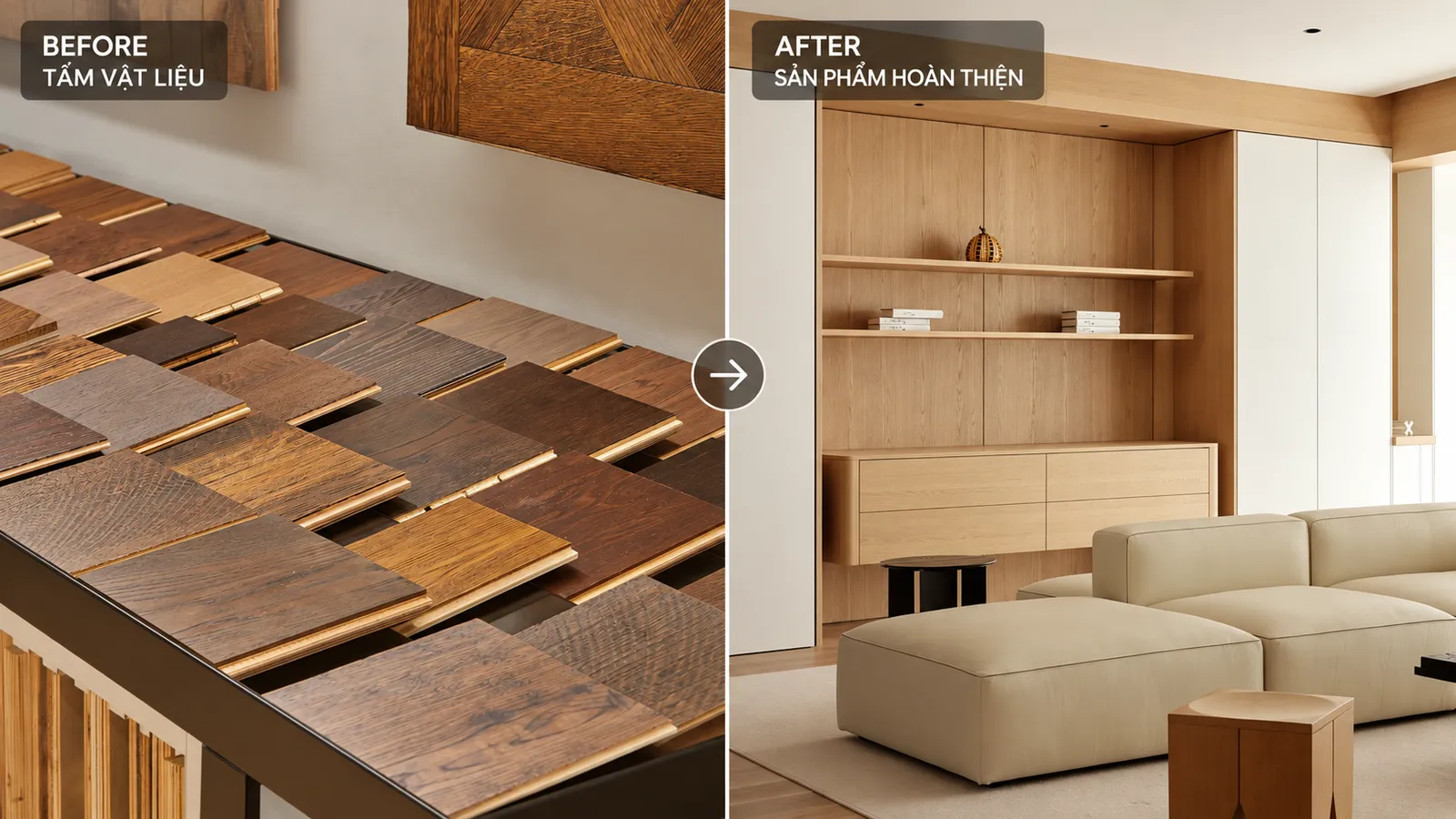
A finished cabinetry set reveals only the final stage of the manufacturing process.
Page 4
Thiên Tín Journal · News
Page 5
A finished cabinetry set reveals only the final stage of the manufacturing process. Behind it lies a comprehensive sequence of steps, from surveying the space and selecting appropriate materials such as aluminium honeycomb, through to design, structural dimension breakdown, precision machining, and final on-site installation.
At Thiên Tín, the quality of a piece is measured not merely by its final aesthetic appearance, but is forged across every preceding stage. From selecting the right materials and determining precise dimensions and functionality, to machining, crafting joint details, and executing on-site installation, each step directly impacts the final finish and long-term user experience.
This article takes you through each phase of Thiên Tín’s production process, from an initial panel of material to a refined, fully installed cabinetry or door system within your living space.
Exceptional furniture begins long before raw materials reach the workshop
On-site surveys ensure tailored integration into your space
Furniture crafting should never begin with cutting panels. The essential first step is understanding the home for which the piece is destined.
For kitchen cabinetry, plumbing lines, electrical sockets, hobs, extractor hoods, and integrated appliances dictate the structural design. Wardrobe systems require careful evaluation of ceiling heights, skirting boards, light switches, door clearances, and personal storage needs. When crafting interior doors, rough opening dimensions and site conditions present distinct specifications.
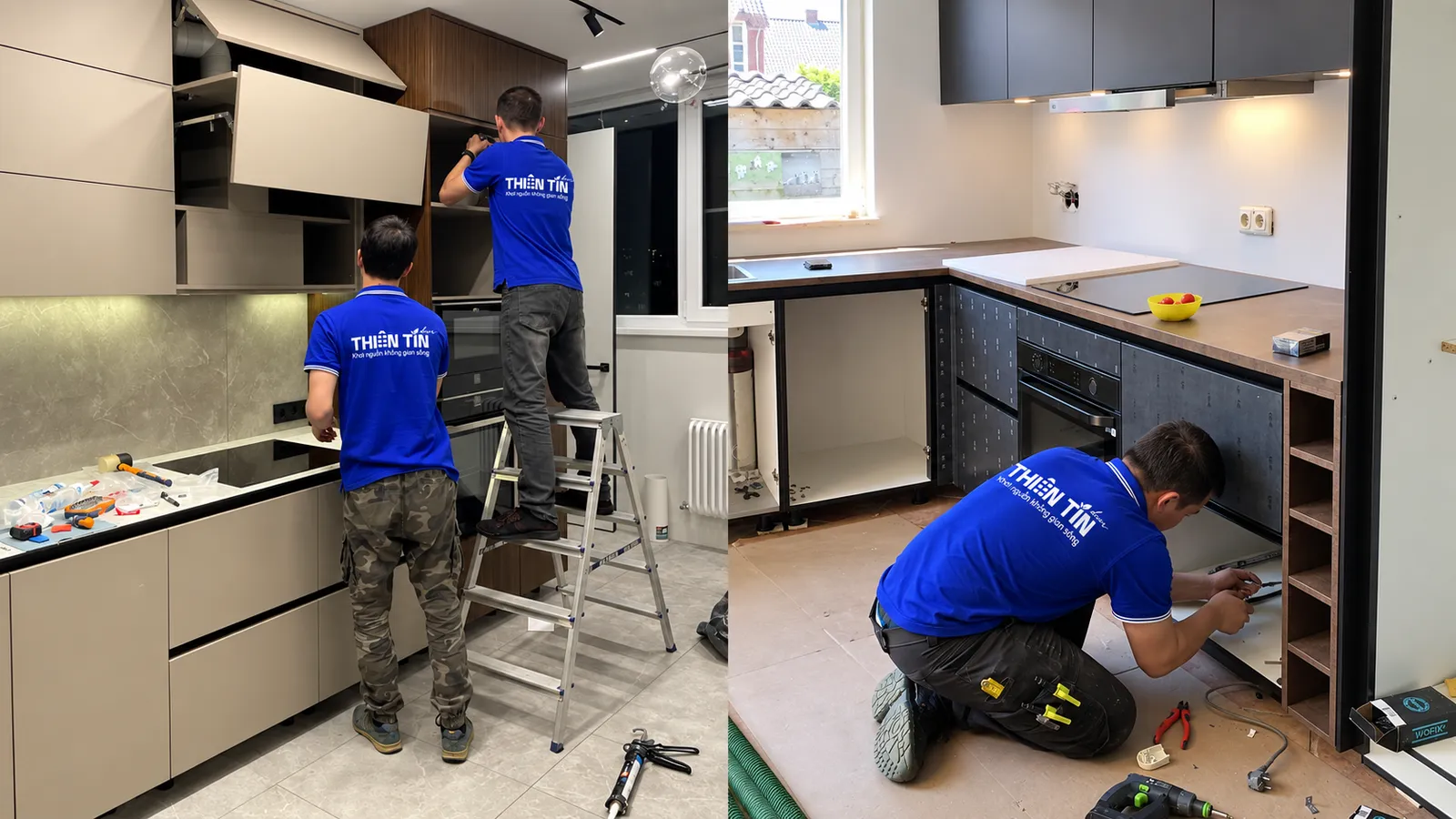
An on-site survey ensures these variables are integrated into the design from the very outset. Rather than taking a stylish template and modifying it to 'fit' the room, our designs are crafted specifically around the exact proportions and practical requirements of the space.
This is also the moment to clarify bespoke requirements. A household that cooks daily requires a vastly different kitchen layout from an apartment where the kitchen sees lighter use. Someone with an extensive wardrobe of hanging garments demands an internal structure quite distinct from one storing predominantly folded items.
When these details are established prior to production, the final creation is truly tailored to its user, rather than simply matching nominal dimensions.
Selecting materials based on application and placement
Once the layout is thoroughly understood, the next step is determining the optimal material for each element.
Thiên Tín crafts furniture from a diverse portfolio of materials, including aluminium honeycomb, stainless steel, premium polymers, solid timber, and engineered wood. As each material possesses unique characteristics, selection is guided by intended location, aesthetic aspirations, and investment considerations, rather than taking a one-size-fits-all approach.
For moisture-prone areas such as kitchen cabinets or bathroom vanities, water resistance is a primary consideration. Wardrobes present additional demands regarding load capacity, tactile finishes, and seamless integration with the bedroom aesthetic. Display cabinetry, by contrast, may place greater emphasis on palette and material texture.
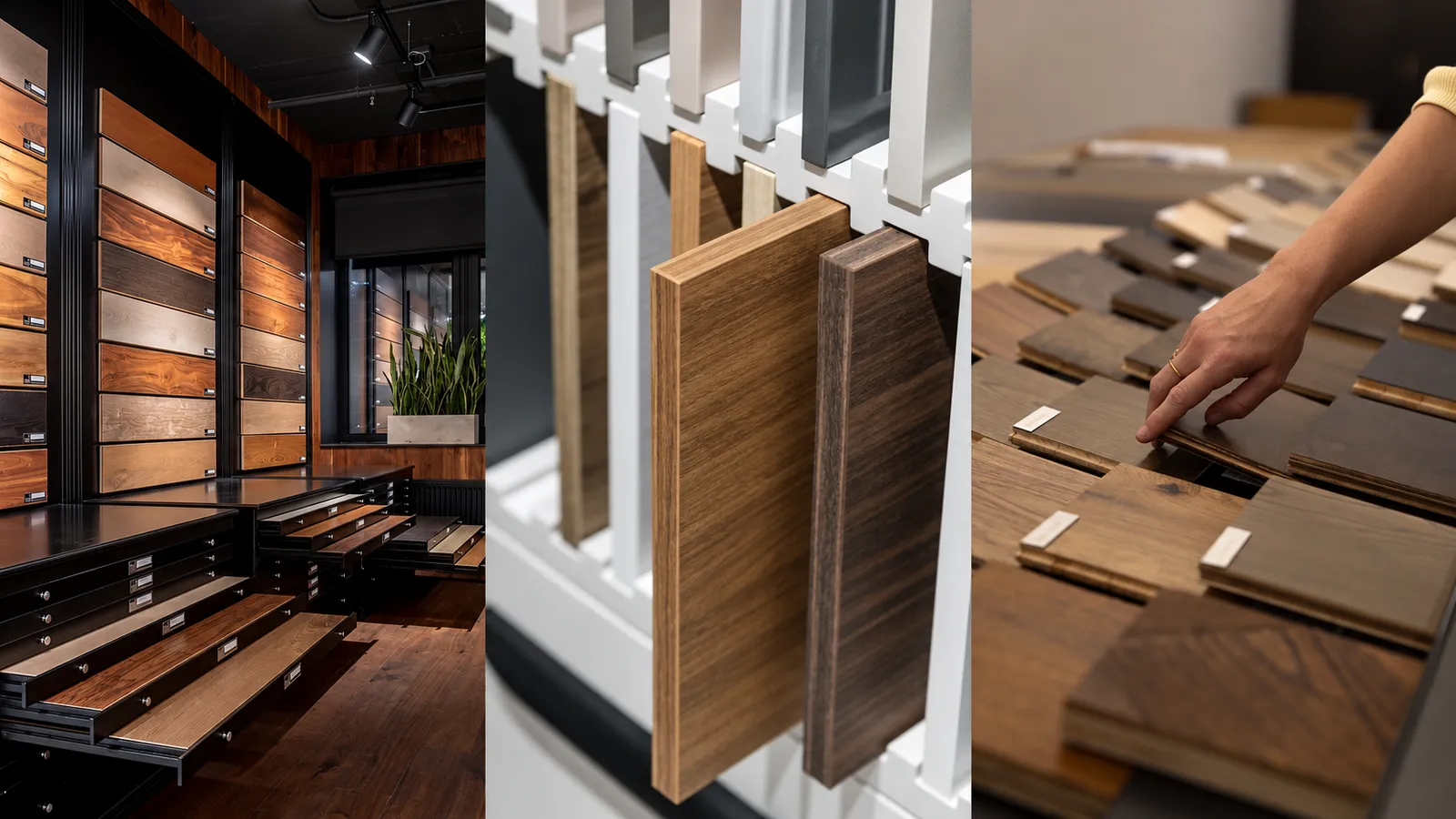
Aluminium honeycomb offers an innovative alternative due to its metallic core structure. The core neither absorbs moisture nor swells like organic wood fibres, and contains no cellulose—the organic compound that attracts termites. When incorporated into custom furniture, these material properties must be paired with appropriate construction, finishes, and precision crafting techniques.
Therefore, consultation at Thiên Tín extends beyond simply asking 'which material is best?', seeking instead to determine which material is most suited to the placement, needs, and lifestyle of each family,.
Popular contemporary interior materials: aluminium honeycomb, timber, polymers, stainless steel
From practical requirements to production-ready design
Once materials and requirements are finalized, survey data is translated into a refined design proposal. This bridges the client’s vision with workshop production.
A design drawing conveys far more than form or colour; it defines module dimensions, compartment divisions, door constructions, drawer placement, hinges, runners, and dedicated appliance zones.
For instance, a kitchen system housing a dishwasher, built-in oven, and sink must be meticulously calculated on paper first. For wardrobes, hanging lengths, shelf quantities, drawers, luggage compartments, and accessory trays must derive directly from practical storage demands.
Once the design scheme is approved, it is broken down into explicit dimensions and component specifications for the workshop floor. At this juncture, the concept transforms into actionable production data.
This is precisely why, at Thiên Tín, design and manufacturing are never treated as separate entities. Every line on the drawing anticipates how materials will be cut, edged, joined, and assembled in subsequent phases.
From raw panels to refined furniture components at the Thiên Tín workshop
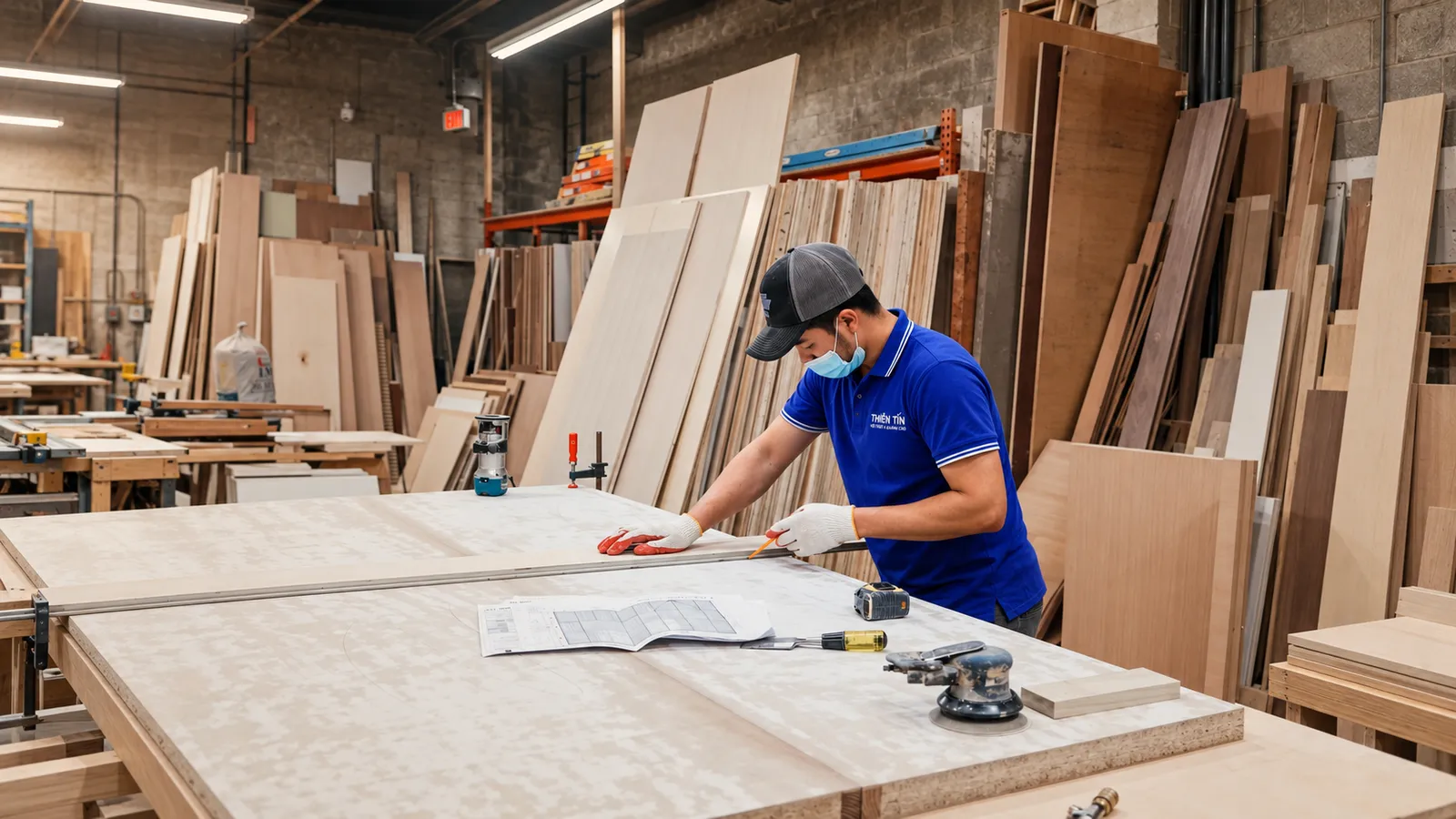
Once the drawings and construction details are approved, the process of transforming raw material panels into precision assembly components begins on the workshop floor.
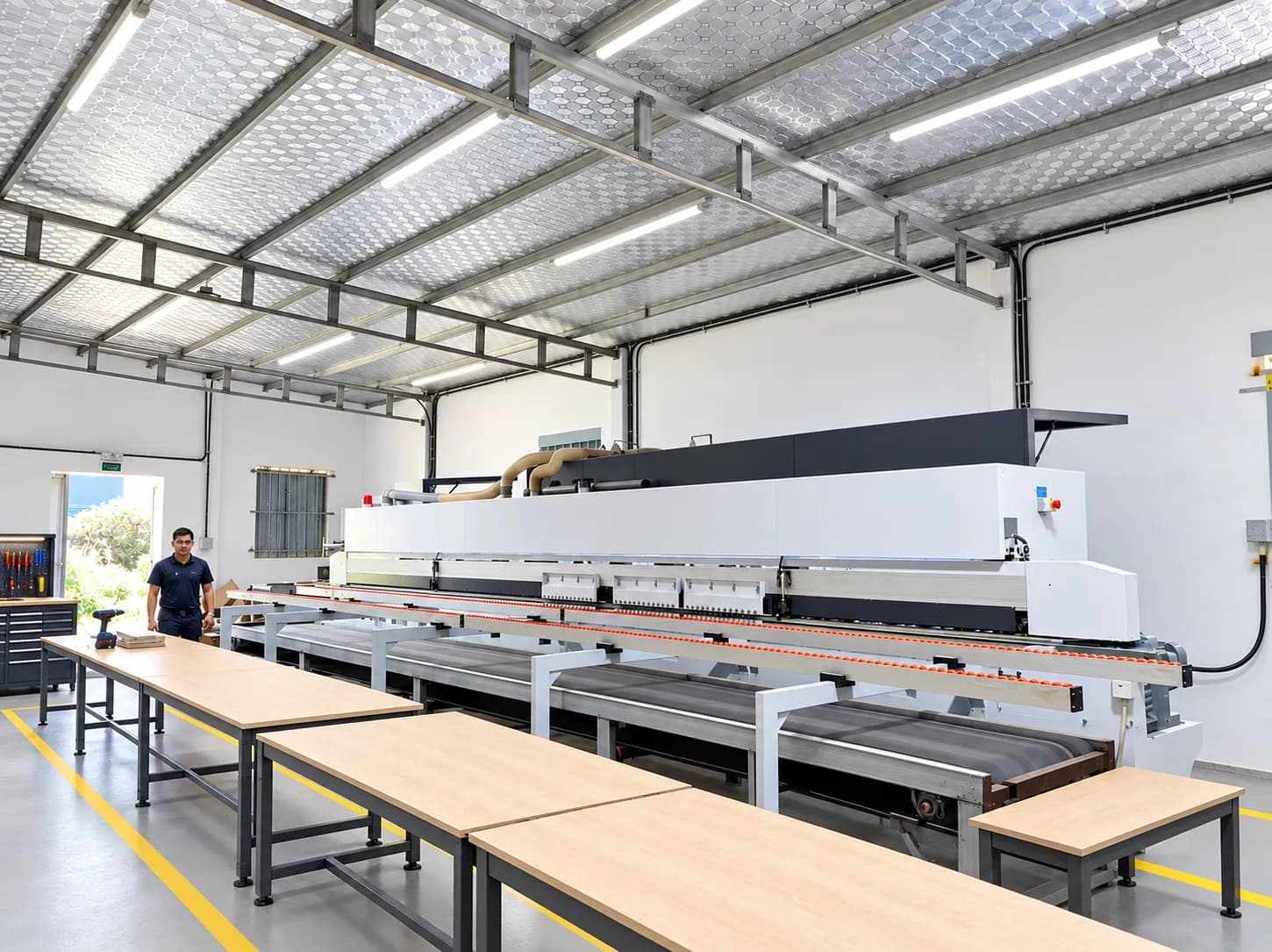
This is the stage where advanced machinery intervenes directly in production. At Thiên Tín, a twin-bed CNC router, a PUR edgebander, and a sensor-driven drilling machine perform specialized, sequential roles—from sizing and edge finishing to preparing precision joinery points.
Rather than viewing each machine as an isolated tool, the process is best understood as a seamless sequence: raw panel → precision cutting to drawing → edge processing → creating joinery points → inspection → assembly.
Component specification breakdown and panel cutting via twin-bed CNC
Before a panel enters the machine, the design layout is resolved into individual components—carcasses, doors, shelving, gables, and functional modules. Each part holds specific dimensions and positions, yet must ultimately unify into a cohesive cabinetry system.
Using this data, materials progress to cutting and shaping. Thiên Tín utilises a twin-bed CNC router system, enabling dual-table processing to execute components strictly to drawing specifications.
The value of this stage lies in absolute consistency between design and execution. A complex cabinetry unit comprises numerous components; any dimensional discrepancy becomes glaringly apparent upon final assembly.
Particularly for bespoke designs with bespoke modules or site-specific dimensions, the cutting phase must strictly adhere to pre-calculated digital specifications.
Following CNC processing, large raw sheets are transformed into individually dimensioned parts. However, they are not yet finished furniture components; their edges and joint preparations require further refined processing in the subsequent steps.
Edge processing using PUR adhesive technology
Once components are cut to exact shape and scale, focus turns to edge finishing.
Though a minor detail in scale, edge quality profoundly influences the tactile and visual presentation of the product. Up close, the seam between panel face and edge banding is a key indicator of craftsmanship.
At Thiên Tín, PUR adhesive edgebanders are employed for components requiring edging. This system creates a uniform, resilient bond between edge tape and panel surface.
The role of PUR adhesive warrants clear understanding. It is selected in modern edge-banding for its superior bond strength and resilience under varied environmental conditions. However, the overall water resistance of a finished piece cannot rely solely on the choice of edging glue.
Following this step, the components closely resemble finished structural elements: sized to drawing, edges sealed, and surfaces prepped prior to precision drilling for assembly.
Precision drilling and joint preparation
A cabinet is far more than panels placed side by side. To form a rigid, durable structure, hinges, runners, dowels, and connecting hardware must align flawlessly.
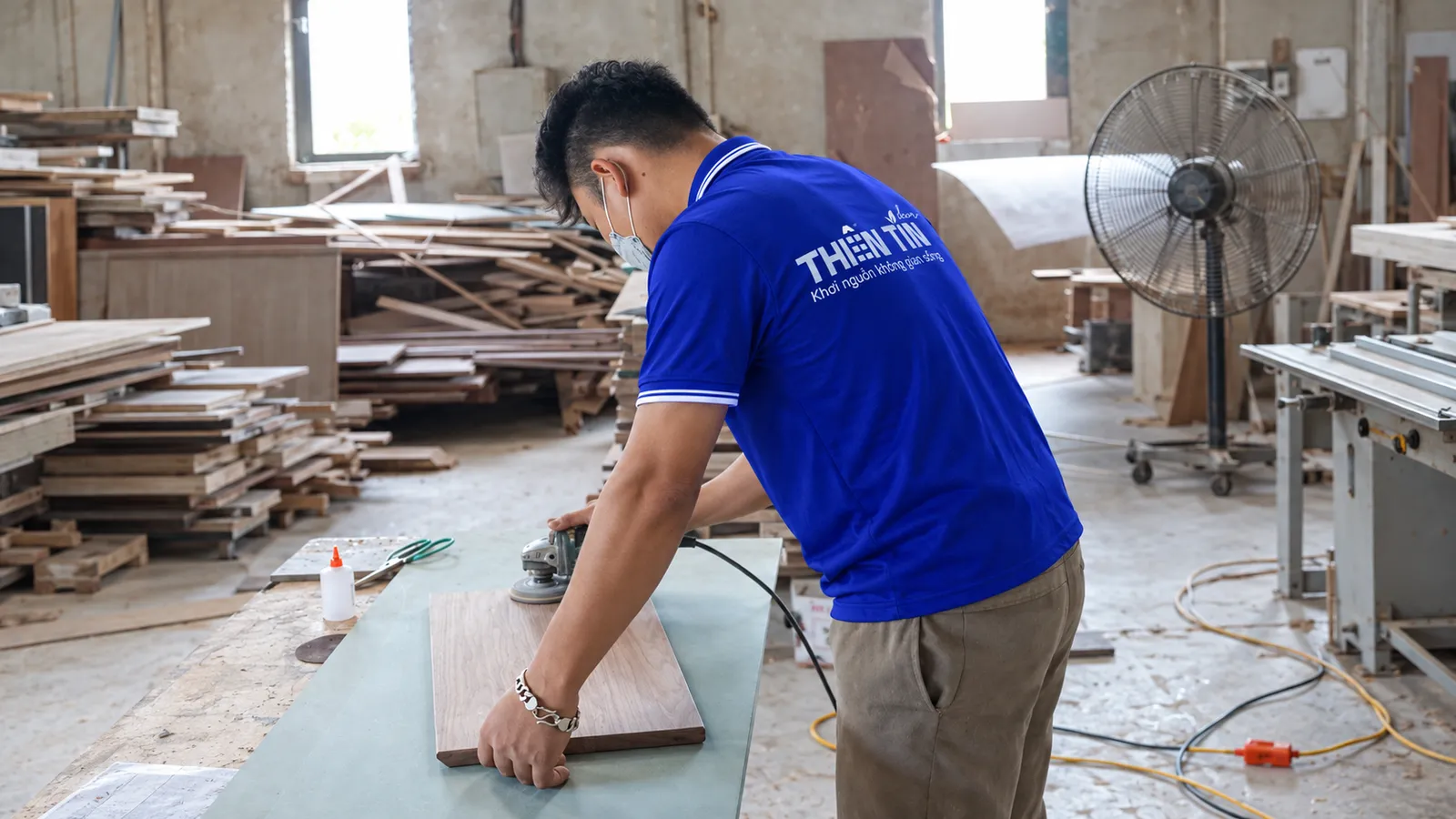
Following sizing and edging, Thiên Tín employs sensor-driven drilling machine to assist in machining required positions according to the product structure. Accurate hole positioning ensures that individual components align seamlessly as designed when moving to assembly.
This stage is particularly vital for hinge and fitting locations. Even a minor deviation can affect door reveals, opening action, or final alignment during fitting.
For aluminium honeycomb panels, the honeycomb core structure differs fundamentally from solid materials; therefore, jointing strategies must be factored in right from the design and machining stages. It is not merely about drilling a hole in a panel, but placing it with absolute precision and employing fixing solutions tailored to the product's architecture.
Upon completing the three primary stages, the raw material has undergone a precise progression: cut to exact dimensions, edge-processed, and prepared with fixing points. Only then are the components ready for pre-assembly, inspection, and crafting into a complete cabinetry or door system.
What is aluminium honeycomb? Structure, properties, and interior applications
From workshop detailing to finished installation on-site
Pre-assembly and inspection prior to leaving the workshop
Once machining is complete, individual components are assembled to verify joint integrity before being dispatched to site.
This is the stage where drawing data, post-CNC dimensions, edge finishes, and fitting placements converge on a physical piece. Should any preceding step hold a discrepancy, pre-assembly provides the clearest opportunity for detection.
For cabinetry systems, Thiên Tín checks module compatibility, door alignments, shelving, and fittings, whilst inspecting surfaces and finished lines. Any required adjustments are carried out in the workshop before items are packed and dispatched.
This is crucial for extensive runs of cabinetry or full-height wardrobes. In isolation, an individual component may conceal minor deviations; however, when multiple modules sit side by side, door reveals and seam lines clearly demonstrate the overall consistency of the system.
Thus, from an initial raw sheet, the piece progresses through a refined sequence of design – detailing – cutting – edge-banding – jointing – assembly and inspection before taking its place in the client's residence.
On-site installation: ensuring a flawless fit within the home
Departure from the workshop is by no means the end of the journey. The next phase involves delivering each module to its designated space—surveyed from the outset—and carrying out the final fitting on-site.
In reality, walls, floors, and ceilings are rarely perfectly square or level. Consequently, our installation team carefully tailors the cabinetry to site conditions, ensuring proportions, reveals, and functionality faithfully reflect the original design intent.
Each product type presents distinct requirements. Kitchen cabinetry must integrate with plumbing, electrics, worktops, sinks, and appliances. Full-height wardrobes require precise finishing at junctions with ceilings, walls, and plinths. For interior doors, the structural opening, frame, hinges, and locks must operate as one cohesive system.
This underlines why the initial site survey is so critical. Measurements recorded on-site inform every stage—from design and manufacture through to final installation back in that very space.
Final inspection and handover
Following installation, the piece is evaluated in its true functional state, far beyond mere visual appearance.
Cabinet doors must operate smoothly, drawers and fittings must perform effortlessly, and reveals and junctions are reviewed once the entire system is calibrated. Where appliances are integrated, ease of access and usability are thoroughly verified.
A kitchen, for instance, must offer more than elegance when all doors are closed. The homeowner must be able to open the dishwasher effortlessly, reach cookware with ease, and enjoy ample workspace whilst cooking. Similarly, wardrobes are evaluated through active use—opening doors, extending drawers, and accessing storage compartments.
The handover phase is therefore the culmination of a journey initiated during the preliminary survey. Only when the furniture performs flawlessly in the exact setting for which it was designed is the transformation from raw material to finished piece truly complete.
From workshop craftsmanship to enduring partnership post-handover at Thiên Tín
What should clients look for when evaluating a bespoke furniture workshop?
An extensive inventory of machinery alone does not guarantee manufacturing excellence. What matters far more is how seamlessly those machines are integrated into a unified workflow.
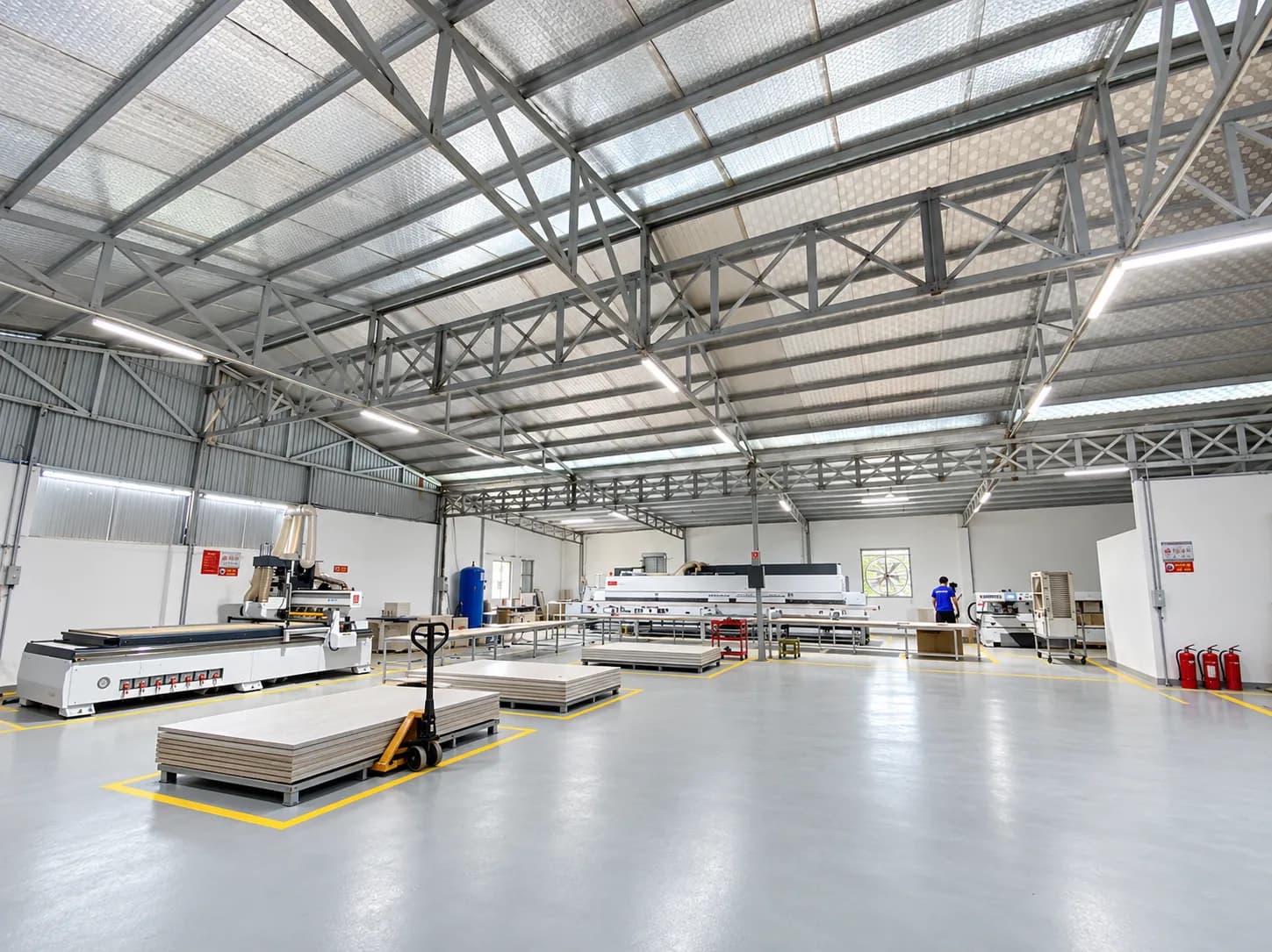
From technical drawings, clients can inquire how design details are broken down, materials machined, panel edges finished, and fitting preparations integrated into the workflow. When inspecting physical pieces, one can examine door reveals, edge profiling, surface finish, and test the tactile operation of doors and drawers.
With aluminium honeycomb, cut-edge samples allow clients to inspect the internal structure rather than judging solely by the outer surface. If the material is destined for kitchens or large-scale cabinetry, discussing how fixing points and functional compartments are engineered is equally valuable.
When a workshop can transparently demonstrate raw materials, precision machining, and finished pieces, evaluating true quality becomes grounded in substance rather than relying on a rendered image.
Manufacturing infrastructure dedicated to exceptional quality
Thiên Tín invests in advanced machinery to forge a seamless link from architectural drawings to final products. A dual-table CNC router handles component shaping and sizing; a PUR edge-bander delivers refined edge finishing; a sensor-driven drilling machine prepares precise jointing and fitting locations.
Each machine serves a distinct function. The true value of this infrastructure lies not in machine count, but in the unbroken flow of design data throughout the manufacturing process.
This highlights the ethos behind how Thiên Tín crafts each piece: it is never a matter of feeding a sheet of material into a machine and expecting a cabinet, but rather deconstructing the design into individual components, machining each with pinpoint accuracy, and meticulously assembling them into a complete system.
Machinery ensures manufacturing consistency, whilst skilled craftsmen inspect, adjust, and hand-finish the final details. These two elements must work in harmony so that workshop output fits seamlessly into bespoke architectural spaces.
Thiên Tín – from raw materials to bespoke cabinetry and door solutions
Reflecting on the entire process, fine interior joinery is never created by a CNC machine alone, nor solely at the final fitting stage.
It originates in a deep understanding of the space and lifestyle requirements, progressing through material selection, design detailing, component machining, assembly, rigorous inspection, and ultimate installation on-site.
This defines Thiên Tín's approach to aluminium honeycomb panels. The true worth of the material is only realized when engineered in harmony with its structural properties, becoming refined cabinetry, doors, or architectural furniture designed for enduring daily living.
THIÊN TÍN – Pioneers of integrated cabinetry and door solutions crafted from next-generation aluminium honeycomb panels in Vietnam.
Thiên Tín Journal · News · Page 6