Thiên Tín Journal · Guides
Materials
Aluminium honeycomb vs natural timber: comparing durability, aesthetics and cost
When selecting interior materials, many homeowners weigh the choice between aluminium honeycomb and natural timber.
Page 14
Thiên Tín Journal · Guides
Page 15
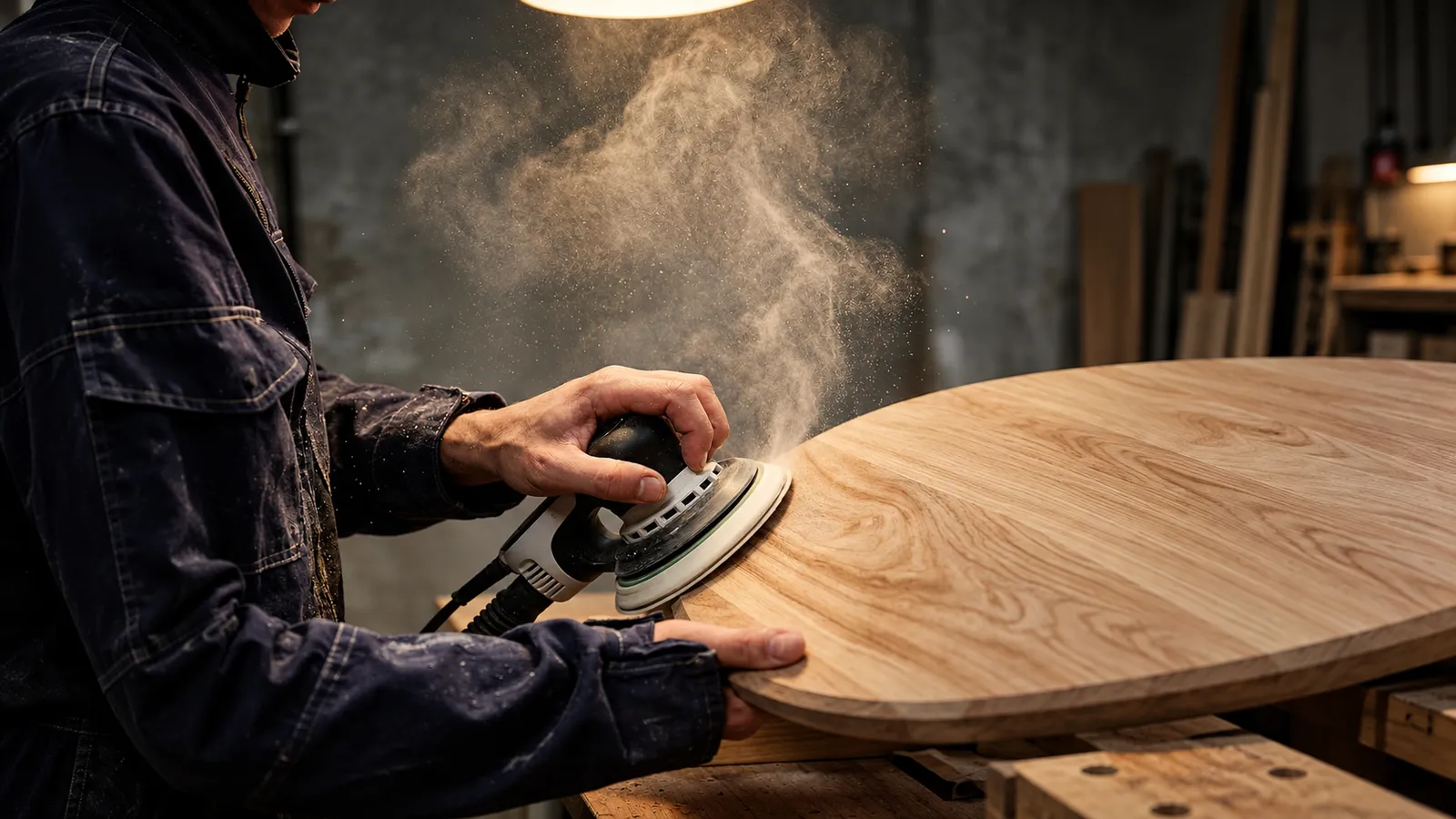
When selecting interior materials, many homeowners weigh the choice between aluminium honeycomb and natural timber. One utilizes a metallic core structure, favoured for its resilience to humid environments and reduced risk of termite infestation. The other offers the inherent beauty of genuine grain, a sense of warmth, and timeless aesthetic value proven across diverse design styles.
However, which material is more durable, aesthetically pleasing, or cost-effective depends on the specific application, environmental conditions, and craftsmanship quality.
This article provides a practical comparison of both material types—covering structure, durability, aesthetics, and cost—helping homeowners make an informed choice for bespoke kitchens, wardrobes, or other joinery features.
How do aluminium honeycomb and natural timber differ?
Aluminium honeycomb – interior materials with a metallic core structure
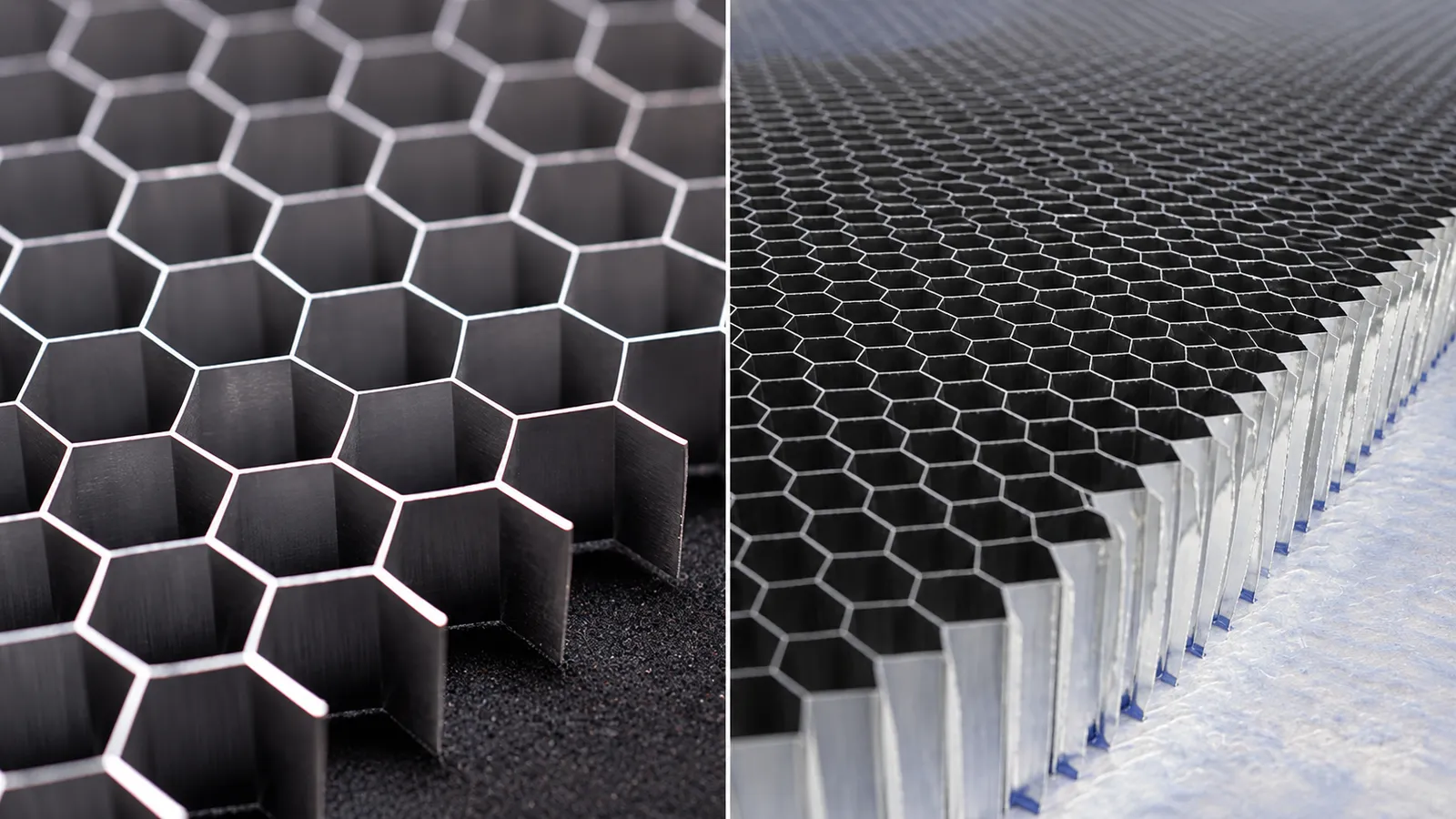
Aluminium honeycomb is a panel material featuring an aluminium core formed into hexagonal cells, mimicking a natural honeycomb structure. This core is bonded with surface layers and structural adhesives to form rigid panels suitable for bespoke furniture crafting.
A notable distinction lies in the metallic nature of the core. Aluminium does not absorb moisture or swell like wood fibres, nor does it contain cellulose—the primary food source for termites. Consequently, this material is increasingly specified for moisture-prone areas or projects prioritising termite resistance.
Aesthetically, aluminium honeycomb panels do not necessarily feature a metallic exterior. Depending on the product range, surface finishes can include solid shades, wood grain effects, or other decorative finishes to suit varied interior schemes.
However, the honeycomb core structure demands specialised engineering during fabrication. Mounting points for hinges, drawer runners, and load-bearing hardware must be carefully reinforced and tailored to the panel's internal architecture.
The overall quality of aluminium honeycomb cabinetry depends not only on the raw materials, but equally on surface finishes, manufacturing precision, and assembly technique.
What is aluminium honeycomb? Structure, characteristics, and interior applications
Natural timber – value rooted in authentic characteristics and organic beauty
Natural timber is harvested from tree trunks, undergoing seasoned kiln-drying, machining, and meticulous finishing for fine furniture making.
What makes this material cherished is the unique character of every grain. The intricate grain patterns, rich tones, and tactile surface offer an organic warmth that synthetic alternatives can rarely replicate fully.
In luxury interiors, natural timber is predominantly used for fitted kitchens, wardrobes, tables, bed frames, doors, and architectural accents. Depending on the wood species, master craftsmen can utilize traditional joinery, intricate carving, or complex shaping.
Nevertheless, not all natural timber species share identical properties. Oak, walnut, cherry, and other hardwoods vary significantly in density, stability, colouration, and price point.
Timber is inherently hygroscopic, exchanging moisture with its surrounding environment. As ambient humidity shifts, natural timber may expand or contract. Proper kiln-drying, material selection, structural engineering, and protective finishes are therefore paramount.
An expertly crafted solid wood piece can endure for generations. Conversely, improperly seasoned or poorly constructed timber can suffer from warping, cracking, or dimensional distortion over time.
How structural differences impact the finished piece
The contrast between aluminium honeycomb and natural timber extends beyond base materials to encompass distinct manufacturing methodologies.
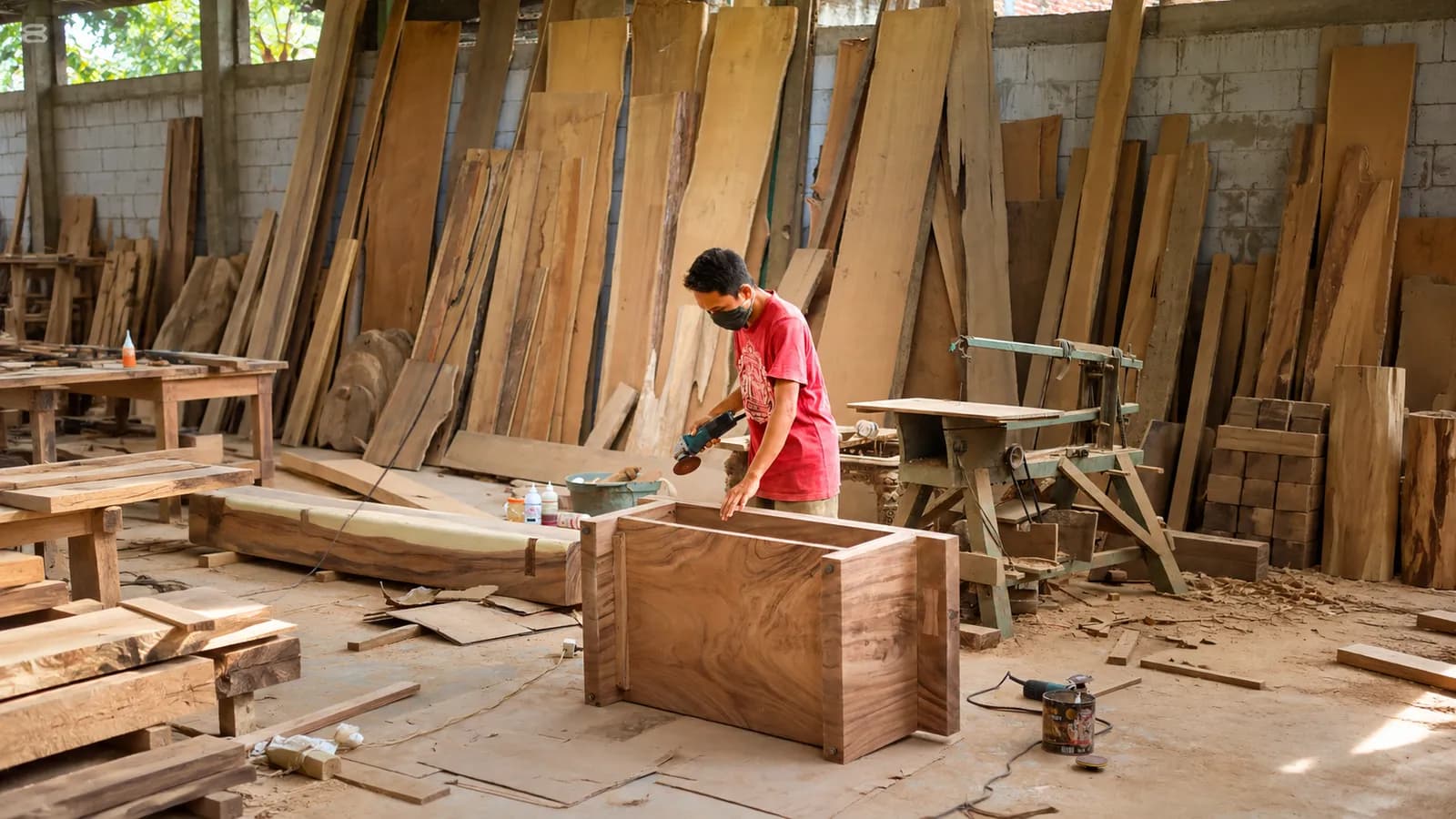
With natural timber, craftsmen must account for grain direction, moisture content, lamination techniques, and allowance for natural movement. These factors directly dictate the long-term stability of cabinet doors, tabletops, and passage doors.
Conversely, aluminium honeycomb is supplied in engineered sheets with an internal core. When used in joinery, fabrication focuses on element sizing, edge-banding, precise fixing points, and hardware integration.
For instance, designing a full-height wardrobe door requires different structural approaches for solid timber versus aluminium honeycomb. Timber calls for expansion allowances and frame construction, whereas aluminium honeycomb requires edge profiling, internal reinforcing, and bespoke fixing details.
Hence, one cannot judge the quality of a complete cabinet system solely by the raw panel material. True durability is the combined result of core materials, structural engineering, hardware quality, and finishing craftsmanship.
This provides an objective foundation for comparing both materials across subsequent criteria.
Comparing durability, moisture resistance, and aesthetics of both materials
Moisture resistance and warp prevention
Moisture levels are a crucial consideration when choosing materials for kitchen cabinets, vanity units, or fitted wall furniture.
For natural timber, absorbing and releasing moisture is an intrinsic trait. As ambient humidity shifts, timber expands or contracts. The degree of dimensional change depends on wood species, initial moisture content, grain orientation, joinery construction, and ambient conditions.
This does not render natural timber unsuitable for kitchens. High-grade timber joinery performs admirably when correctly seasoned, properly engineered, and protected in water-exposed zones.
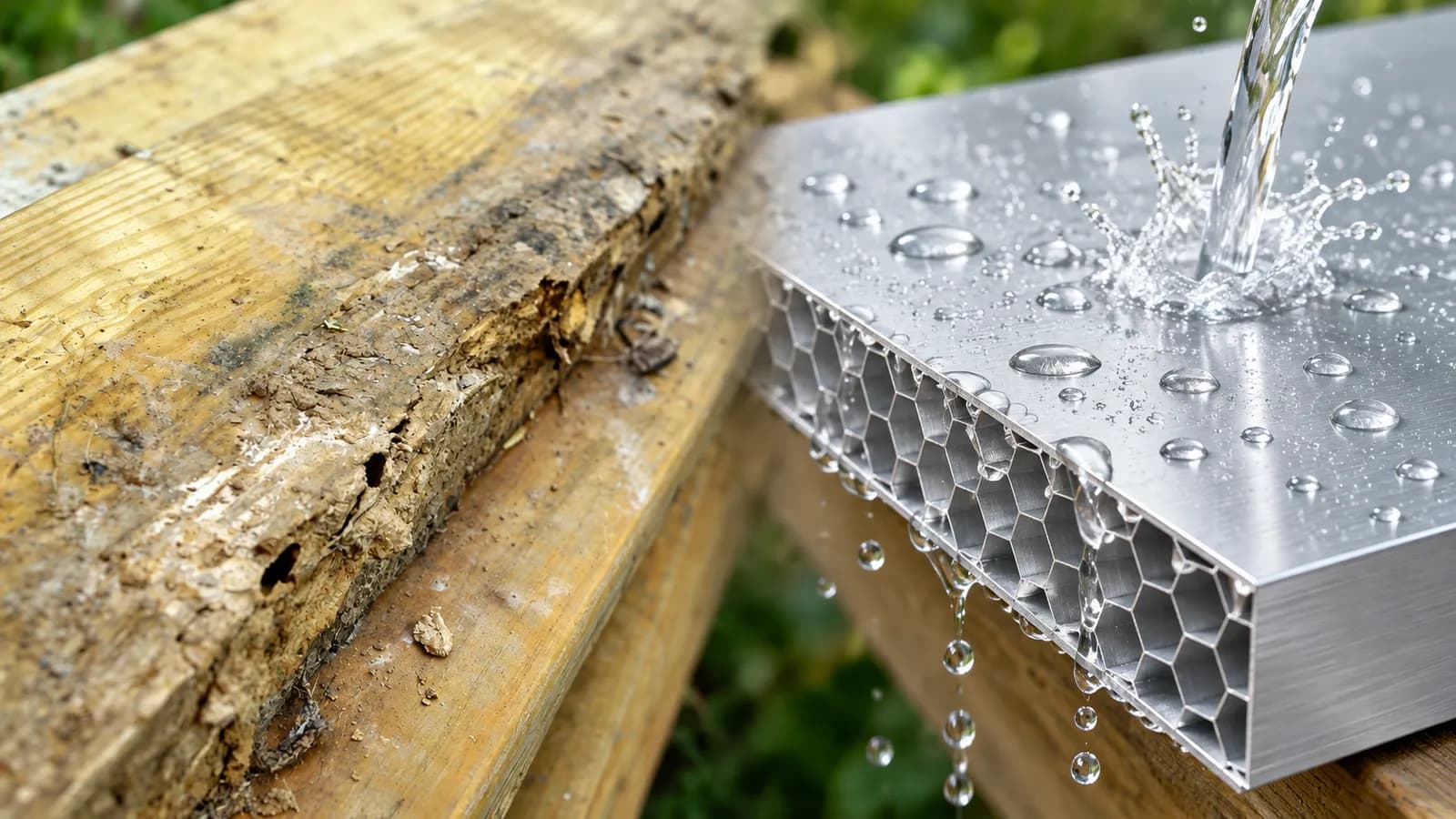
Meanwhile, the metal core of aluminium honeycomb panels does not swell from moisture absorption like organic wood fibres—a distinct advantage in high-humidity zones or frequently cleaned surfaces.
Nevertheless, the moisture resistance of a finished cabinet setup ultimately relies on surface veneers, edge-sealing, joint integrity, hardware, and installation quality. Utilising aluminium honeycomb does not eliminate the need to address underlying water leaks or damp walls.
If a property experiences elevated humidity, homeowners should evaluate the complete structural design rather than relying solely on claims of waterproof materials.
Termite resistance and operational durability
Termites are a primary concern when specifying wood-based furniture, particularly in ground-floor residences or properties with a history of infestation.
Natural timber contains cellulose, yet vulnerability varies across different wood species. Specific timber characteristics, environmental conditions, and preventative treatments all influence the actual risk.
Aluminium honeycomb offers an advantage with its metallic core, which provides no organic sustenance for termites. This is a valuable factor for fixed cabinetry or high-risk areas.
However, specifying aluminium honeycomb furniture does not entirely eradicate termite risks across a property, as pests may still target cellulose-based materials elsewhere.
In terms of overall longevity, both materials must be assessed by their total product configuration. Well-seasoned, expertly crafted timber cabinetry can last for decades, just as aluminium honeycomb systems demand precise fittings, hardware, and fabrication to ensure lasting stability.
Rather than asking which material has a higher absolute lifespan, one should consider the specific environmental risks and usage conditions the furniture will face.
Aesthetics: Natural timber grain or versatile decorative finishes?
While moisture and termites are technical considerations, aesthetics speak directly to personal sensibility and lifestyle.
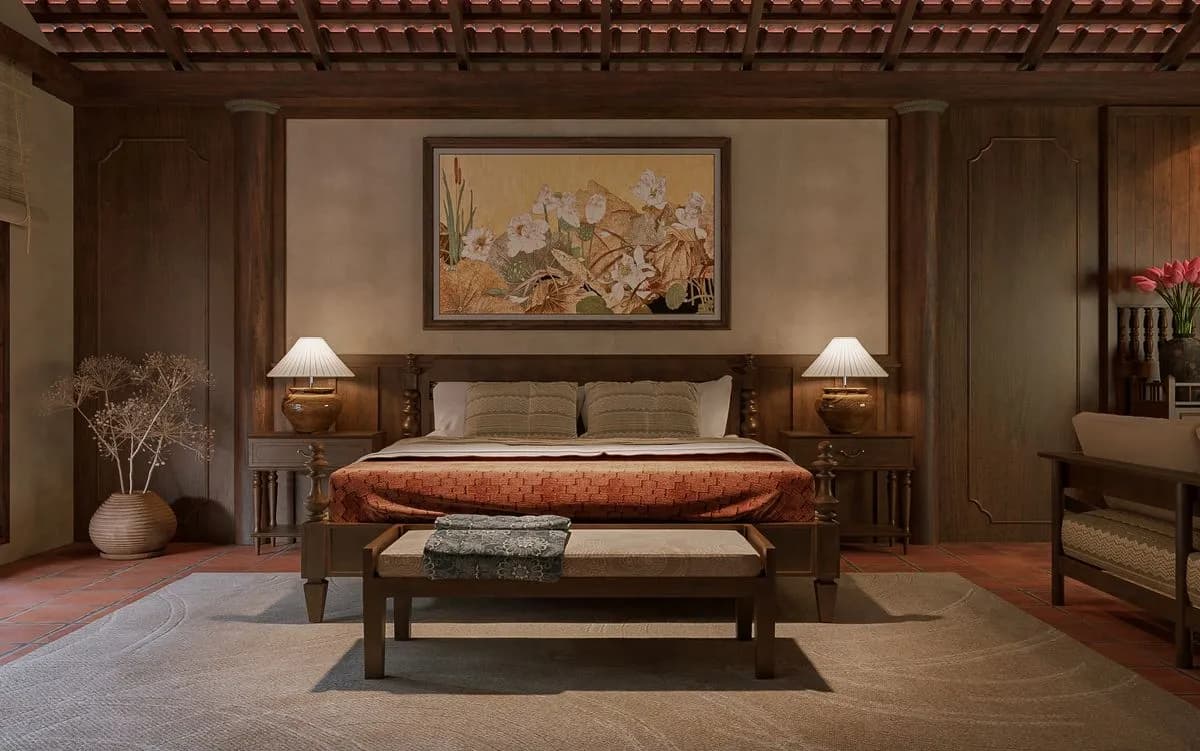
Natural timber holds an undisputed advantage in authentic material beauty. Every plank features unique grain patterns and tonal depth, imparting a rich, organic warmth. Consequently, timber remains the preferred choice for interiors celebrating natural materials, spanning traditional to contemporary design.
Aluminium honeycomb approaches aesthetics differently. With its metal core concealed, visual character is defined by engineered surface finishes. Options such as light oak, walnut, beige, taupe, or grey allow the material to harmonise with diverse interior schemes.
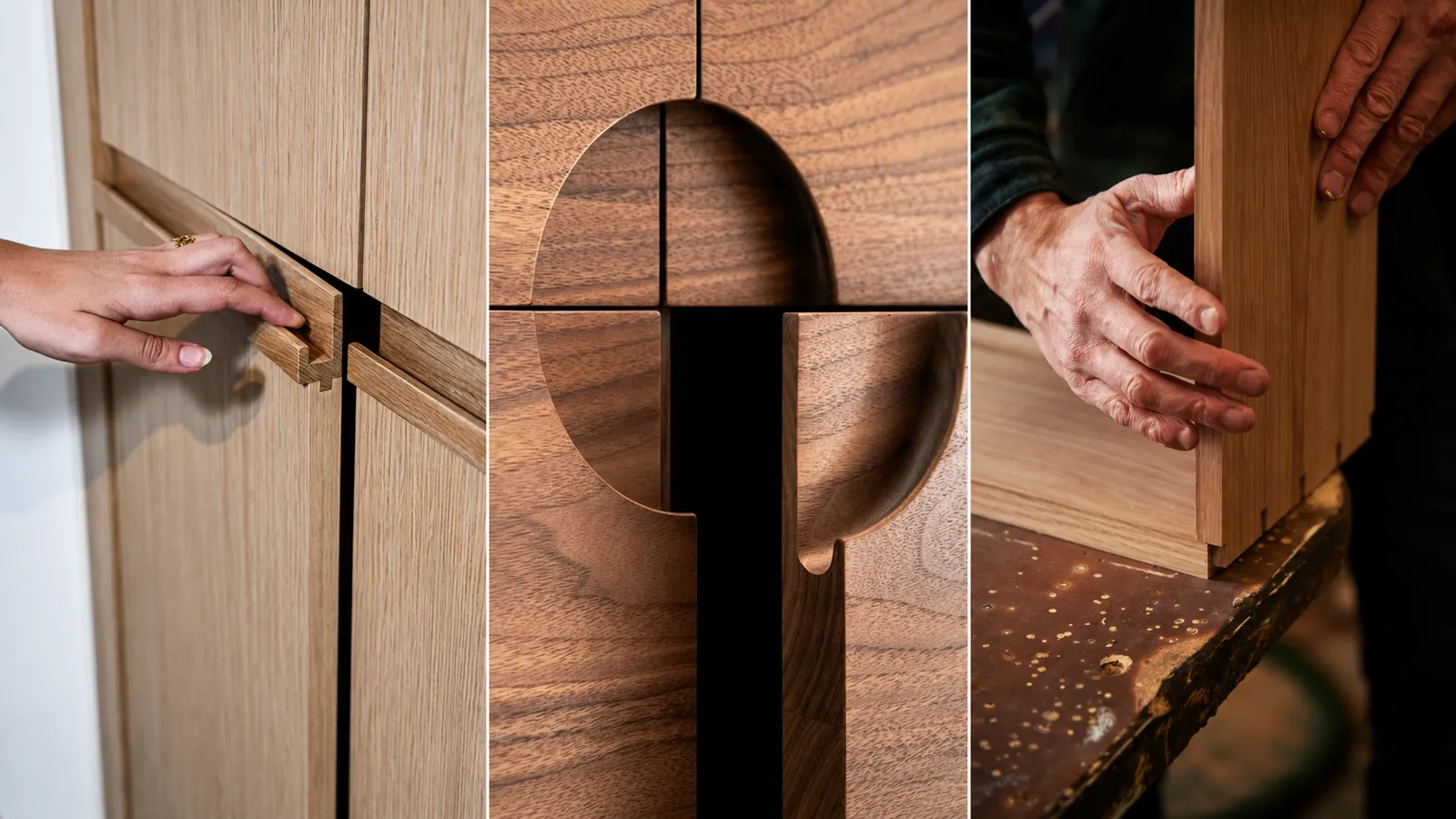
However, a clear distinction must be made between genuine timber grain and wood-effect surfaces. While visual similarity can be achieved, tactile feel, natural patina, and surface character remain fundamentally distinct.
For clients who cherish authentic tactile luxury, natural timber possesses unmatched value. Conversely, those seeking a metallic core while retaining a warm interior aesthetic may opt for aluminium honeycomb paired with refined finishes.
Material selection should ideally be made using physical samples under lighting conditions matching the intended space, rather than relying solely on 3D renderings.
2.4. Investment and maintenance costs: Which material is more economic?
Cost is one of the factors that leads many homeowners to weigh up aluminium honeycomb against natural wood.
With natural wood, pricing depends significantly on the species, provenance, timber quality, dimensions, crafting complexity and finishing method. Two cabinetry sets made from natural wood can require vastly different investments.
The price of aluminium honeycomb furniture is equally variable. Costs depend on panel construction, surface finish, edge-banding solution, hardware fittings, overall design and manufacturing processes.
Comparing the unit price of an aluminium honeycomb panel directly with raw timber is therefore insufficient to determine which material is more cost-effective. They must be evaluated within identical product contexts—matching in size, functionality and hardware quality.
Long-term ownership costs are also worth considering. Natural wood may require ongoing care or re-refinishing over time depending on its condition and coating technique. With aluminium honeycomb, maintenance generally focuses on the surface finish, hardware fittings and joinery connection points.
One should not assume that one option is inherently cheaper or entirely maintenance-free. A truly economical choice is one where the total cost aligns with the intended lifespan and environmental conditions of use.
| Criteria | Aluminium honeycomb | Natural wood |
|---|---|---|
| Construction | Panels featuring an aluminium honeycomb core | Solid wood or real timber laminates |
| Moisture response | The core does not swell like natural wood fibres | Prone to expansion and contraction with humidity |
| Termite resistance | The metallic core is entirely impervious to termites | Risk varies depending on wood species and ambient conditions |
| Aesthetics | Depends on the chosen surface finish system | Authentic grain pattern and tactile wood feel |
| Crafting & Assembly | Requires specialized edge detailing and suitable fixing points | Requires careful control of moisture content, grain orientation and timber structure |
| Investment level | Varies according to panel specifications, hardware and installation | Varies according to timber species, raw material grade and craftsmanship |
| Maintenance | Focuses on surface care, edge-banding and hardware | Focuses on surface care, humidity control and hardware |
This table serves as a general guide and should not replace a detailed comparison of specific product configurations.
Should you choose aluminium honeycomb or natural wood for each interior application?
Kitchen cabinetry and vanity units: Prioritising environmental conditions
Within the home, the kitchen and bathroom are two areas where environmental conditions require careful evaluation prior to selecting materials.
Kitchen cabinets are constantly exposed to steam, grease and regular cleaning. The under-sink area also carries the risk of water leaks. For vanity units, moisture and splashes are far more frequent than in most other interior zones.
In these areas, aluminium honeycomb presents a compelling option, thanks to the metallic core's inherent resistance to moisture and pests. Nevertheless, the cabinetry system must still be correctly engineered around sink cut-outs, plumbing runs and joint fixings.
Natural wood remains a viable choice for kitchens if homeowners prioritize the timeless beauty of genuine timber and accept the corresponding maintenance requirements. Timber seasoning quality, protective surface coatings and adequate ventilation must be factored in right from the design phase.
Another approach is a hybrid strategy: specifying moisture-resilient materials for high-risk zones, whilst integrating natural timber where its unique tactile character is desired.
Crucially, decisions should not be based solely on door front aesthetics. Internal construction and ambient exposure are the true determinants of long-term durability and performance.
Wardrobes, TV units and display cabinetry: Balancing functionality with aesthetics
Unlike kitchens, wardrobes and media units are typically situated in dry environments. Storage functionality and aesthetic design can therefore take centre stage.
Natural wood is ideal for homeowners who cherish authentic grain patterns and wish to create a warm feature in bedrooms or living spaces. For bespoke designs requiring carved detailing, traditional joinery lines or an unrefined organic feel, timber retains a distinct advantage.
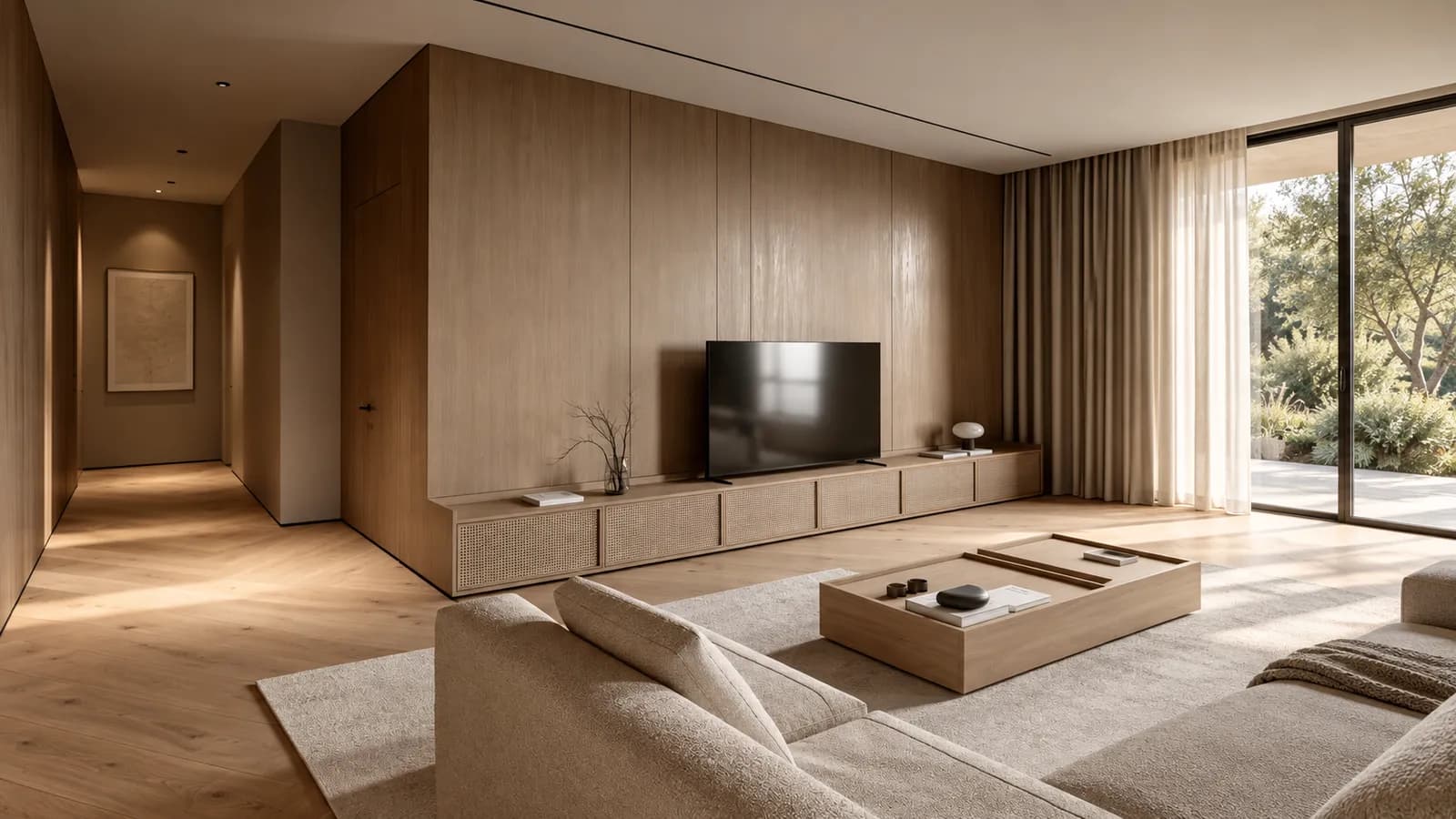
Aluminium honeycomb excels in contemporary schemes that demand seamless, unified finishes. Full-height fitted wardrobes, vanity-desk integrated runs or wall-to-wall media consoles can all benefit from this material, provided the structural detailing and hardware specifications are properly engineered.
However, large-scale storage systems require meticulous engineering regarding door dimensions, internal spans, load-bearing capacities and structural fixings. Material benefits alone should not dictate cabinet construction.
For modern interiors, homeowners might consider wood-grain effect or neutral-toned aluminium honeycomb panels. Where the goal is to celebrate the raw, organic beauty of the material itself, genuine wood remains the superior choice.
Internal doors and integrated joinery: Is a hybrid material approach advisable?
Internal doors require a holistic evaluation of aesthetics, leaf core construction, frame engineering, hinge specifications and usage frequency.
Natural wood is widely specified for spaces requiring warmth or rich character points. Its versatility in machining allows it to suit a broad spectrum of door styles, from refined minimalist leaves to ornate decorative designs.
Aluminium honeycomb can also be engineered into door leaf structures using tailored design solutions. With this material, hinge anchoring points, lock block reinforcements and frame interfaces must be carefully adapted to suit the panel construction.
For residences featuring comprehensive joinery packages—including kitchens, wardrobes, shoe storage, media units and internal doors—it is by no means necessary to commit to a single material throughout.
For instance, built-in cabinetry can share a unified finish with the room doors, whilst standalone accent pieces or decorative trims retain natural timber to preserve an authentic, organic feel.
The essential factor is harmony in colour palette, proportion and architectural design language. Combining different materials will not disrupt spatial cohesion, provided they are curated within a unified master scheme from the outset.
Selecting the right materials and bespoke interior solutions at Thiên Tín
Key considerations before commissioning bespoke interior joinery
Having evaluated aluminium honeycomb against natural wood, the next step should not be simply choosing the material with the most obvious advantages, but rather defining the precise requirements of your project.
First and foremost, assess the operating environment. Wet zones, high-humidity areas or properties prone to pests demand fundamentally different performance criteria compared to dry living rooms and bedrooms.
Next is functionality. An appliance-heavy kitchen layout requires a very different structural approach to a wardrobe or media unit. Material choice must be paired with compatible crafting techniques and specified hardware systems.
When reviewing estimates, insist on full transparency regarding material specifications, core construction, surface finishes, hardware and installation scope. To evaluate alternative options accurately, compare like-for-like specifications to identify where true cost differentials lie.
Furthermore, we recommend inspecting material samples and finished pieces in person. With natural timber, observe the grain variation, tactile surface and joinery detailing. With aluminium honeycomb, examine the panel cross-section, edge-banding precision and hardware mounting points.
Finally, it is essential to thoroughly understand the contractor's warranty policy and scope of responsibility. This forms the foundation for evaluating service quality alongside the initial cost.
Why do production techniques directly impact the quality of the finished piece?
Bespoke cabinetry designed for daily use must satisfy numerous requirements that are rarely discernible from 3D renderings alone.
Door reveals must be uniform, hinges smooth and dependable, drawers effortless to operate, and structural elements precisely aligned. These details depend directly on technical drawings, crafting techniques, and installation precision.
Working with aluminium honeycomb requires careful consideration of panel structure, edge details, and jointing points. Conversely, natural timber demands a deep understanding of wood characteristics, joinery methods, and dimensional movement caused by humidity.
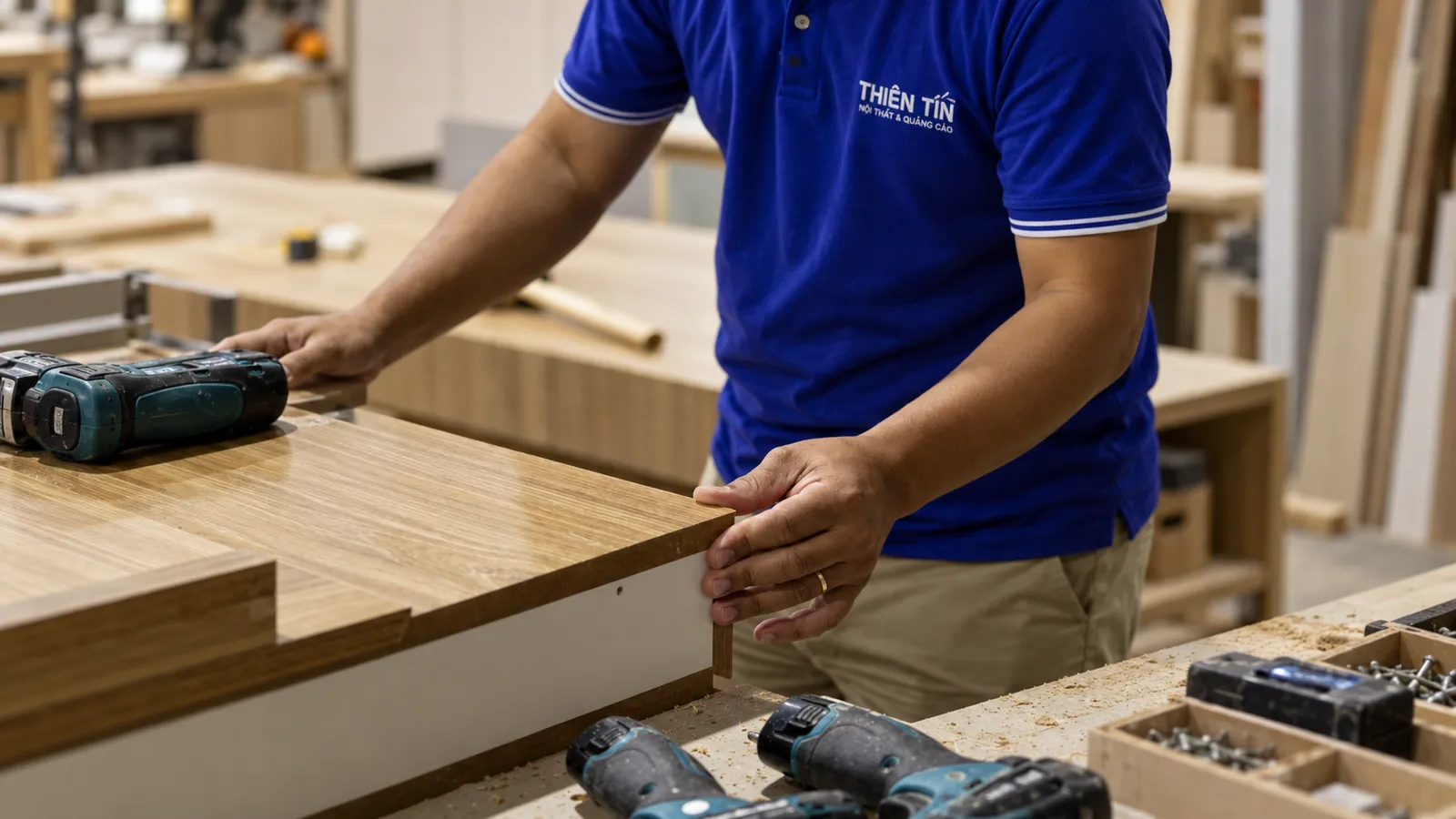
At Thiên Tín, our interior crafting process spans from initial site survey, material consultation, and design, through to workshop production, installation, and final on-site hand-finishing.
Our machinery—comprising a dual-table CNC router, PUR edgebanding technology, and sensor-driven drilling equipment—supports tailor-made processing for each material type and product specification.
While advanced machinery executes precise design data, achieving flawless final quality ultimately relies on the seamless synergy of engineering, master craftsmanship, and rigorous quality inspection.
Therefore, when selecting an interior specialist, clients are encouraged to evaluate the production process as a whole, rather than relying solely on showroom samples or initial quotes.
Thiên Tín – Comprehensive solutions from raw materials to finished pieces
Based on these criteria, it is clear that both aluminium honeycomb and natural timber bring distinct qualities to interior design.
Natural timber is celebrated for its authentic grain, tactile warmth, and sculptural flexibility. Aluminium honeycomb offers a sophisticated alternative with its metallic core, making it an exceptional choice for areas prone to humidity and pests.
The ideal material is not necessarily the most costly, but the one that best aligns with your functional requirements, design aesthetic, and preferred budget.
At Thiên Tín, our consultations begin with your physical space and lifestyle requirements. From here, our team recommends tailored materials, engineering specifications, and design concepts for every element—be it kitchen cabinetry, wardrobes, shoe storage, vanity units, media consoles, or interior doors.
With aluminium honeycomb panels, Thiên Tín offers a fully integrated solution from raw material to finished product, seamlessly combining design, precision manufacturing, and refined craftsmanship to suit practical modern living.
THIÊN TÍN – Pioneering fully integrated cabinetry and door solutions crafted from next-generation aluminium honeycomb panels in Vietnam.
Should you be deciding between aluminium honeycomb and natural timber, we invite you to visit Thiên Tín to experience our material samples firsthand, compare surface finishes, and explore fully completed pieces. Based on your aspirations and budget, Thiên Tín will tailor the ideal solution prior to design development and quotation.
Thiên Tín Journal · Guides · Page 16