
Thiên Tín Journal · Guides
Materials
Aluminium honeycomb vs stainless steel: which material suits home interiors best?
When selecting interior materials, many homeowners weigh up aluminium honeycomb against stainless steel, particularly for areas frequently exposed to moisture such as kitchen cabinets, vanity units, or pantry cupboards.
Page 12
Thiên Tín Journal · Guides
Page 13
When selecting interior materials, many homeowners weigh up aluminium honeycomb against stainless steel, particularly for areas frequently exposed to moisture such as kitchen cabinets, vanity units, or pantry cupboards. Both belong to the metal-based material category and attract interest due to their ability to mitigate common issues associated with timber-based materials.
However, aluminium honeycomb and stainless steel differ in everything from structural composition and fabrication methods to surface finishing capabilities. These differences directly impact design aesthetic, user experience, and the investment required for each piece.
So which material should you choose for home interiors? To answer this, one must evaluate the actual properties of each option rather than relying solely on advertised benefits.
How do aluminium honeycomb and stainless steel differ in structure?
Aluminium honeycomb – sheet materials featuring a hexagonal core structure
Aluminium honeycomb is a composite panel material with a sandwich structure, comprising an aluminium core formed into hexagonal cells and outer skins bonded on both sides. This construction creates a material system that can be further processed into cabinet doors, partitions, shelving, or other interior components.
A notable feature of aluminium honeycomb is its engineered hollow-core structure. Rather than using solid metal, the material harnesses honeycomb geometry to form rigid panels. Its actual weight and load-bearing capacity depend on overall thickness, skin material, core specification, and the bond quality between layers.
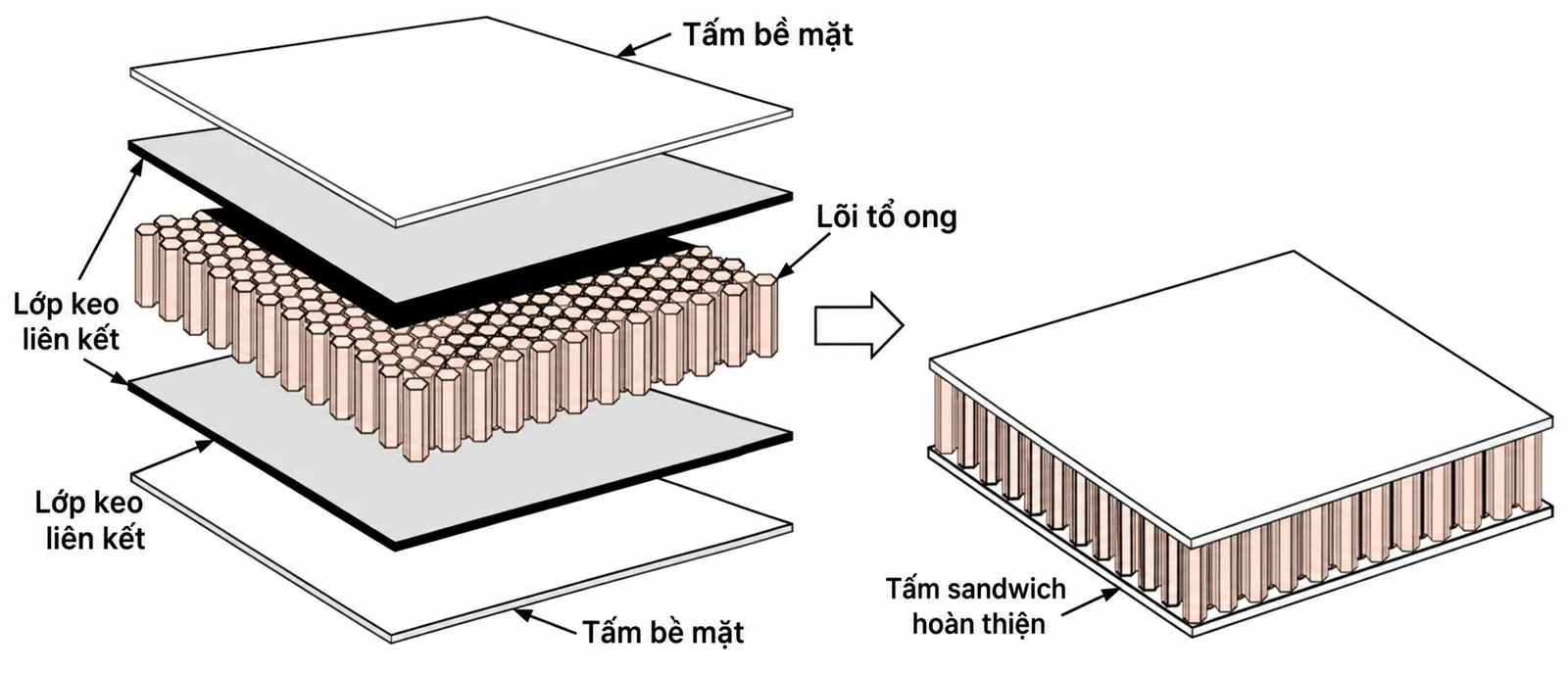
In cabinetry manufacturing, the metallic core does not absorb water or swell like wood fibres. Aluminium also contains no cellulose—the organic material that attracts termites. These characteristics make it a compelling choice for cabinetry in humid spaces.
Aesthetically, aluminium honeycomb can accommodate a variety of surface finishes depending on the product line, ranging from neutral tones to realistic wood-grain effects. As a result, it integrates seamlessly into residential spaces without feeling overly clinical or metallic.
However, the honeycomb core requires specialized engineering at anchor points for hinges, drawer runners, and load-bearing hardware. The true quality of a finished cabinet cannot be judged solely by the raw panel material.
What is aluminium honeycomb? Structure, characteristics, and interior applications
Stainless steel – a widely used metal material in furniture manufacturing
Stainless steel is an alloy family primarily composed of iron, with added chromium that forms a self-healing passive surface layer. Its corrosion resistance varies depending on the specific grade, operating environment, and fabrication processes.
In residential interiors, stainless steel is typically found in kitchens, home appliances, hardware, cabinetry, or fixtures requiring effortless hygiene and cleaning.
Not all grades of stainless steel are created equal. For instance, grade 304 is frequently selected for applications demanding high corrosion resistance. Lower-grade alternatives may offer cost savings but exhibit markedly different performance in challenging environments. Consequently, buyers should always verify the exact grade of steel being specified.
Regarding fabrication, stainless steel can be laser-cut, folded, welded, or combined with structural components. The execution of welds, edges, and surface polishing directly governs the final aesthetic and craftsmanship.
Unlike aluminium honeycomb, which denotes a specific panel construction with a hexagonal core, stainless steel refers to a broader category of metal alloys. Therefore, when comparing the two, one must clarify the precise construction of the stainless steel product, rather than relying on the material name alone.
Distinguishing between standard stainless steel cabinets and glass-fronted stainless steel cabinets
A common misconception when exploring stainless steel furniture is assuming that all stainless steel cabinets share the same underlying construction.
In reality, stainless steel cabinetry encompasses diverse manufacturing methods. Some feature fully fabricated sheet steel carcasses, others blend steel with composite elements, while modern designs pair stainless steel carcasses with sleek glass doors.
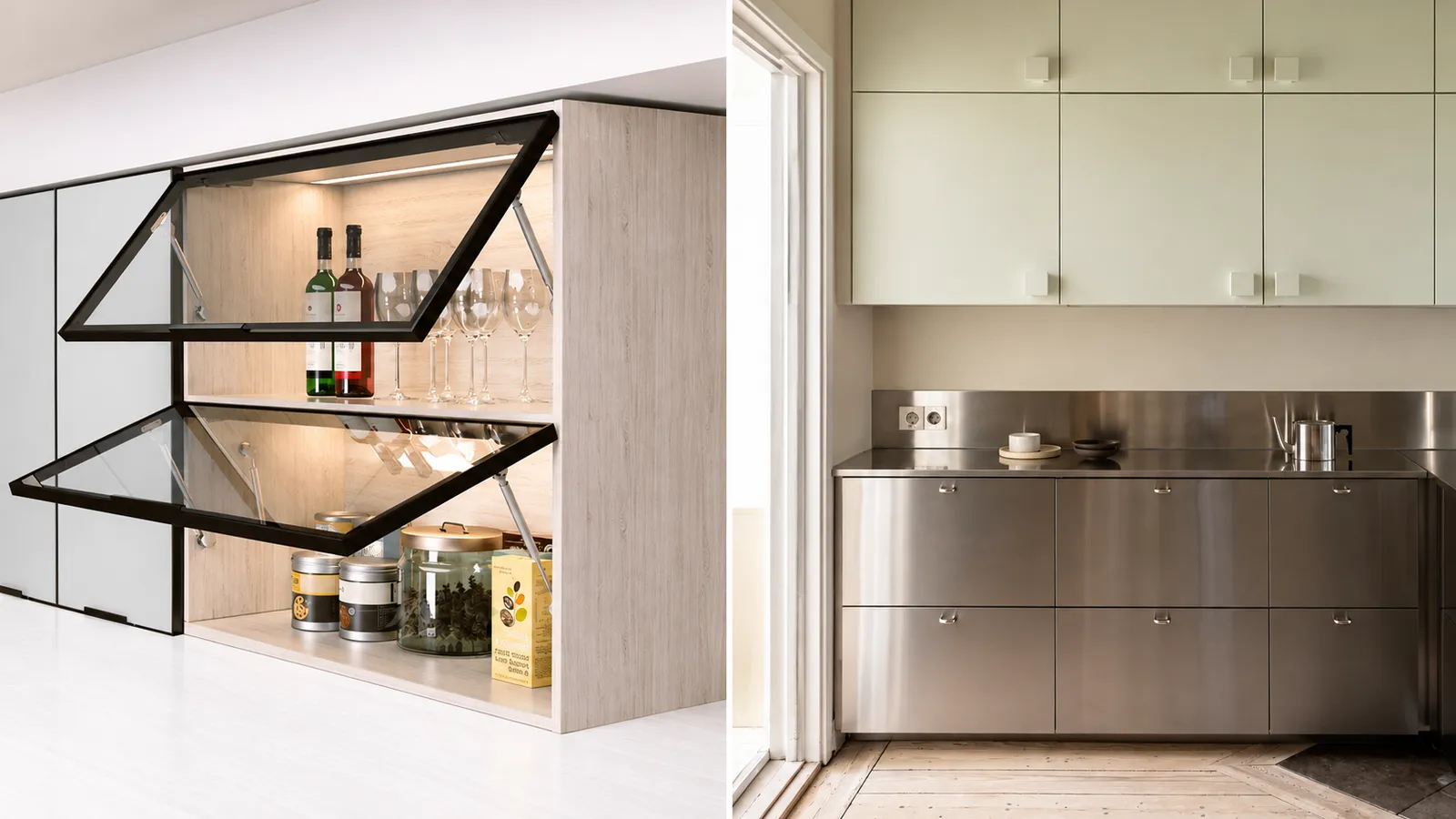
For glass-fronted stainless steel systems specifically, it is vital to distinguish between the carcass construction and the door assembly. The door typically comprises glass, an engineered frame, and dedicated hardware, while the cabinet body can be fabricated from stainless steel in various structural configurations.
Even among products marketed under the blanket term 'stainless steel cabinetry', material gauge, reinforcement methods, carcass geometry, and finishing techniques can vary dramatically.
Therefore, when comparing with aluminium honeycomb, clients are advised to request detailed structural cross-sections and precise material specifications from suppliers. This prevents comparing a fully engineered aluminium honeycomb panel against a single layer of stainless steel sheet when assessing durability or value.
Comparing aluminium honeycomb and stainless steel: durability, aesthetics, and investment
Water resistance, pest resistance, and corrosion control
Both aluminium honeycomb and stainless steel offer clear advantages when specified for humid environments.
With aluminium honeycomb, the metal core cannot absorb water or swell like timber products. Furthermore, its inorganic structure offers no nutritional value to pests like termites. These attributes make it ideal for kitchen joinery, bathroom vanities, or storage units in damp zones.
Stainless steel similarly avoids moisture-induced swelling. Certain grades, most notably 304 stainless steel, provide impressive resistance to corrosion under standard conditions. Nevertheless, stainless steel is not entirely immune to tarnishing or pitting; exposure to chlorides, harsh cleaning agents, or surface contaminants can compromise its protective layer.
Likewise, aluminium and associated metallic components must be evaluated against actual exposure conditions. The longevity of any joinery unit depends equally on surface treatments, edge banding, structural joints, hardware, and craftsmanship quality.
Consequently, one should not conclude that either aluminium honeycomb or stainless steel offers superior water resistance in every situation. For areas near sinks or subject to frequent cleaning with water, the key aspect to inspect is the complete carcass engineering and the protection of structural joints.
Weight, structural stability, and load capacity
Weight is a crucial factor when engineering large cabinetry units, particularly tall wardrobe doors, wall-hung units, or internal doors.
Aluminium inherently possesses a lower density than stainless steel. Furthermore, the sandwich honeycomb geometry produces rigid, thick panels without the deadweight of solid materials—providing an ideal foundation for lightweight yet substantial components.
However, it would be incorrect to assume every aluminium honeycomb piece is lighter than any stainless steel alternative. A thin stainless steel sheet, folded or selectively reinforced, may weigh considerably less than a thick-gauge aluminium honeycomb panel.
Load-bearing performance must likewise be assessed on a structural basis. For stainless steel, panel gauge, folding techniques, welding, and stiffeners dictate rigidity. For aluminium honeycomb, the core density, skin thickness, edge profile, and connection points play the decisive role.
For instance, a grand cabinet door requires not only structural stiffness but also an optimal mass that operates seamlessly with fine concealed hinges. Similarly, expansive shelving must be calculated against anticipated loads and support spacing.
Therefore, rather than asking which material is stronger in abstract terms, discerning homeowners should seek tailored structural solutions suited to specific dimensions and functional demands.
Aesthetics: Sleek metallic surfaces or warm interior styling?
When introducing these materials into residential spaces, aesthetics often mark the clearest distinction between aluminium honeycomb and stainless steel.
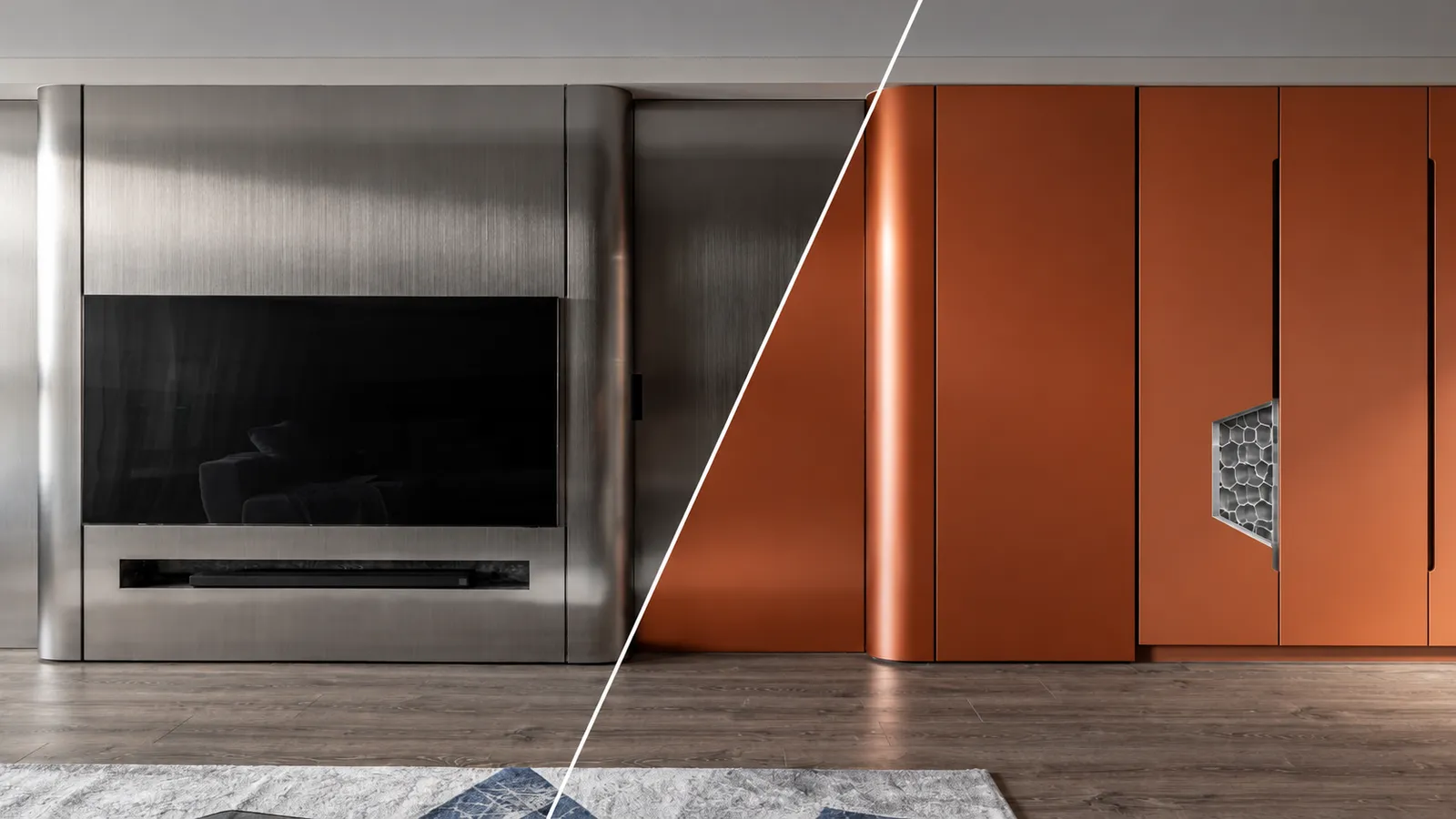
Stainless steel is inherently associated with a sleek, architectural, and modern aesthetic. Brushed, mirror-polished, or PVD colour-treated finishes lend distinct design expressions. When combined with glass, stainless steel creates striking kitchen systems defined by clean lines and modern elegance.
Nonetheless, exposed metallic surfaces over large expanses may not appeal to every palette. When specifying extensive exposed stainless steel, thoughtful pairing with timber flooring, wall textures, soft lighting, and warm tactile materials is essential to prevent the space from feeling overly clinical.
Aluminium honeycomb offers a more versatile canvas for decorative finishes. Depending on specification, panels can be clad in refined shades of beige, taupe, grey, or authentic wood-grain textures—effortlessly fitting minimalist, contemporary, or warm organic interior styles.
For example, a kitchen palette celebrating light timber and warm cream can utilise matching aluminium honeycomb finishes. Conversely, homeowners favoring high-tech sophistication may prefer glass-fronted stainless steel units for their crisp interplay of glass and metal.
There is no single correct aesthetic choice for everyone. The ideal material is one that fulfils your desired aesthetic while effortlessly meeting technical performance demands.
Investment cost and long-term maintenance
The cost of bespoke aluminium honeycomb and stainless steel cabinetry depends on far more than raw material pricing.
With stainless steel, the steel grade, gauge thickness, carcass structure, fabrication technique, and surface treatment all influence the final investment. Furthermore, a glass-fronted stainless steel system commands a different price point than standard metal-door units.
For aluminium honeycomb, pricing reflects panel configuration, decorative finish, edge detailing, integrated hardware, and design complexity. Specialized joinery techniques, reinforced attachment points, and expert installation must also be factored into the overall investment.
Therefore, the price of a single material panel should not be compared directly with the cost of a complete cabinetry system. Determining which option is more cost-effective requires evaluating both products under identical conditions regarding dimensions, functionality, and hardware tier.
Long-term ownership costs also warrant careful consideration. Stainless steel surfaces require appropriate cleaning methods to minimise blemishes and avoid compromising the protective layer. For aluminium honeycomb, ongoing maintenance depends on the surface finish, hardware, and joint locations.
When properly specified and appropriately used, both materials can meet the demands of residential interiors. Determining the more economical solution should be evaluated based on the total investment, maintenance requirements, and intended lifespan,
| Criteria | Aluminium honeycomb | Stainless steel |
|---|---|---|
| Structure | Sandwich panel featuring an aluminium honeycomb core | Stainless steel sheet, adaptable through folding, welding, or combining with other materials |
| Moisture resistance | Core does not swell from moisture absorption unlike wood fibres | Non-swelling structure unaffected by wood-fibre mechanisms |
| Termite resistance | Metal core does not serve as a food source for termites | Metal does not serve as a food source for termites |
| Corrosion | Depends on the alloy, surface finish, and environment | Depends on the steel grade, surface finish, and environment |
| Weight | Optimised thanks to the honeycomb core structure | Depends on thickness and fabrication design |
| Aesthetics | Versatile, depending on the surface finish selected | Metallic finish, capable of pairing with glass and other materials |
| Cost | Depends on panel specification and fabrication | Depends on steel grade, thickness, and structure |
| Applications | Kitchen cabinets, wardrobes, vanity units, shoe cabinets, doors, and decorative joinery | Kitchen cabinets, vanity units, accessories, cabinetry, and elements requiring metallic materials |
This comparison table serves as a general guide. Actual quality must be assessed against specific product configurations.
Should You Choose Aluminium Honeycomb or Stainless Steel for Each Interior Element?
Kitchen and Pantry Cabinets – Choosing by Environment and Design Style
The kitchen area allows both aluminium honeycomb and stainless steel to demonstrate the superior qualities of metallic materials.
Kitchen cabinetry must satisfy multiple demands simultaneously: enduring moisture exposure, withstanding frequent opening and closing, integrating appliances, and presenting surfaces that are effortless to clean. Consequently, material selection should not rely solely on water resistance.
If homeowners favour a contemporary aesthetic combining glass and metal, stainless steel cabinets with glass-fronted doors offer a refined solution. These designs typically emphasise clean lines and the seamless pairing of glass surfaces with structural framing.
Conversely, aluminium honeycomb is an ideal consideration when a metal-core material is preferred alongside wood-grain finishes or neutral tones. This design approach is particularly well suited to kitchens requiring visual colour cohesion with living rooms and adjoining spaces.
With both options, areas such as sink units, pan drawers, dishwasher housings, and tall larders must be tailored to practical requirements.
Crucially, the hinges, runners, and connection points must be compatible with the product's construction. Even a superior material can result in everyday inconvenience if the functional layout is poorly executed.
Wardrobes, Shoe Cabinets, and Media Units – Prioritising Spatial Harmony
For wardrobes, shoe cabinets, and media units, functional requirements differ noticeably from those of the kitchen.
Wardrobes typically command a large footprint, feature multiple storage compartments, and reside in restful living quarters. Alongside structural stability, surface textures and colour palettes play a pivotal role in establishing bedroom harmony.
Aluminium honeycomb, offering wood-grain finishes or neutral tones, is exceptionally suited to floor-to-ceiling cabinetry, vanity-integrated wardrobes, and cohesive bespoke designs. During manufacturing, door dimensions and hardware positions must be calculated in accordance with the material's structural properties.
Stainless steel remains applicable for these items, particularly in designs that showcase metallic surfaces or incorporate glass. However, when specified across large surface areas, its impact on the room's overall aesthetic ambiance must be carefully weighed.
With shoe cabinets, operational conditions revolve around dust, footwear moisture, and airflow requirements. Here, compartment layout, ease of cleaning, and ventilation can be just as crucial as material selection.
For media units and display cabinetry specifically, proportions, colour harmony, and architectural integration take precedence. Homeowners are advised to select materials based on the overall space rather than evaluating the durability of individual panels alone.
Vanity Units and High-Moisture Zones
Vanity units represent one of the key joinery elements demanding meticulous attention to operating conditions.
This area is routinely subjected to moisture, water splashes, and internal plumbing systems. Consequently, a material's resilience to humid environments is essential, yet insufficient on its own to determine overall product quality.
Aluminium honeycomb benefits from a metallic core structure that does not absorb water like wood fibres. When specified for vanity units, careful attention must still be directed towards surface finishes, panel edging, and interface points with sanitaryware.
Stainless steel is another viable option for these zones. However, homeowners should clearly specify the steel grade and usage conditions, particularly if the area is regularly exposed to household cleaning chemicals or corrosive environments.
Beyond material choice, cabinet construction must accommodate sufficient clearance for pipework, shut-off valves, and future inspection or maintenance. Moisture-prone areas should be designed to prevent standing water accumulation.
If a home features multiple wet areas, homeowners may specify different materials for different elements. It is by no means necessary to use a uniform material throughout the entire interior, provided the overall design maintains functional excellence and aesthetic harmony.
Selecting the Right Material and Interior Solutions at Thiên Tín
Essential Criteria to Verify Before Commissioning Bespoke Joinery
Having compared aluminium honeycomb and stainless steel, the crucial step is aligning material characteristics with your specific practical requirements.
First and foremost, homeowners should identify the installation setting. Kitchen cabinetry, vanity units, wardrobes, and media units each present distinct requirements regarding humidity, load capacity, hardware, and surface finishes.
Next is product construction. For aluminium honeycomb, reviewing a cross-section sample is recommended to understand the core, surface skin, and joinery details. For stainless steel, it is essential to clarify the steel grade, panel thickness, carcase structure, and finishing technique.
When receiving a quotation, it is advisable to ensure that materials, surface finishes, fittings, dimensions, product specifications, and the scope of installation are clearly detailed. Two sets of cabinetry may appear visually similar, yet differences in their construction can lead to a significant variation in cost.
Homeowners are also advised to inspect finished products firsthand to evaluate door reveals, edge finishing, the tactile feel of opening and closing, and practical everyday usability.
Finally, it is essential to review the warranty policy, its scope of coverage, and the recommended cleaning and maintenance guidelines. Although these factors directly shape the post-handover experience, they are often overlooked during the initial selection phase.
From raw materials to finished pieces at the Thiên Tín workshop
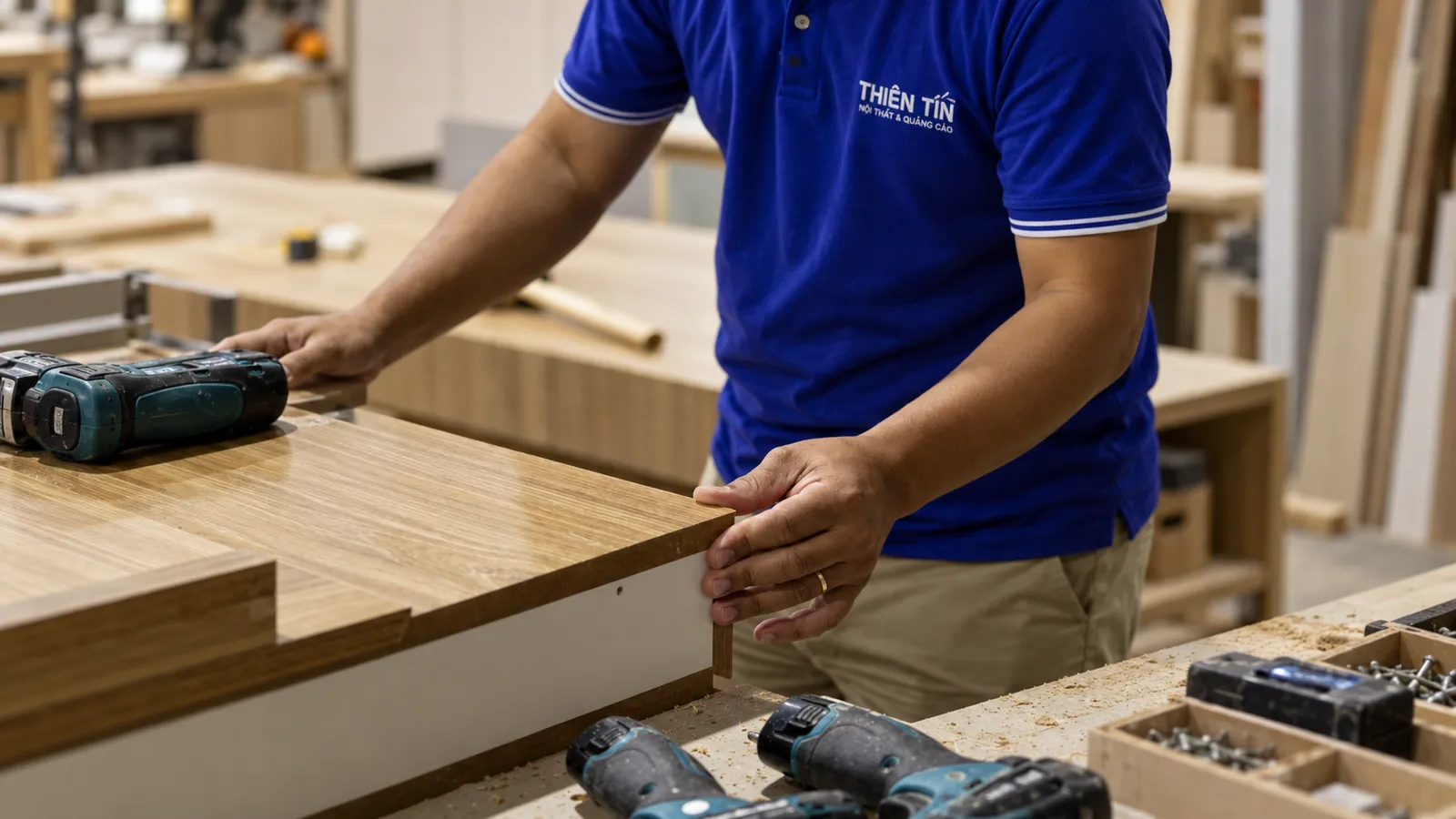
The quality of a luxury furniture piece is not determined by raw materials alone. The design and crafting processes exert a profound influence on the level of refinement achieved once the cabinetry is installed.
At Thiên Tín, our process begins with evaluating the space, defining functional requirements, and selecting appropriate materials. From the design blueprints, individual components are precisely dimensioned for production.
Our workshop machinery includes a twin-table CNC router, a PUR edgebander, and a sensor-driven drilling machine, enabling tailored machining steps suited to each material group and product structure.
For aluminium honeycomb, the fabrication process requires meticulous attention to dimensions, edge treatments, and joint connections. Stainless steel, by contrast, presents distinct requirements for cutting, bending, welding, and surface finishing.
Following fabrication, components are assembled, inspected, and refined in accordance with the design prior to delivery to site.
This approach illustrates to our clients that beautiful, practical cabinetry is the result of meticulous, sequential steps—from initial drawings to the physical product.
Thiên Tín – Tailored solutions driven by practical living needs
Based on the above criteria, both aluminium honeycomb and stainless steel offer suitable options for residential interiors, yet no single material is universally superior for every requirement.
Stainless steel excels in applications requiring corrosion-resistant properties paired with appropriate construction and surface finishes. Aluminium honeycomb offers a compelling alternative, owing to its metallic cellular core structure and versatility with decorative surface finishes.
For homeowners who favour glass-fronted stainless steel kitchen cabinets, this approach effortlessly achieves the intended aesthetic. If a metal core material is desired while retaining the warm character of a wood grain finish, aluminium honeycomb is a noteworthy choice.
At Thiên Tín, our consultations are never limited to a single material. Tailored to your space, lifestyle requirements, and investment level, we guide clients towards aluminium honeycomb, stainless steel, timber, or harmonious hybrid solutions.
THIÊN TÍN – A pioneer in integrated cabinetry and door solutions crafted from next-generation aluminium honeycomb panels in Vietnam.
Guided by an end-to-end approach—from material advisory and design to manufacturing and final installation—Thiên Tín delivers interior solutions that seamlessly balance functionality, aesthetics, and real-world durability.
If you are considering the merits of aluminium honeycomb versus stainless steel, we invite you to visit Thiên Tín to inspect material samples, structural details, and finished displays in person. From there, the Thiên Tín team will recommend a tailored solution aligned with your space and intended investment prior to formal design and quotation.
Thiên Tín Journal · Guides · Page 14