
Thiên Tín Journal · Guides
Products
Are aluminium honeycomb kitchen cabinets any good? What you need to know before you start
Kitchen cabinets are among the most demanding interior elements in a home: they face water around the sink, cooking steam, grease, heat-generating appliances, and the daily wear and tear of constant opening and closing.
Page 20
Thiên Tín Journal · Guides
Page 21
Kitchen cabinets are among the most demanding interior elements in a home: they face water around the sink, cooking steam, grease, heat-generating appliances, and the daily wear and tear of constant opening and closing. Therefore, a set of cabinets that looks beautiful upon completion is not enough to judge its quality.
Aluminium honeycomb is gaining attention from homeowners looking for kitchen materials due to its metallic core structure and ability to adapt to humid environments. But are aluminium honeycomb kitchen cabinets actually good, what are their limitations, and are they suitable for every kitchen?
To make the right choice, you need to look at the materials, cabinet structure, functionality, hardware, and construction techniques rather than relying solely on a few advertised features.
What are aluminium honeycomb kitchen cabinets and what makes them different?
From an aluminium honeycomb panel to a complete kitchen cabinet set
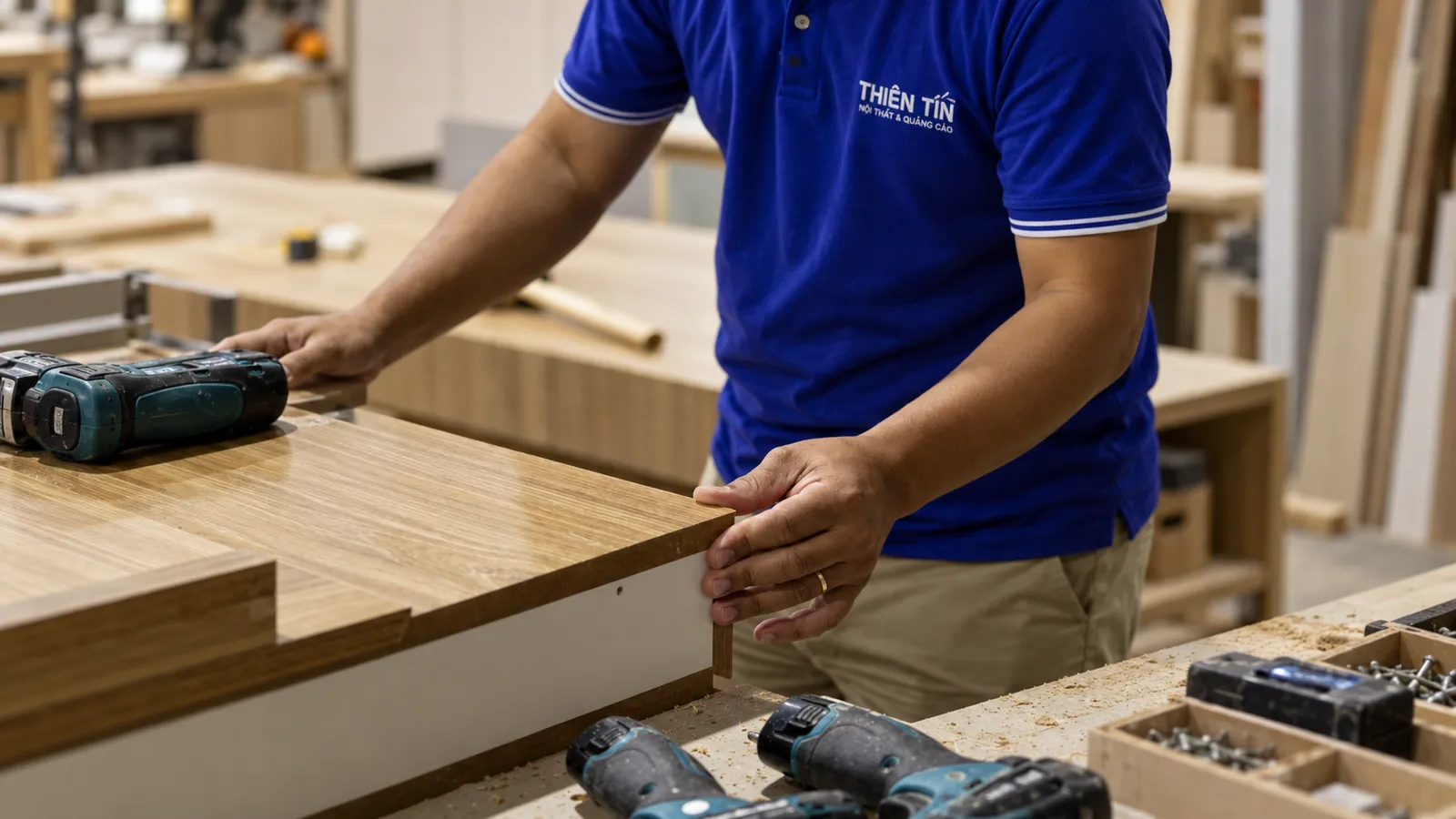
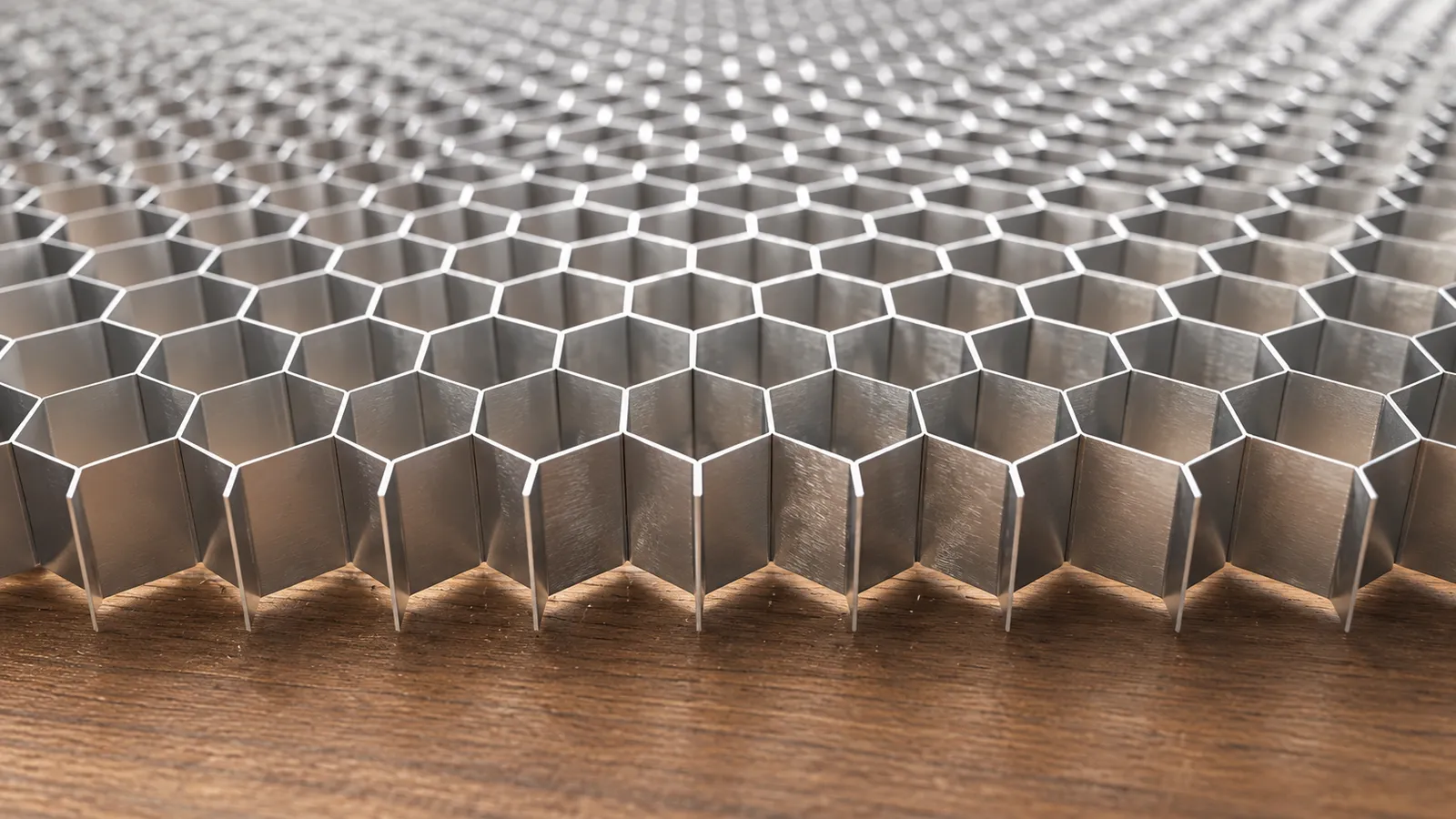
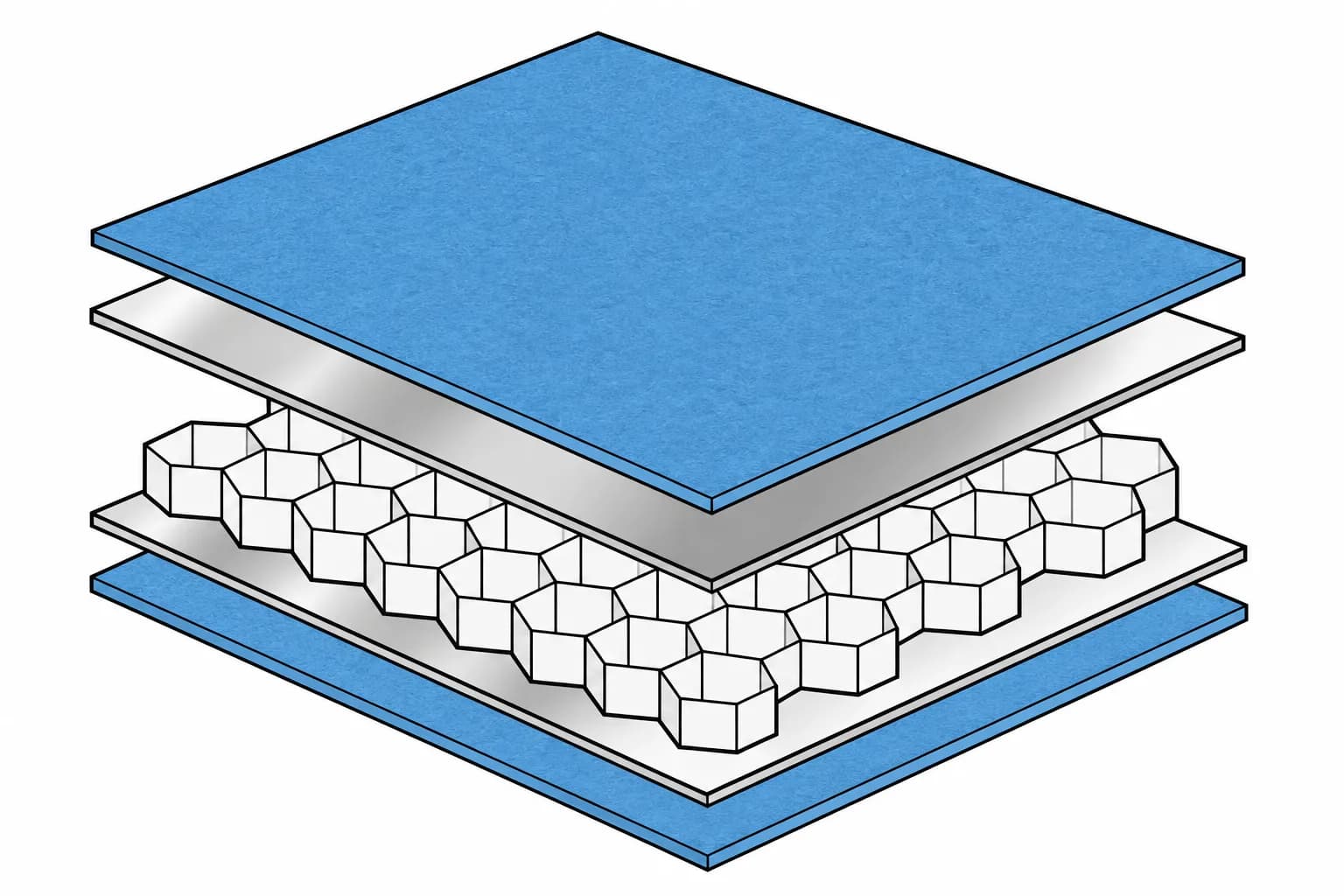
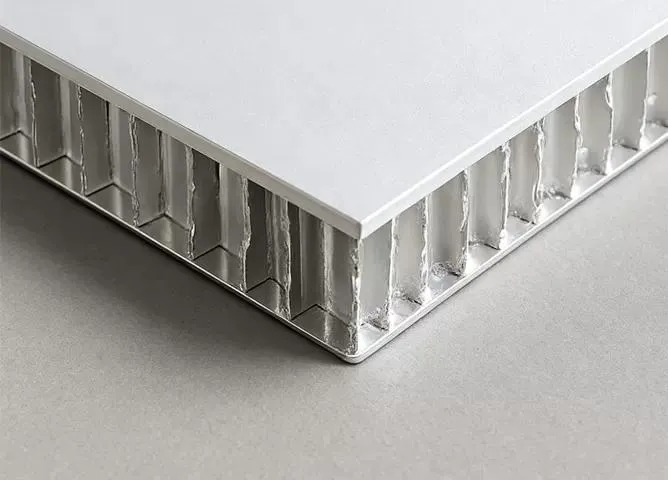
Aluminium honeycomb is a panel material with a core formed from aluminium cells bonded in a honeycomb structure. When applied to interiors, the core is combined with surface layers and bonding systems to create finished panels used for cabinet components.
The point of interest here is the metallic nature of the core. Aluminium does not absorb water and swell like wood-based fibres, nor does it contain cellulose—a component that can become a food source for termites. These are two valuable characteristics when the material is placed in a kitchen environment.
A complete cabinet set is far more complex than a single panel of material. Cabinets include doors, storage compartments, back panels, shelves, hinges, drawer runners, lift systems, and connection points for stone worktops, sinks, or kitchen appliances.
Due to the unique characteristics of the honeycomb core structure, points where hardware is installed or where weight is concentrated must be handled with appropriate technical solutions. This is why you should not judge the quality of a cabinet just by looking at a sample panel.
When researching aluminium honeycomb kitchen cabinets, homeowners should ask questions about the construction of the finished product and the installation method alongside questions about the material itself.
What is aluminium honeycomb? Construction, characteristics, and interior applications
Why does the kitchen environment place higher demands on materials?
Unlike wardrobes or decorative shelving, kitchen cabinet compartments must operate under very different conditions.
The compartment under the sink faces water and plumbing lines. The area around the hob is affected by heat, steam, and grease. Spaces for dishwashers, ovens, or integrated appliances need to be designed according to the specific technical requirements of each device.
In addition to the environment, kitchen cabinets bear significant loads. Pots, pans, crockery, dry goods, and small appliances place continuous weight on shelves and drawers. Cabinet doors are also opened and closed many times every day.
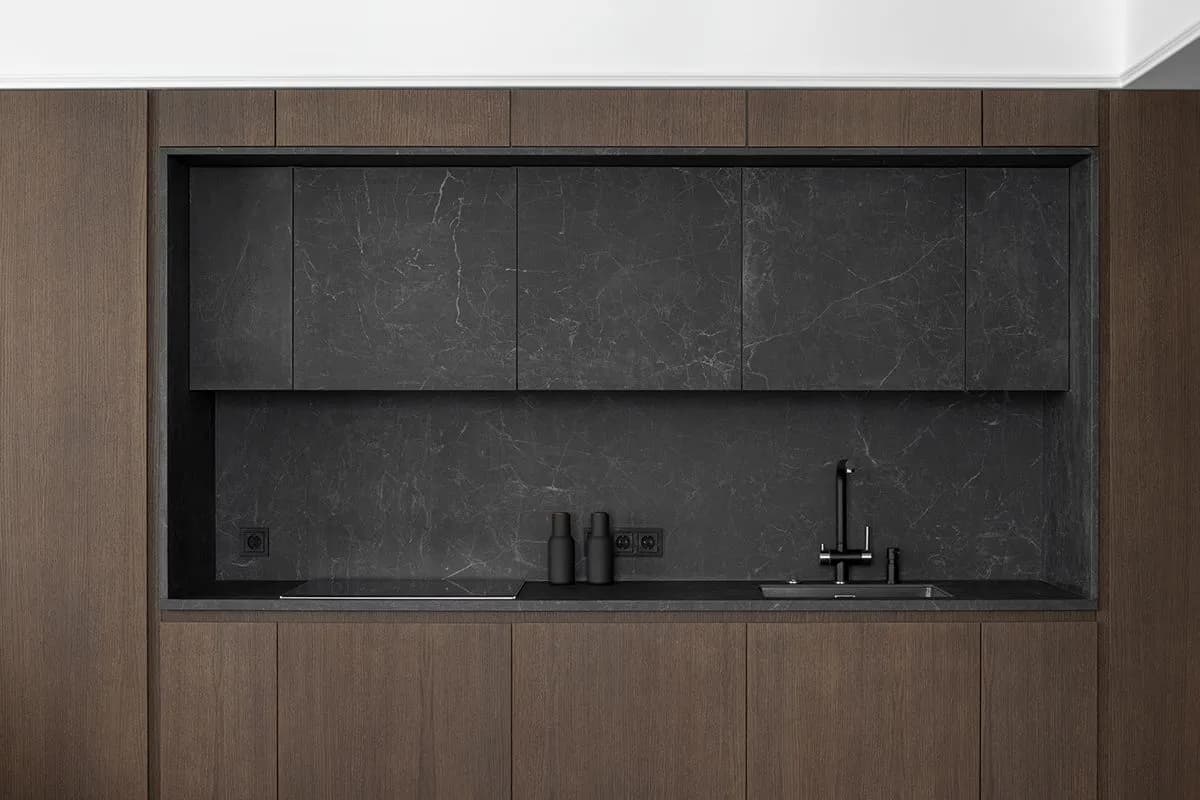
Therefore, “waterproof material” is not a complete answer for a good kitchen cabinet set. The product must simultaneously address moisture adaptability, structural integrity, hygiene, hardware, and functional layout.
This is also a point where buyers should be cautious of marketing that focuses on only one feature. A suitable material creates a good foundation, but the final quality of use depends on how it is transformed into a product.
Are aluminium honeycomb kitchen cabinets any good?
If we consider the characteristics of the core, aluminium honeycomb has advantages suitable for the kitchen environment. The aluminium core does not swell due to water absorption like wood-fibre materials and is not a food source for termites. These are factors worth considering for an item frequently exposed to moisture.
The answer would be incomplete if it stopped there.
A set of cabinets can still provide a poor experience if the compartment layout is inconvenient, the hardware is unsuitable, the doors are too large for the structure, or the connection points are poorly executed. The surface must also meet the regular cleaning requirements of a cooking space.
Therefore, whether aluminium honeycomb kitchen cabinets are good or not must be evaluated based on the entire system: panel quality, cabinet box and door construction, connection techniques, hardware, functional design, and finishing craftsmanship.
If these factors are handled consistently, aluminium honeycomb is a choice worth considering for families who prioritise adaptability to humid environments and want to reduce risks related to the core material.
The advantages of aluminium honeycomb kitchen cabinets in practical use
The clearest advantage lies in areas frequently exposed to water
The compartment under the sink is usually the most “challenging” part of the entire kitchen system. Water can come from daily washing, leaking pipes, or the joints between the sink and the worktop.
If water penetrates a material capable of absorbing moisture, the core can be affected over time. With an aluminium honeycomb core, water does not cause the absorption and swelling seen in wood-fibre materials.
This value is especially noticeable after a plumbing incident. Instead of just worrying about whether the surface can be wiped clean, users also need to know how the internal material reacts when exposed to moisture.
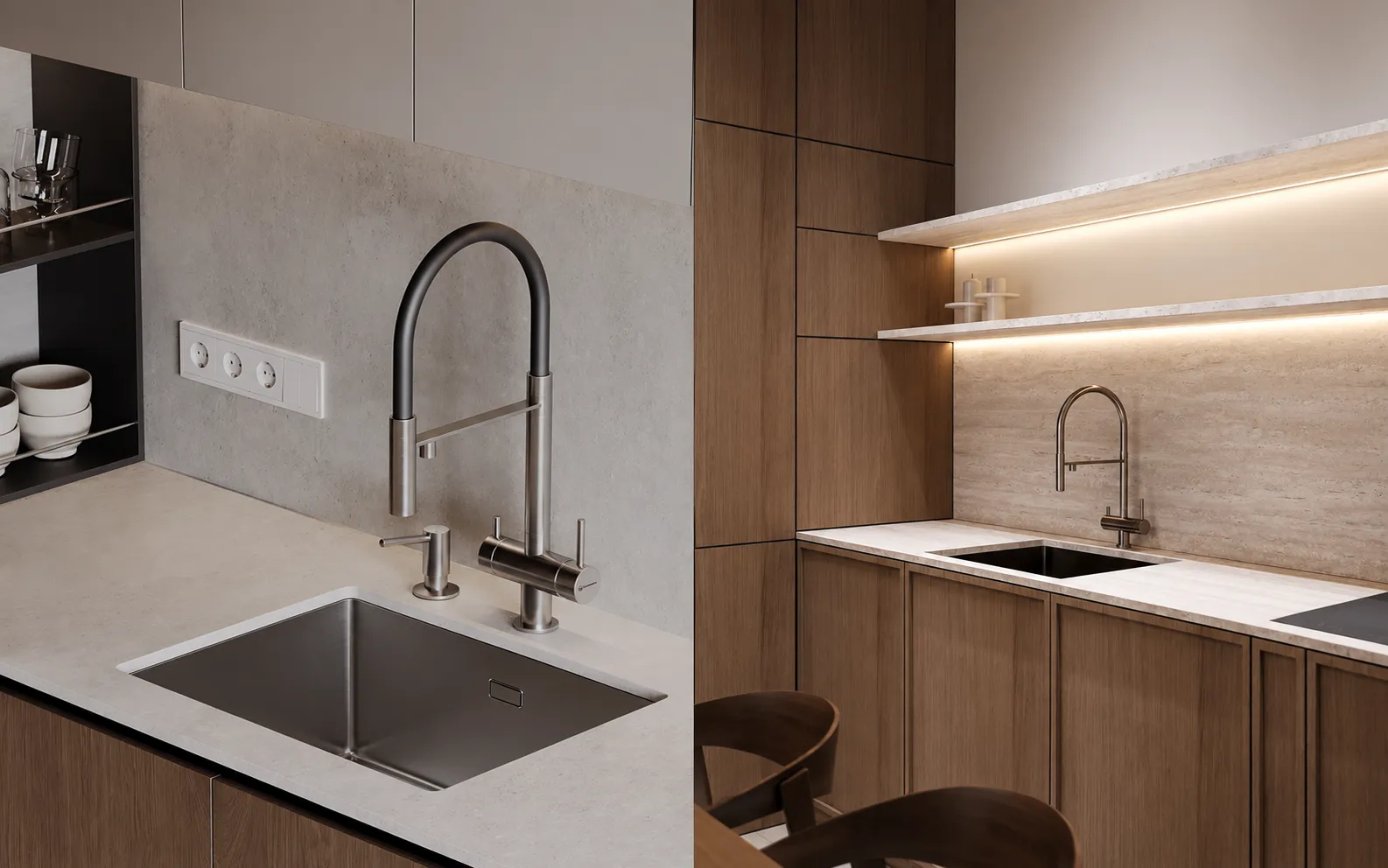
However, “waterproof core” should not be interpreted as “the entire cabinet set can be submerged in water”. Hinges, runners, joints, surface layers, and other materials in the kitchen system still need to be protected from standing water.
A good construction plan must simultaneously address plumbing, sink joints, panel edges, and accessibility for repairs. The material helps reduce risk; design and construction help control the causes of that risk.
[Internal link: Are aluminium honeycomb interiors waterproof and termite-proof?]
A metal core helps reduce one worry about termites
Kitchen cabinets are often placed against walls and floors, with many enclosed compartments, so signs of termites behind them are not always detected early.
Termites use cellulose as a nutrient source. The aluminium honeycomb core does not contain this component, so the metal core itself does not become food for termites like wood-based materials.
This advantage is notable for ground-floor homes, properties that have previously had termites, or families who want to proactively reduce a category of risk right from the material selection stage.
It is necessary to distinguish between a material that termites do not eat and a house that is free of termites. If a termite colony already exists in the building, they can still travel through the foundation, walls, and affect other components containing cellulose.
Therefore, homes showing signs of termites need to have the root cause addressed alongside the interior renovation process. Aluminium honeycomb helps protect the cabinet material from one mechanism of damage, but it does not replace termite control solutions for the entire building.
This understanding is more practical and helps homeowners set the right expectations when choosing materials.
From “aluminium cabinets” to an aesthetically pleasing kitchen system
One reason many people are still hesitant about aluminium cabinets is the image of traditional metal cabinets: cold surfaces, few colours, and difficulty blending with modern home interiors.
Aluminium honeycomb needs to be viewed differently. The core acts as the base material, while the appearance of the kitchen system depends heavily on surface solutions and colour coordination.
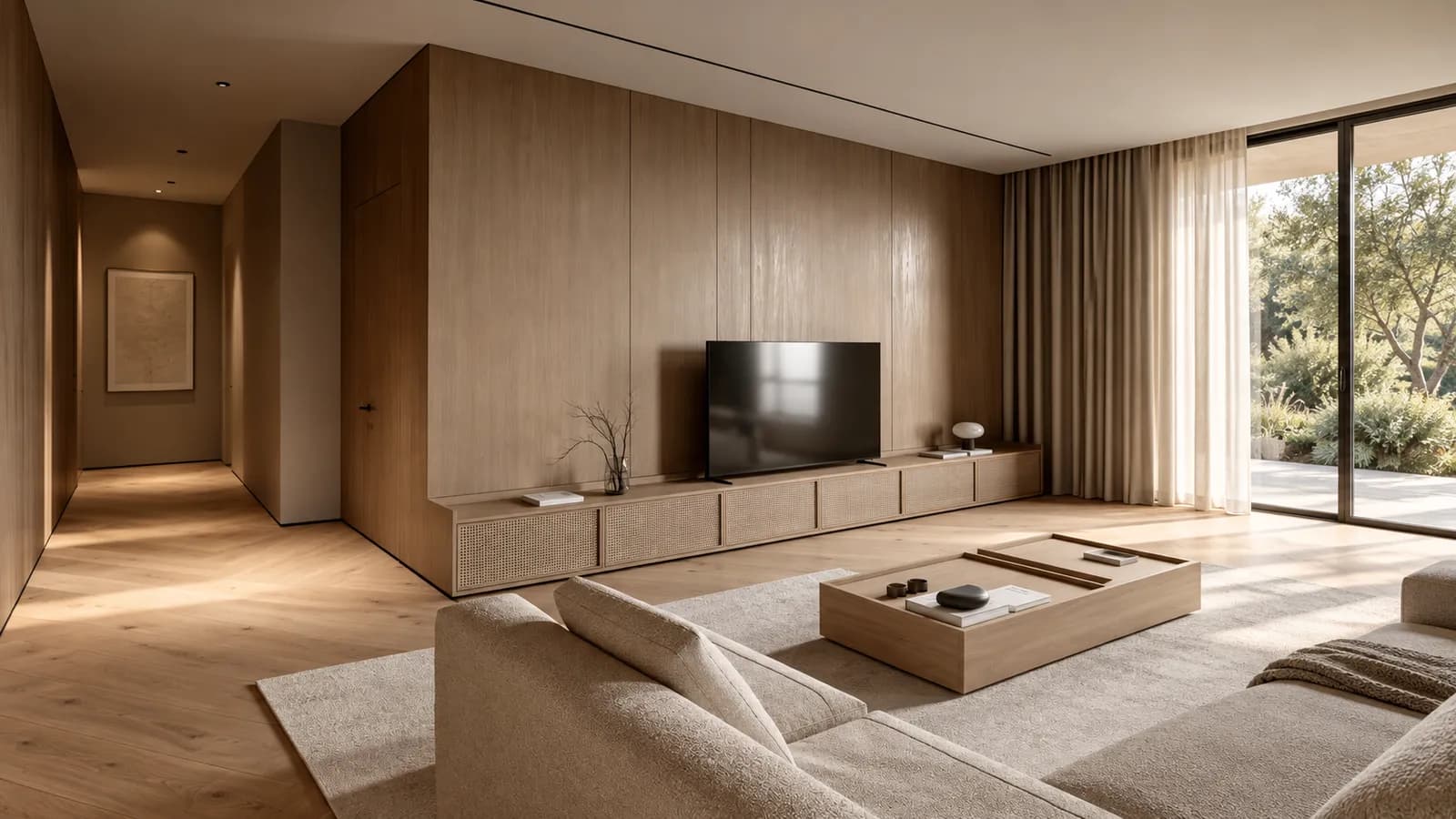
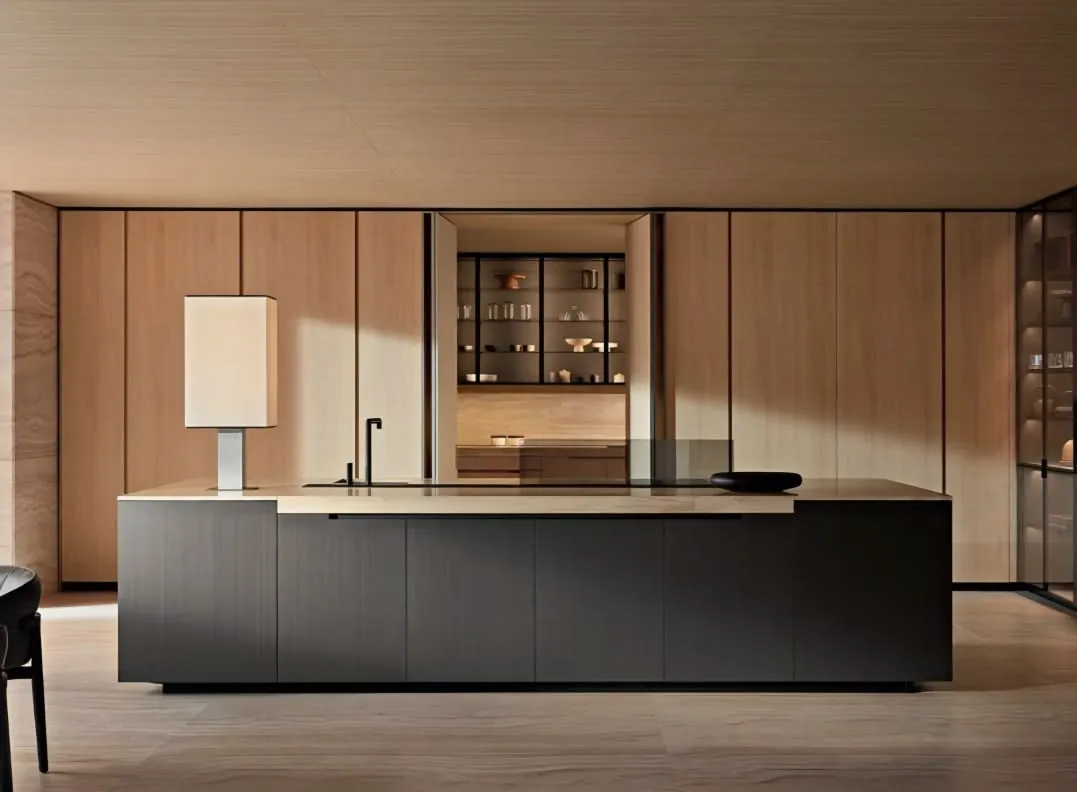
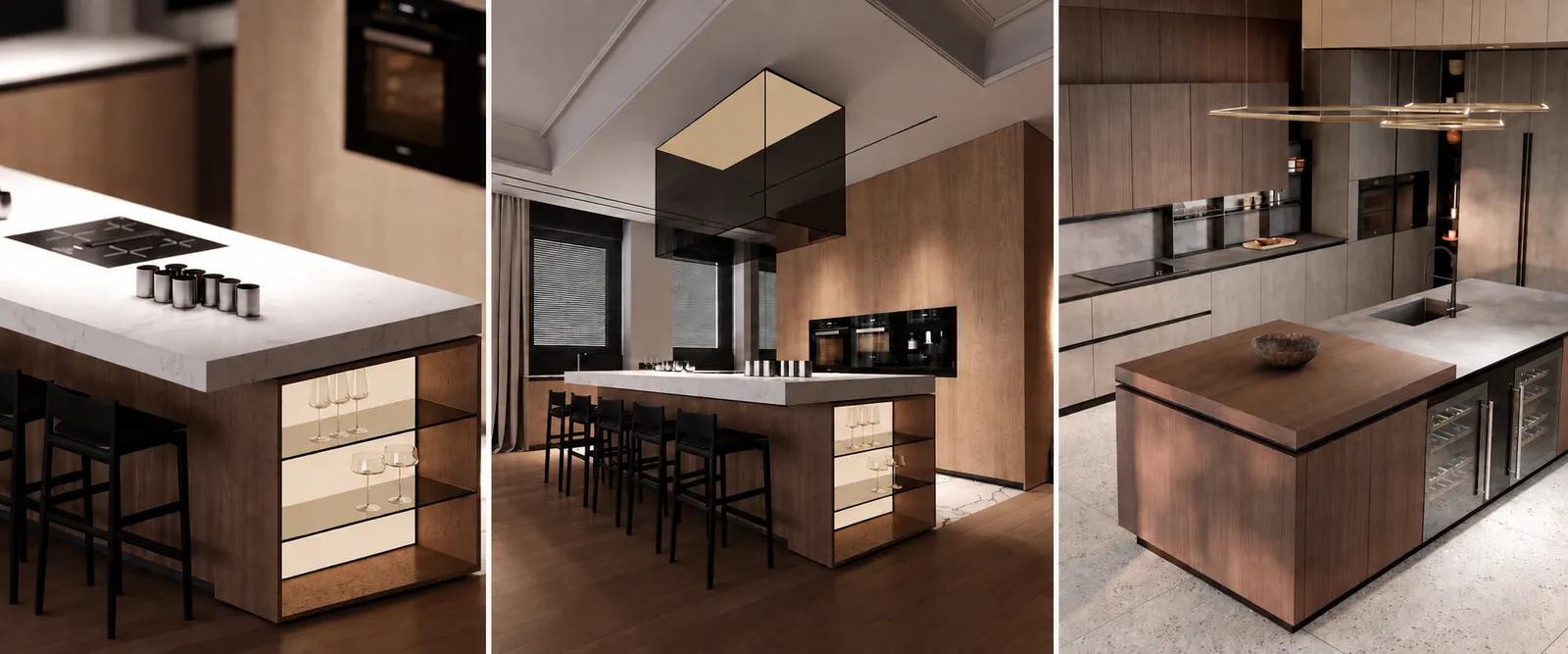
Light wood grains can be combined with white stone worktops for a light, airy kitchen. Walnut or deep brown tones add depth to large spaces. Beige, taupe, and grey fit the minimalist kitchen trend, while a two-tone combination between upper and lower cabinets can help reduce the visual bulk.
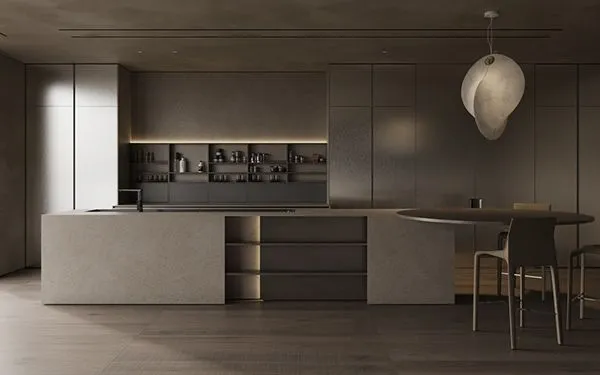
Design should not just focus on the door panels. Handles, finger pulls, tall cabinet systems, under-cabinet lighting, and how appliances are integrated all impact the perceived finish of the kitchen.
Because colours on a screen may differ from the actual sample, customers should view the surfaces in person under lighting close to the conditions of use. A suitable choice needs to look good at close range, be easy to clean, and harmonise with the floor, walls, worktops, and existing appliances.
What you need to know before you start your Thiên Tín aluminium honeycomb kitchen cabinets
Choose the cabinet style based on the floor plan rather than chasing trends
A kitchen design that looks beautiful online may not necessarily function well in your actual home. The cabinet layout should be based on the available space, door positions, plumbing systems, appliances, and your personal cooking habits.
An I-shaped kitchen is ideal for spaces with one main wall or apartments where space optimisation is key. An L-shaped kitchen makes use of two walls and creates additional workspace. In larger kitchens, a kitchen island can provide extra counter space, storage, or serve as a bridge between the kitchen and the living area.
More important than the shape is the organisation of the workflow. The positions for food preparation, washing, and cooking should be arranged so that you do not have to move around unnecessarily. Bins, knives, chopping boards, spices, and frequently used utensils should also be kept within easy reach.
If your family has decided on using a dishwasher, built-in oven, refrigerator, or other appliances, their dimensions and installation requirements should be incorporated into the design from the very beginning.
A well-designed kitchen system must ensure convenience for the user before it aims to impress with its aesthetics.
Do not overlook the cabinet structure, joint details, and hardware.
When reviewing a kitchen cabinet quote, customers often focus heavily on the door material, stone countertop, or the total linear metres. However, the internal details have a significant impact on your daily experience.
Cabinet shelves must be suitable for the intended load. Drawers for pots and pans differ from those for cutlery. Tall cabinet doors and smaller doors also have different requirements for hinges and structural joints.
With an aluminium honeycomb core structure, the points where hinges, runners, or load-bearing hardware are attached require appropriate processing methods. This is something buyers should ask the manufacturer about rather than simply checking the thickness of the panel.
Hardware should not be chosen based on the principle that 'more is better'. Lift systems, corner units, dish racks, runner systems, or pantry accessories should be selected based on your actual usage habits. An expensive accessory that is rarely used may simply take up space without adding any real value.
When viewing a finished product, observe the edge banding, door gaps, the feel of opening and closing, and the level of finish at the joints. These details clearly distinguish a carefully crafted cabinet set from a product that is only beautiful on the surface.
How should the price of aluminium honeycomb kitchen cabinets be compared?
One of the most common questions following 'Is it good?' is 'How much does it cost?'. With kitchen cabinets, comparing a figure based on linear metres without knowing the accompanying configuration can easily lead to the wrong decision.
The final cost is influenced by the cabinet body and door materials, surface finishes, dimensions, number of drawers, hardware, countertops, design style, and installation complexity. Two kitchen systems of the same length but different configurations can have very different investment levels.
Therefore, when receiving a quote, homeowners should check exactly which items are included and which are calculated separately. Comparing two quotes only makes sense when they use equivalent configurations.
It is also worth viewing costs over the duration of use rather than just at the time of installation. In areas with high humidity or where water incidents have occurred, choosing the right material from the start can help reduce the risk of having to repair or replace parts of the cabinet system later.
This does not mean that a more expensive option is always better. A reasonable investment is one that meets your specific needs, focusing the budget on the materials, structure, and hardware that are truly necessary.
Choosing aluminium honeycomb kitchen cabinets and solutions at Thiên Tín
A good cabinet set should be evaluated based on the finished product.
Before deciding to order cabinets, homeowners should view the actual product rather than just a small material sample.
For the cabinet carcass, observe how the edges, corners, and joints are handled. For the doors, test the opening and closing action and check the uniformity of the gaps. Drawers, hinges, and hardware should operate smoothly according to the frequency of use in the kitchen.
The sink area deserves a separate inspection. Is the plumbing layout convenient for maintenance? How are the joints sealed? Is the cabinet interior easy to clean in the event of a leak? These are much more practical questions than simply asking, 'Is the cabinet waterproof?'
A quote should describe the configuration in enough detail so that the customer knows exactly what they are paying for. The warranty policy should also clearly state the scope of coverage for materials, finished products, and the corresponding groups of hardware.
A capable provider does not just show the customer a colour chart. They must be able to explain why a specific structure is suitable for its intended location and how the requirements differ for the sink area, cooking zone, wall units, or appliance cabinets.
When are aluminium honeycomb kitchen cabinets a worthwhile choice?
There is no single material that is suitable for every kitchen. The decision should start with the problems your family wants to solve.
Aluminium honeycomb is worth considering when homeowners prioritise the ability to adapt to humid environments, want to eliminate the risk of termites affecting the core, or have previously experienced cabinet degradation after water incidents. Kitchens that are used frequently can also benefit from a material system chosen for its stability and ease of cleaning.
For customers who prioritise aesthetics, the important step is to view the actual surface finish and how it coordinates with the stone countertop, appliances, flooring, and wall colours. A material is only suitable when it meets both the functional requirements and the design language of the home.
Budget remains a factor that needs to be calculated. It is not necessary for every detail to use the highest configuration. A good consultancy should help customers allocate their investment to the most important areas rather than increasing costs with items that offer little practical value.
In other words, the question should shift from'Is aluminium honeycomb good?' to 'Does aluminium honeycomb solve the specific problems of this kitchen?'
Kitchen cabinet solutions using aluminium honeycomb panels at Thiên Tín
A good kitchen cabinet set does not start with choosing a door colour. It starts with how your family uses the kitchen.
At Thiên Tín, the cabinet design is built based on the actual floor plan, plumbing locations, intended appliances, storage needs, and the style of the entire space. Only then do we move to the steps of selecting the structure, surface finish, and internal compartment layout.
With aluminium honeycomb panels, Thiên Tín aims to leverage the advantages of the metal core in the cabinet system while simultaneously addressing all functional, hardware, and finishing requirements. The material can also be extended to other cabinet and door applications when the project requires consistency in surface and design language.
THIÊN TÍN – A pioneer in providing integrated cabinet and door solutions using next-generation aluminium honeycomb panels in Vietnam.
From material consultation, design, and production to final installation, our goal is to create a kitchen system that is suited to actual usage conditions rather than applying a 'one-size-fits-all' model to every family.
Thiên Tín Journal · Guides · Page 22