
Thiên Tín Journal · Guides
Products
Aluminium honeycomb shoe cabinets: durable and refined storage solutions for the modern home
The shoe cabinet is one of the most frequently used pieces of furniture, yet it is often overlooked during residential design.
Page 10
Thiên Tín Journal · Guides
Page 11
The shoe cabinet is one of the most frequently used pieces of furniture, yet it is often overlooked during residential design. Footwear carries dirt, moisture, and occasionally rainwater, whilst entryway spaces are typically constrained. Choosing an ill-suited cabinet can lead to cluttered piles of shoes, unpleasant trapped odours, or difficulty in cleaning after prolonged use.
Aluminium honeycomb shoe cabinets are attracting growing interest thanks to their metal core structure, resilience in humid environments, and versatile surface finishes. However, to craft a truly functional cabinet, homeowners must carefully evaluate the material, internal compartment layout, ventilation, and craftsmanship quality.
How do aluminium honeycomb shoe cabinets differ from conventional shoe cabinets?
How are aluminium honeycomb shoe cabinets constructed?
An aluminium honeycomb shoe cabinet is a joinery system utilizing panels with an aluminium honeycomb core to fabricate components tailored to the design, such as the carcass, doors, or internal fittings.
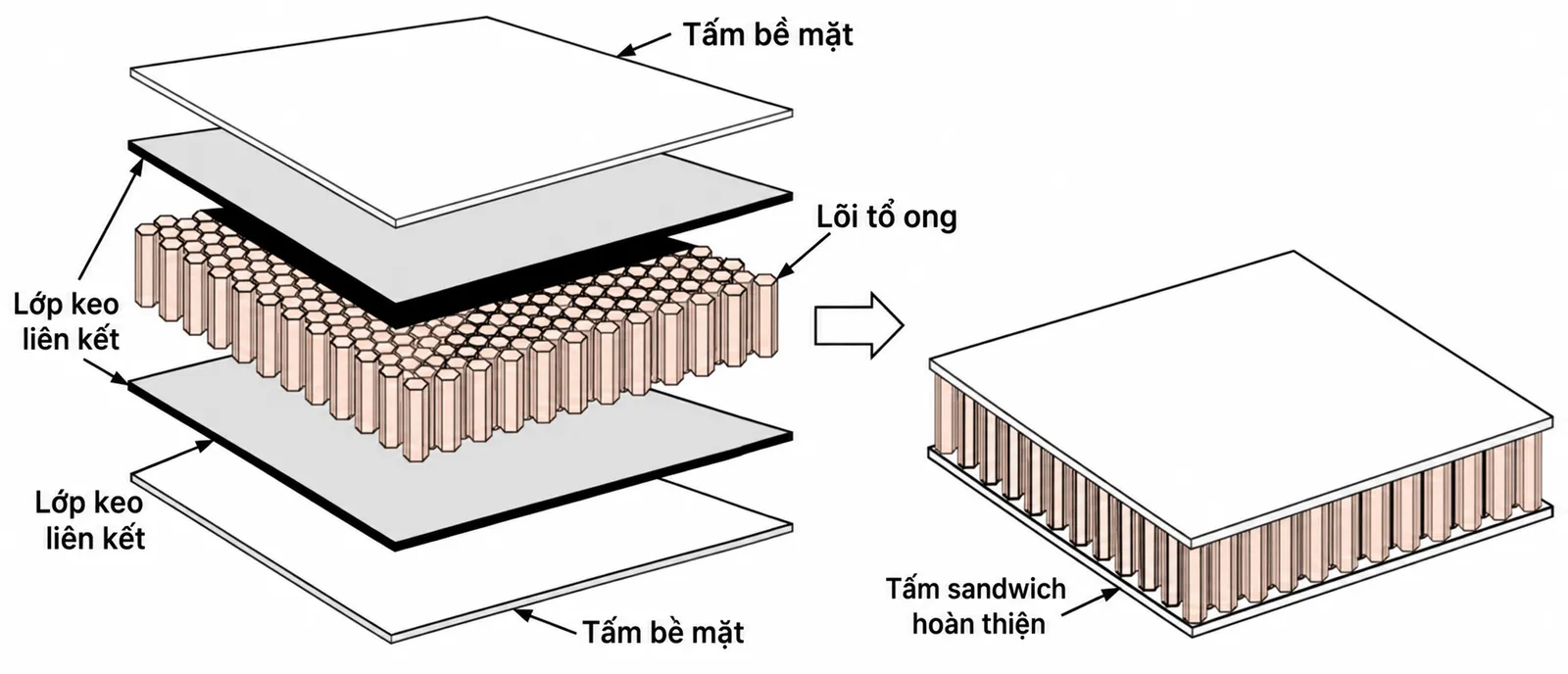
This material features a core formed of hexagonal aluminium cells combined with outer skin layers to form a rigid panel. This sets it apart from natural timber, engineered wood, or conventional folded sheet-metal cabinets.
The aluminium core does not absorb water or swell like wood fibre materials. Aluminium is also immune to termites, helping eliminate a key group of material-related risks during use.
However, a shoe cabinet is more than just panels assembled together. To create a finished piece, components must be precision-machined to size, expertly edge-banded, joined, and fitted with appropriate hardware.
Locations such as hinges, drawer runners, shelves, or flap mechanisms must be engineered for compatibility with the panel structure—a key factor influencing smooth operation and overall product stability.
The exterior surfaces can also be finished in various styles, from solid shades to wood-grain effects, depending on the material configuration. As a result, aluminium honeycomb shoe cabinets can seamlessly complement modern interiors without feeling overly industrial.
What is aluminium honeycomb? Structure, characteristics, and interior applications
Why does shoe storage demand more careful material selection?
Unlike wardrobes, shoe cabinets are regularly exposed to items brought directly indoors from outside.
A pair of shoes can carry dirt, moisture, or rainwater. If stowed immediately in a sealed compartment, dampness can accumulate and lead to lingering odours. Furthermore, sports trainers, leather shoes, and everyday footwear each have distinct preservation requirements.
Therefore, materials for shoe cabinets must be considered in relation to their real-world environment. Internal surfaces should be effortless to wipe clean, whilst the structure must withstand frequent daily opening and closing.
In compact apartments, shoe cabinets are often situated adjacent to the main entrance, in hallways, or against exterior walls. If these areas are prone to dampness, material selection and installation method require extra consideration.
Aluminium honeycomb is a compelling option owing to the inherent properties of its metallic core. Nevertheless, material alone cannot resolve every functional issue of shoe storage.
A completely sealed cabinet lacking adequate ventilation can still develop odours when damp shoes are stored inside. Similarly, poorly arranged shelving will make retrieving shoes inconvenient, regardless of material quality.
Therefore, a well-suited shoe cabinet must simultaneously resolve three issues: footwear preservation, spatial organization, and everyday convenience.
Practical benefits of aluminium honeycomb shoe cabinets
Mitigating moisture impact and enabling effortless cleaning
One of the main reasons homeowners consider aluminium honeycomb shoe cabinets is the material's performance in humid areas.
The aluminium core neither absorbs water nor swells like wood fibre materials. Consequently, aluminium honeycomb offers a clear advantage when utilized in cabinetry frequently exposed to damp footwear or placed near entrance doors.
However, the moisture resistance of the final product also depends on the surface layer, edge sealing, joinery, and fittings. It should not be assumed, therefore, that any cabinet incorporating aluminium honeycomb can withstand direct water exposure under all conditions.
In terms of maintenance, shoe cabinets should feature easy-to-clean surfaces and a layout that allows access to internal corners. Everyday footwear compartments naturally accumulate dust, sand, and minor scuffs, requiring periodic cleaning.
For wet shoes, it is advisable to allow them to drain and dry before storing them away. If footwear is frequently worn in rainy weather, incorporating an open niche or dedicated area for drying shoes is highly beneficial.
This practice reduces moisture introduced into the cabinet while helping preserve the footwear far better.
Versatile surface finishes: seamlessly matching living room interiors
The shoe cabinet is often the very first piece seen by homeowners and guests upon entering the home. Beyond functionality, its design directly influences the visual atmosphere of the space.
With aluminium honeycomb, the appearance of the cabinet is largely defined by the surface finish. Depending on the material specification, homeowners can choose solid colours, wood-grain textures, or subtle neutral tones to match their interior style.
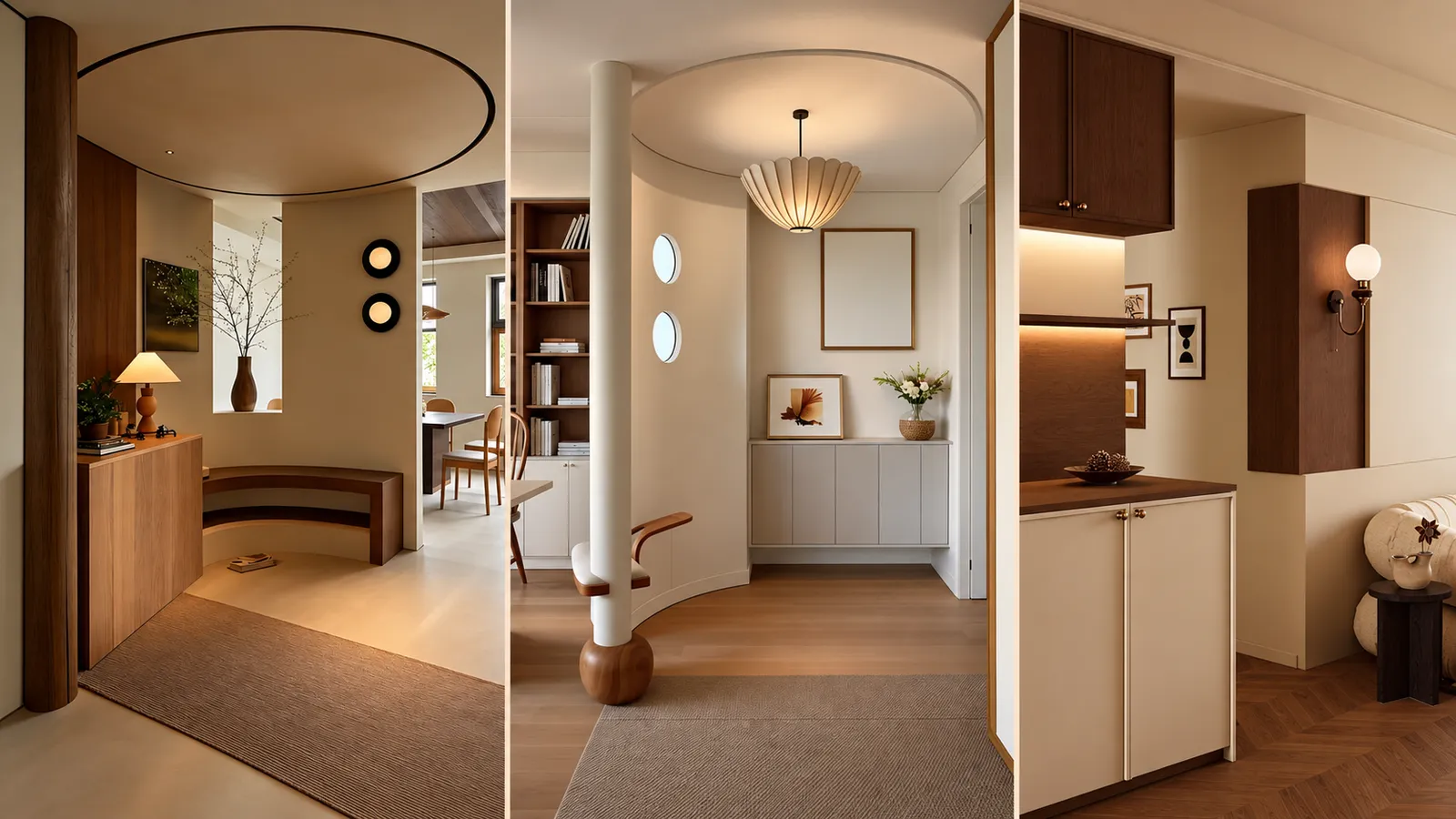
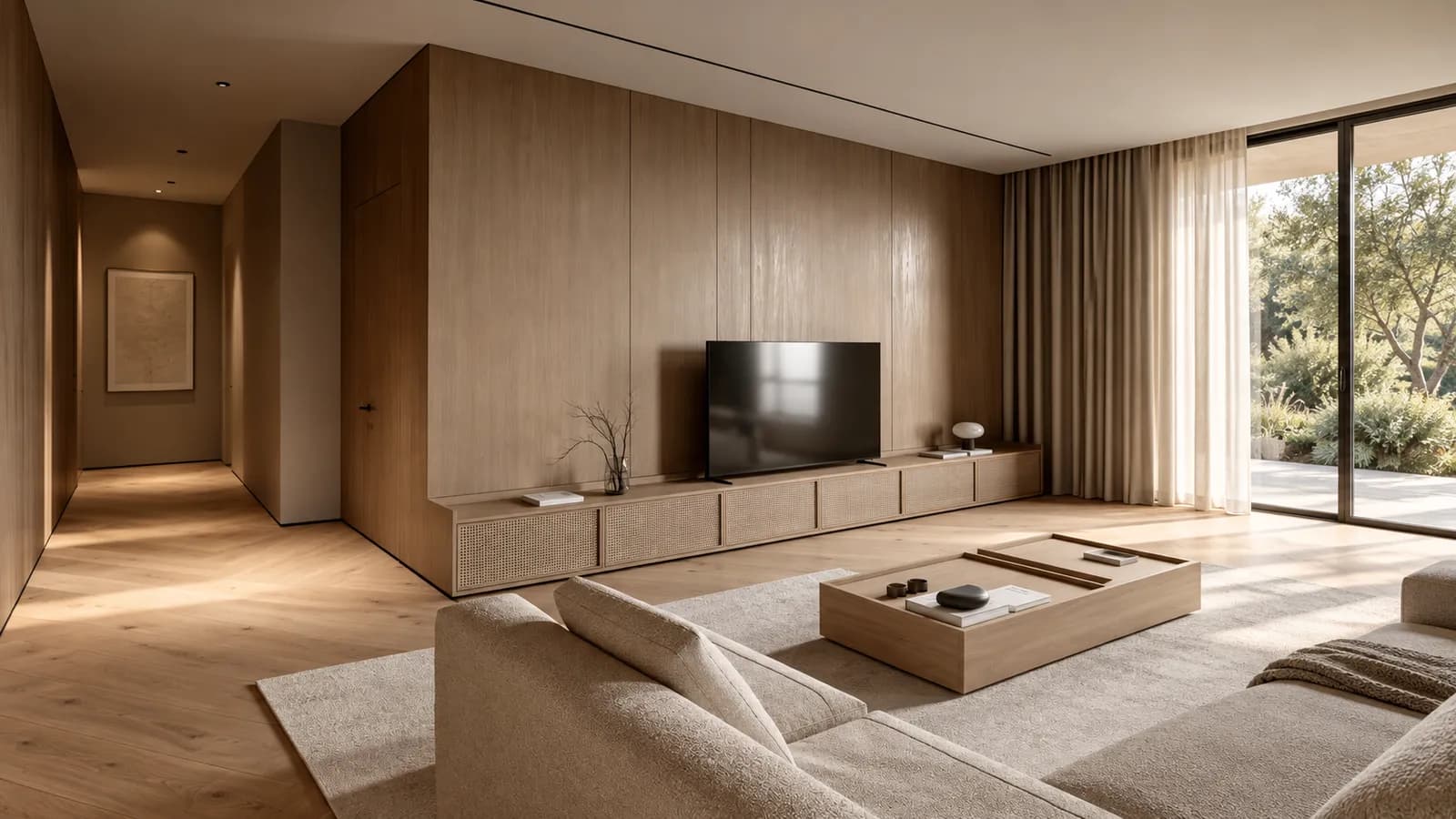
For instance, an apartment featuring beige tones and light wood can incorporate a shoe cabinet matched in colour to the living room joinery. Contemporary spaces utilizing walnut, charcoal grey, or taupe can similarly select corresponding finishes to establish visual continuity.
The key is not decorative ornamentation, but rather refined proportions and balanced colour choices. A floor-to-ceiling cabinet with flush doors creates a neat, minimalist feel, whereas a design incorporating open niches offers a visually lighter presence.
Beyond colour, integrated handles, shadow gaps, and panel division must be carefully calculated. Overly complex division lines or contrasting colours can easily make the entrance area feel cluttered.
In apartments where the living room opens directly into the entrance, the shoe cabinet should be treated as an integral part of the overall joinery system rather than a standalone piece.
Tailored flexibility to suit family routines
A visually appealing shoe cabinet may not be functional if the compartments fail to suit a family's specific footwear collection.
For example, families with young children often require lower tiers so children can reach their own shoes. Those with extensive trainer collections might prioritize wide, easy-to-clean shelves. Meanwhile, boots and high heels require different vertical clearances compared to indoor slippers.
Aluminium honeycomb can be custom-fabricated into joinery systems tailored to precise dimensions and structures, allowing bespoke storage solutions rather than relying on off-the-shelf models.
However, customizability does not mean every shelf design or door style is suitable for the same material configuration. Load-bearing zones and hardware mounting points must be engineered correctly.
A practical solution is to zone storage according to frequency of use. Everyday shoes should be placed at an easily accessible height, whilst rarely worn pairs can be stored in top compartments or deeper recesses.
If space allows, the cabinet can also incorporate drawers for keys and small items, or a dedicated compartment for dried umbrellas and raincoats.
Through thoughtful organization, a shoe cabinet becomes more than just storage—it creates an orderly, functional, and welcoming entryway for daily life.
Aluminium honeycomb shoe cabinet designs for modern homes
Floor-to-ceiling shoe cabinets: maximizing vertical height for apartments and townhouses
Floor-to-ceiling shoe cabinets are a popular option for homeowners seeking to expand storage capacity without taking up additional floor area.
This design utilizes the full height from floor to ceiling to create multi-tiered storage. Lower compartments serve daily footwear, whilst the upper space is ideal for storing shoeboxes or seldom-used items.
Aesthetically, a tall cabinet creates a seamless feature wall. When selecting suitable finishes and colours, the shoe cabinet integrates into the architecture rather than appearing as a bulky standalone piece.
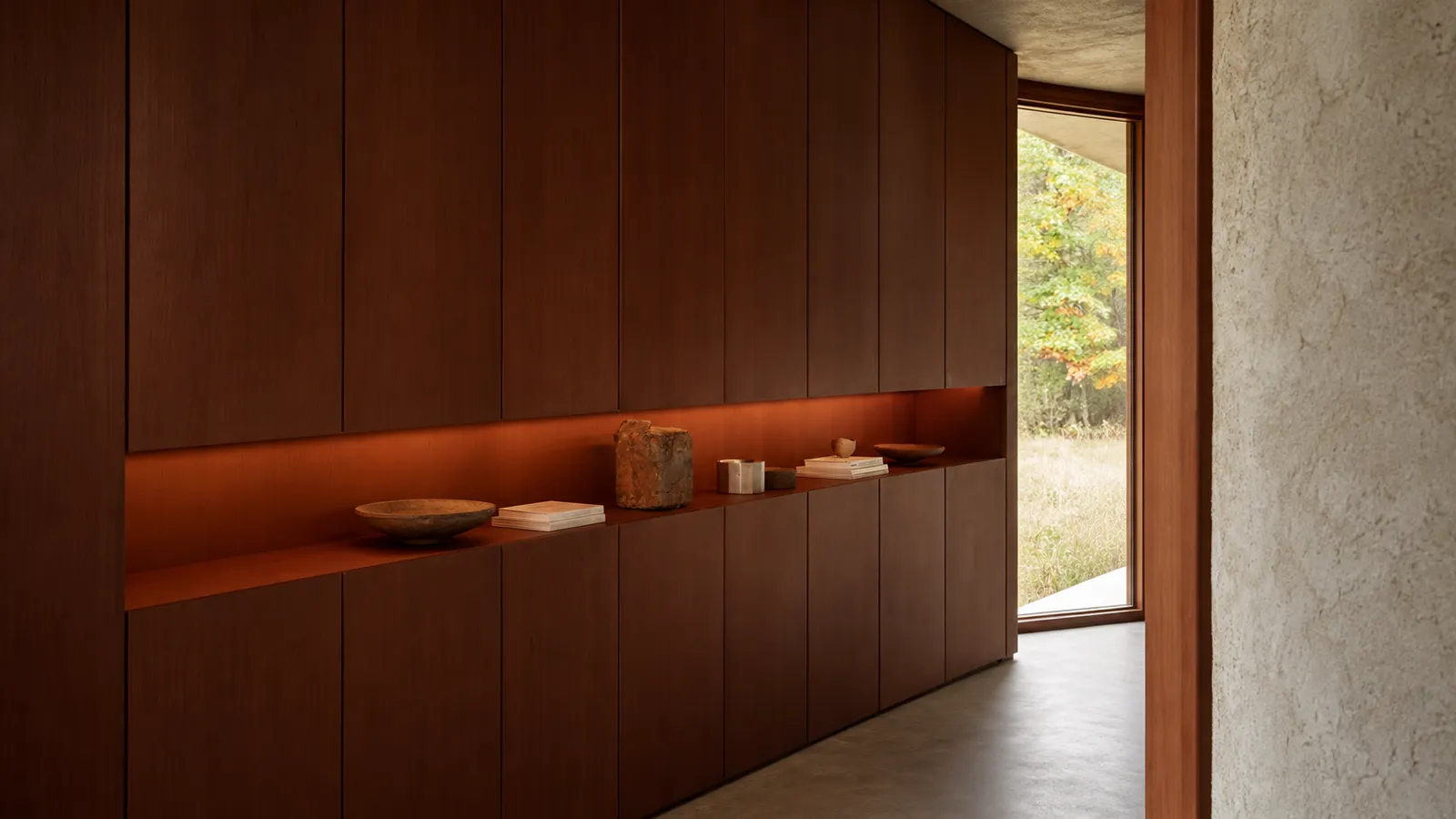
However, floor-to-ceiling cabinets are not always the best solution. In overly narrow hallways or dimly lit entryways, a tall, dark unit can make the space feel oppressive.
In such cases, homeowners can opt for light-coloured surfaces, combine open niches, or balance door proportions to alleviate any sense of confinement.
Additionally, tall cabinet doors require precise sizing and suitable hardware. Upper compartments should also be planned according to practical needs, avoiding excessive depth that makes retrieving items inconvenient.
When working with aluminium honeycomb, meticulous edge finishing and secure hardware joinery are essential for large-scale cabinetry.
Shoe cabinets with integrated seating: everyday convenience for modern living
For households with elderly family members, young children, or those who frequently wear lace-up shoes, an integrated shoe-changing seat makes the entryway significantly more convenient.
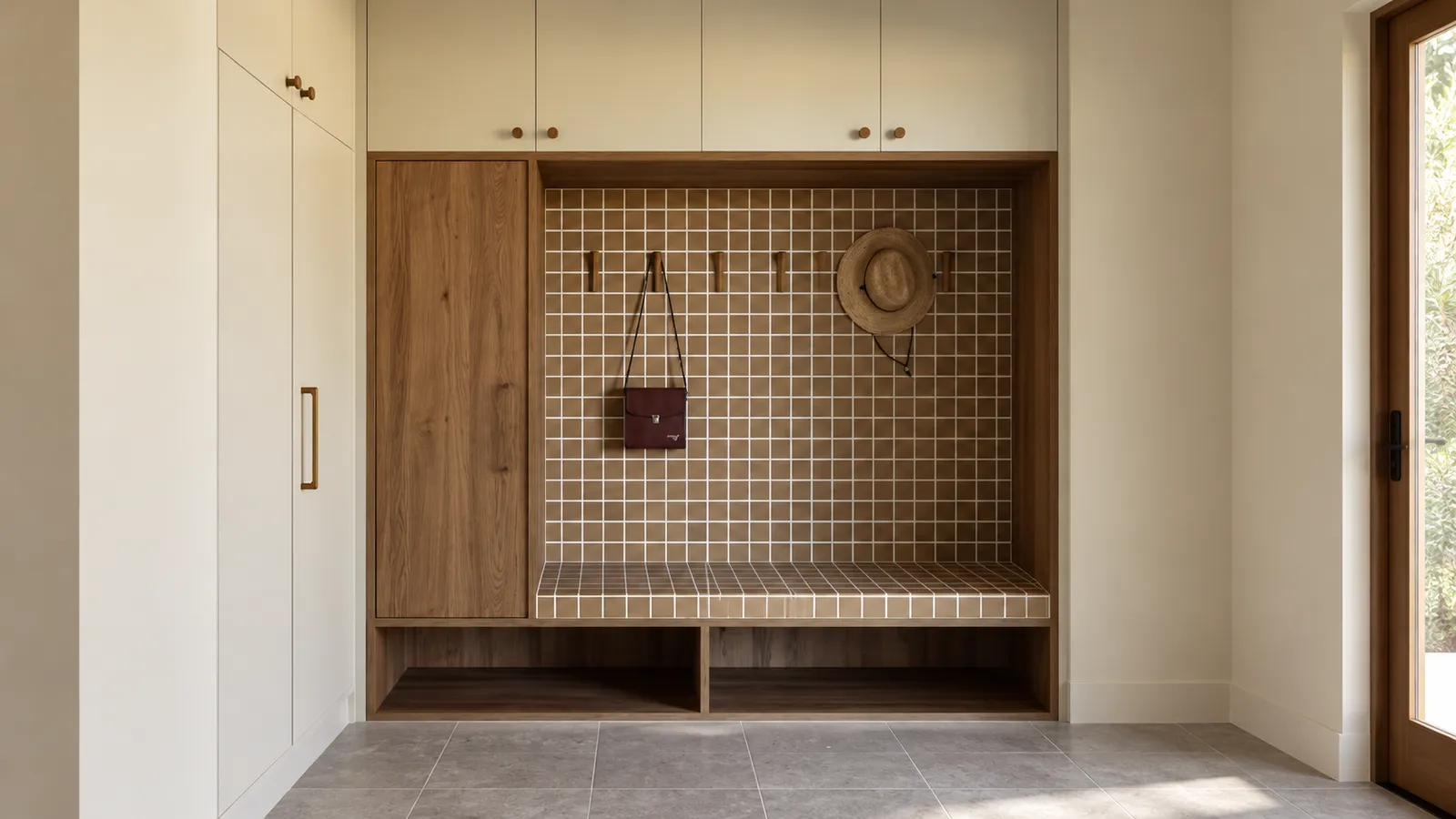
Rather than placing a freestanding stool, homeowners can opt for a shoe cabinet with built-in seating within a single cohesive joinery system. The seat can be positioned at one end of the cabinet, nestled between two storage bays, or directly beneath a coat rack.
This design approach reduces clutter from individual furniture pieces while creating a dedicated spot for putting on and taking off footwear.
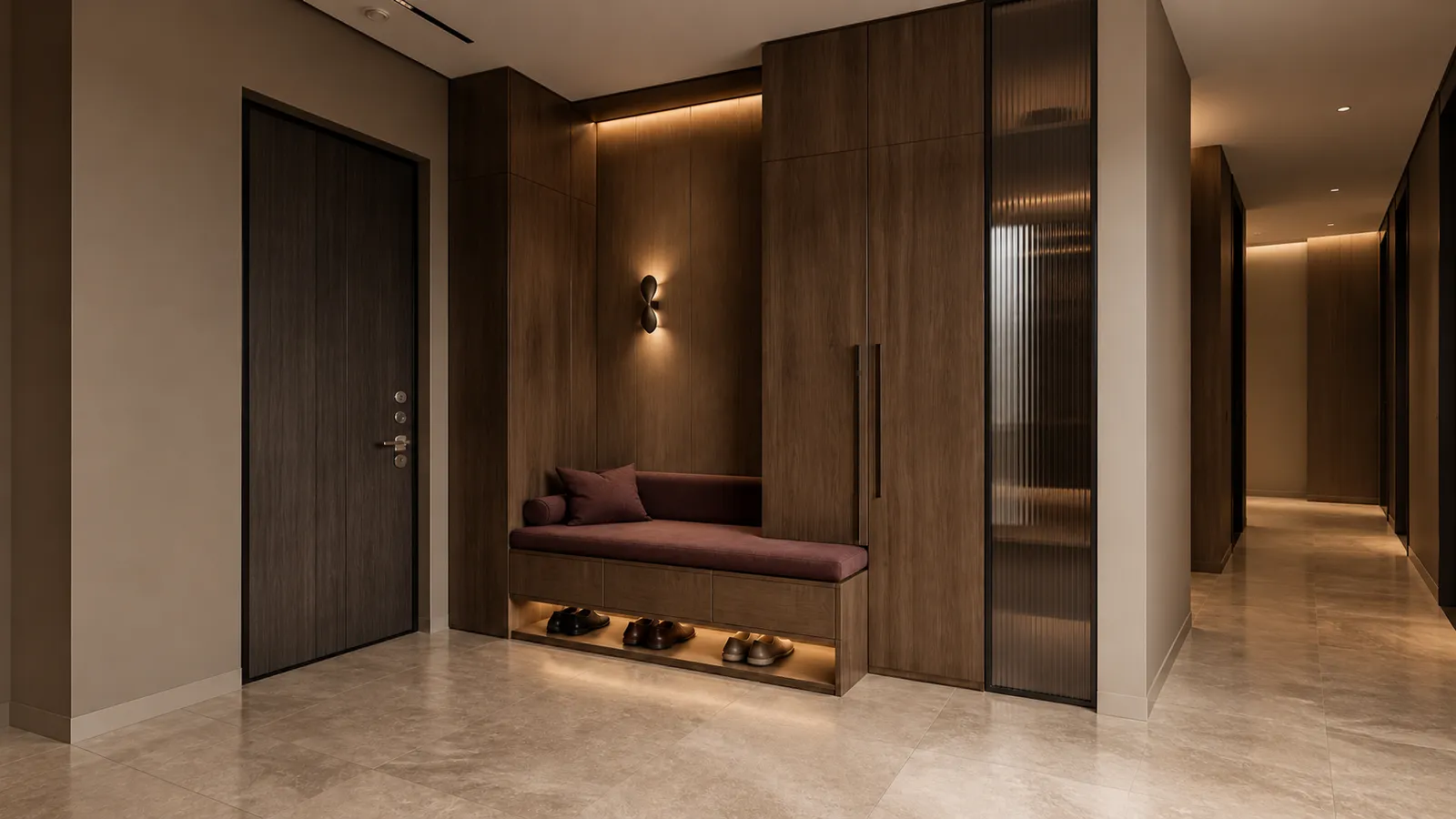
However, a clear distinction must be made between cabinetry components and load-bearing structural elements for seating. The seat requires a dedicated, properly engineered load-bearing structure; a standard cabinet shelf panel should never be assumed suitable for direct use as a seat top.
The seating surface can be finished in materials that complement the overall interior aesthetic, enhanced with cushioning if desired. The compartments below are ideally arranged for quick access to indoor slippers or daily footwear.
For apartments with compact entryways, a shoe cabinet system combining seating and a mirror can fulfill multiple requirements in a single footprint.
The key priority remains user convenience, rather than attempting to cram in as many functions as possible.
Hinged-Door, Tilt-Out, and Open-Bay Shoe Cabinets
Beyond aesthetic styling, the door-opening mechanism directly influences the day-to-day user experience of a shoe cabinet.
Traditional hinged doors suit spaces with adequate clearance in front. Their advantage lies in clear visibility and effortless access to storage compartments, accommodating footwear of various sizes with ease.
Tilt-out doors are often considered when minimizing cabinet depth is essential. However, tilt-out mechanisms bring specific requirements regarding hardware, load capacity, and shoe sizes. Larger shoes or high-top boots may not fit comfortably within certain tilt-out layouts.
For households with extensive daily footwear, a combination of open shelves and closed compartments is worth serious consideration.
Open compartments offer swift access and encourage airflow, whereas enclosed sections are ideal for storing less frequently worn pairs, maintaining a tidy appearance around the entrance.
Whichever door style is chosen, adequate ventilation remains crucial. Louvred slats, discreet air vents, or bespoke airflow solutions tailored to the design and usage conditions should be incorporated.
A thoughtfully planned aluminium honeycomb shoe cabinet harmoniously balances storage capacity, practical convenience, and refined aesthetics, rather than focusing solely on shelf count.
Choosing the Right Aluminium Honeycomb Shoe Cabinet with Thiên Tín
Key Considerations Before Ordering a Bespoke Shoe Cabinet
Before selecting a cabinet style, homeowners should evaluate their actual shoe inventory and the daily routines of all family members.
A household with an extensive trainer collection requires a different layout from one wearing primarily slippers, formal shoes, or high heels. If there are young children, lower compartments should be thoughtfully positioned for easy access.
Next is the installation area. It is vital to measure the width, depth, and height, while considering the clearance required for door openings.
Crucially, the shoe cabinet must not obstruct walkways or interfere with the main entrance door. For apartments with narrow hallways, slimline designs or tall, vertically partitioned units are often far more suitable than deep cabinetry.
Regarding materials, clients are advised to inspect physical samples to appreciate the surface finish, edge detailing, and aluminium honeycomb panel structure. Mounting points for hinges, runners, or tilt mechanisms must be precisely engineered to suit the chosen hardware.
When reviewing a quote, clarify the dimensions, material specifications, finishes, hardware fittings, compartment counts, and scope of installation.
This transparency allows homeowners to compare options accurately while minimizing unexpected modifications during production.
What Factors Influence the Price of an Aluminium Honeycomb Shoe Cabinet?
The cost of an aluminium honeycomb shoe cabinet is not determined solely by its overall width or height.
Two cabinets of identical dimensions may require different levels of investment due to internal configurations, surface finishes, door counts, and hardware systems.
For instance, a standard hinged unit with basic shelving involves a different manufacturing process compared to an integrated system featuring seating, drawers, and tilt-out bays. Such custom details increase crafting complexity and hardware investment.
Surface finishes also play a significant role in pricing. Depending on the specification, solid tones, wood-grain effects, or decorative options carry varying cost structures.
In addition, site conditions must be evaluated. Non-square walls, structural columns, service risers, or bespoke architectural adjustments can increase installation complexity.
Therefore, homeowners should avoid comparing prices purely per linear metre without considering build specification. A transparent quote should clearly outline the cabinet layout, material specifications, and hardware included.
To establish the right investment level, define a target budget alongside essential requirements. This enables designers to refine specifications without compromising key functionalities.
Designing and Manufacturing Aluminium Honeycomb Shoe Cabinets at Thiên Tín
An exceptional shoe cabinet need not be overly elaborate. What matters most is addressing practical storage needs, keeping the entryway uncluttered, and harmonizing with the wider interior scheme.
At Thiên Tín, our consultations begin with your physical space and lifestyle routines. From there, our specialists recommend tailored dimensions, compartment layouts, door styles, and material selections.
Utilising aluminium honeycomb panels, Thiên Tín delivers cohesive door and cabinetry solutions, pairing sophisticated surface finishes with bespoke architectural designs for every project.
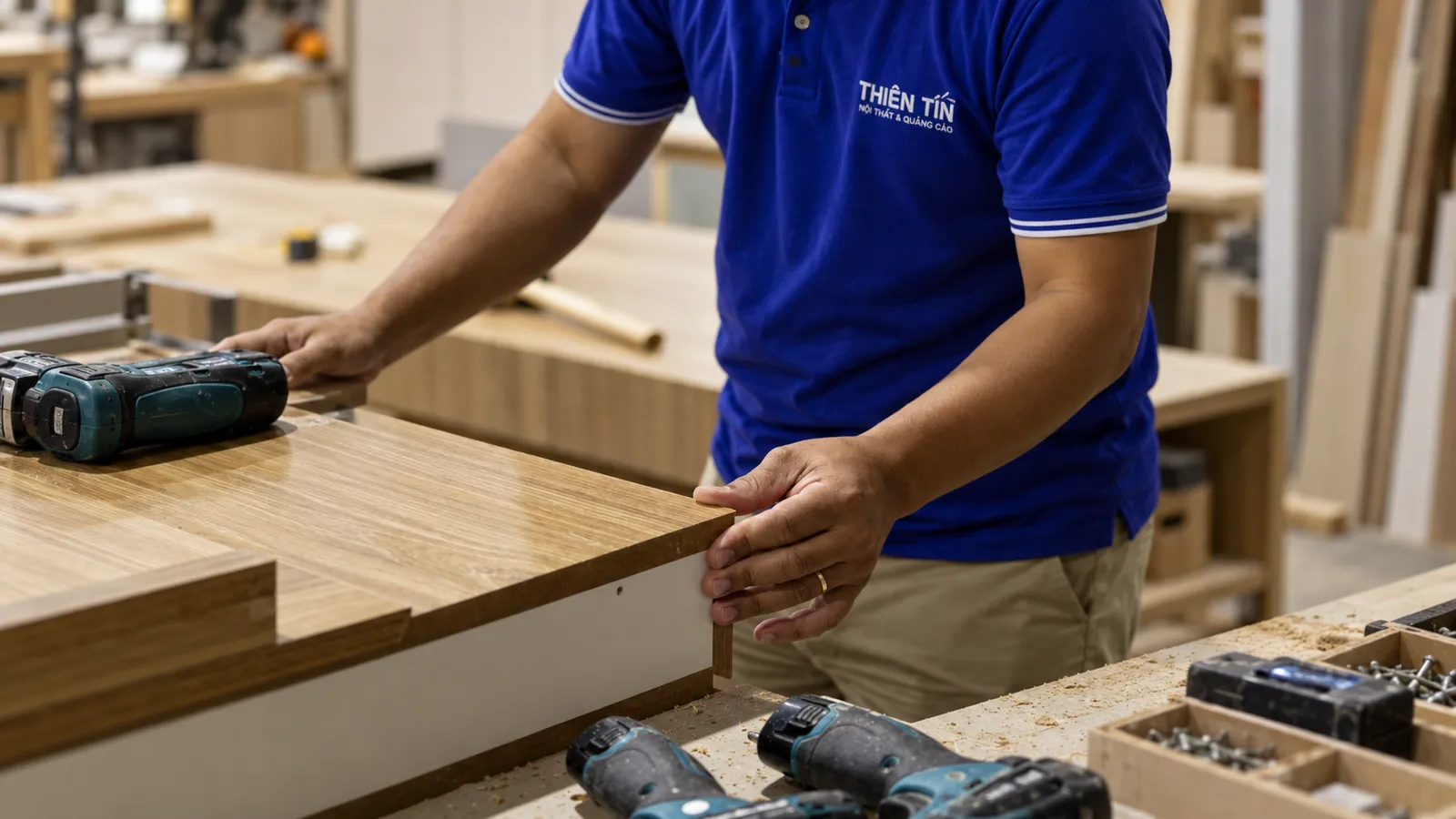
Our manufacturing process spans from technical drawings to precision machining, edge detailing, assembly, and hand-finishing. Details such as door reveals, hardware alignment, and smooth operation are meticulously crafted to ensure flawless performance upon handover.
Beyond shoe cabinets, clients can explore matching designs for kitchen cabinetry, wardrobes, media units, or other joinery elements to achieve seamless colour and stylistic unity.
THIÊN TÍN – A pioneer in providing cohesive door and cabinetry solutions from next-generation aluminium honeycomb panels in Vietnam.
If you are seeking a bespoke aluminium honeycomb shoe cabinet tailored to your home, we invite you to visit Thiên Tín to inspect material samples, explore design concepts, and discuss your storage requirements.
Based on your spatial measurements and intended investment, Thiên Tín will advise on the ideal solution before proceeding with design and detailed quoting.
Thiên Tín Journal · Guides · Page 12