Thiên Tín Journal · Guides
Materials
Aluminium honeycomb and engineered wood: which material should you choose for your interior?
When designing kitchen cabinets, wardrobes, or storage systems for your home, the difficult question is not just choosing a colour or a style, but selecting a material that will remain stable for many years.
Page 24
Thiên Tín Journal · Guides
Page 25
When designing kitchen cabinets, wardrobes, or storage systems for your home, the difficult question is not just choosing a colour or a style, but selecting a material that will remain stable for many years.
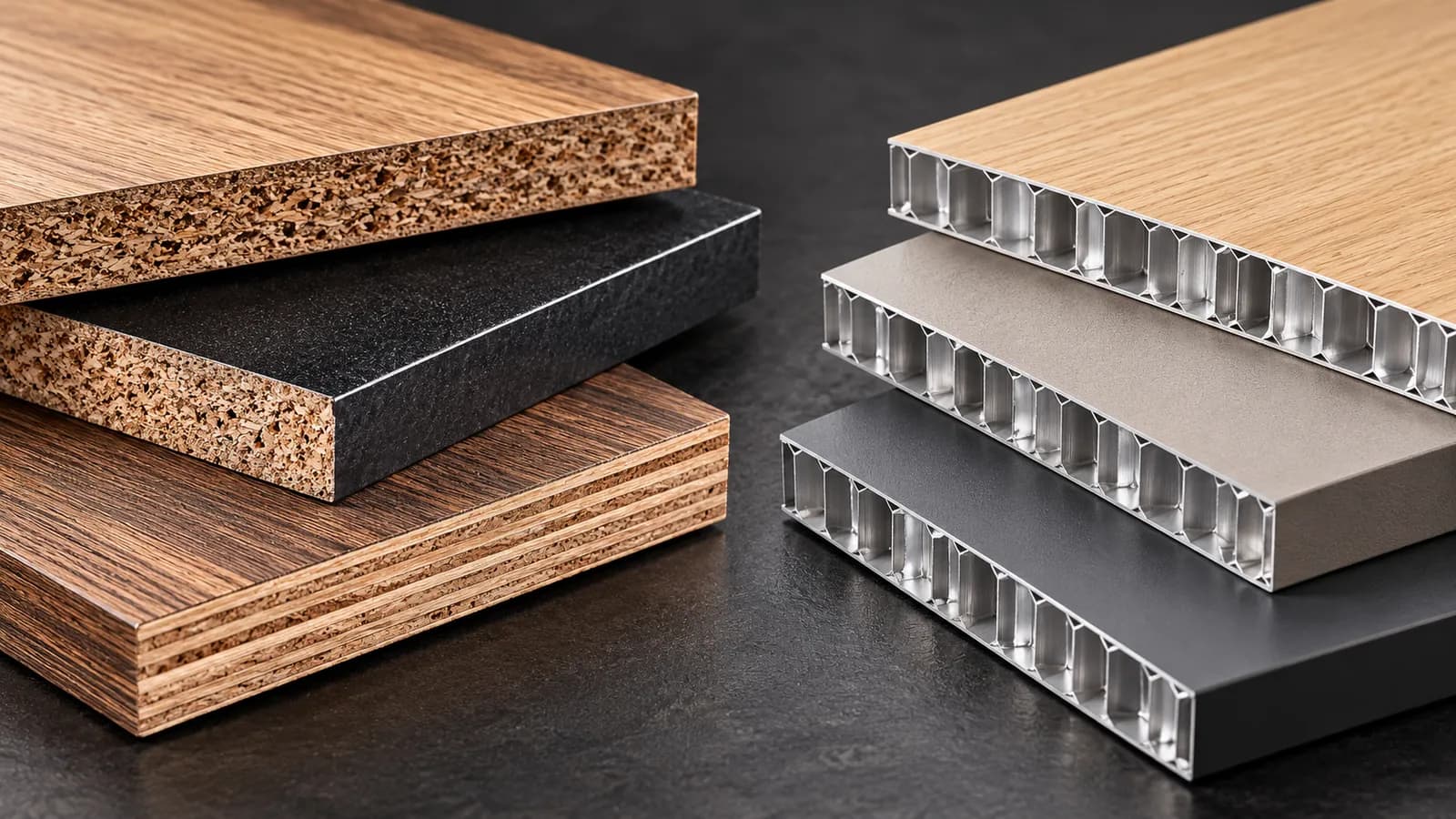
Engineered wood is a familiar choice due to its diverse designs, flexible fabrication, and range of investment levels. Meanwhile, aluminium honeycomb is gaining attention for its metal core, excellent adaptability to humid environments, and resistance to termites, unlike cellulose-based materials.
Both materials have very different strengths. Therefore, rather than asking which is “better” in absolute terms, it is necessary to consider them within specific usage conditions to find the right choice for your home.
How do aluminium honeycomb and engineered wood differ in their construction?
Aluminium honeycomb – the difference lies in the metal core structure
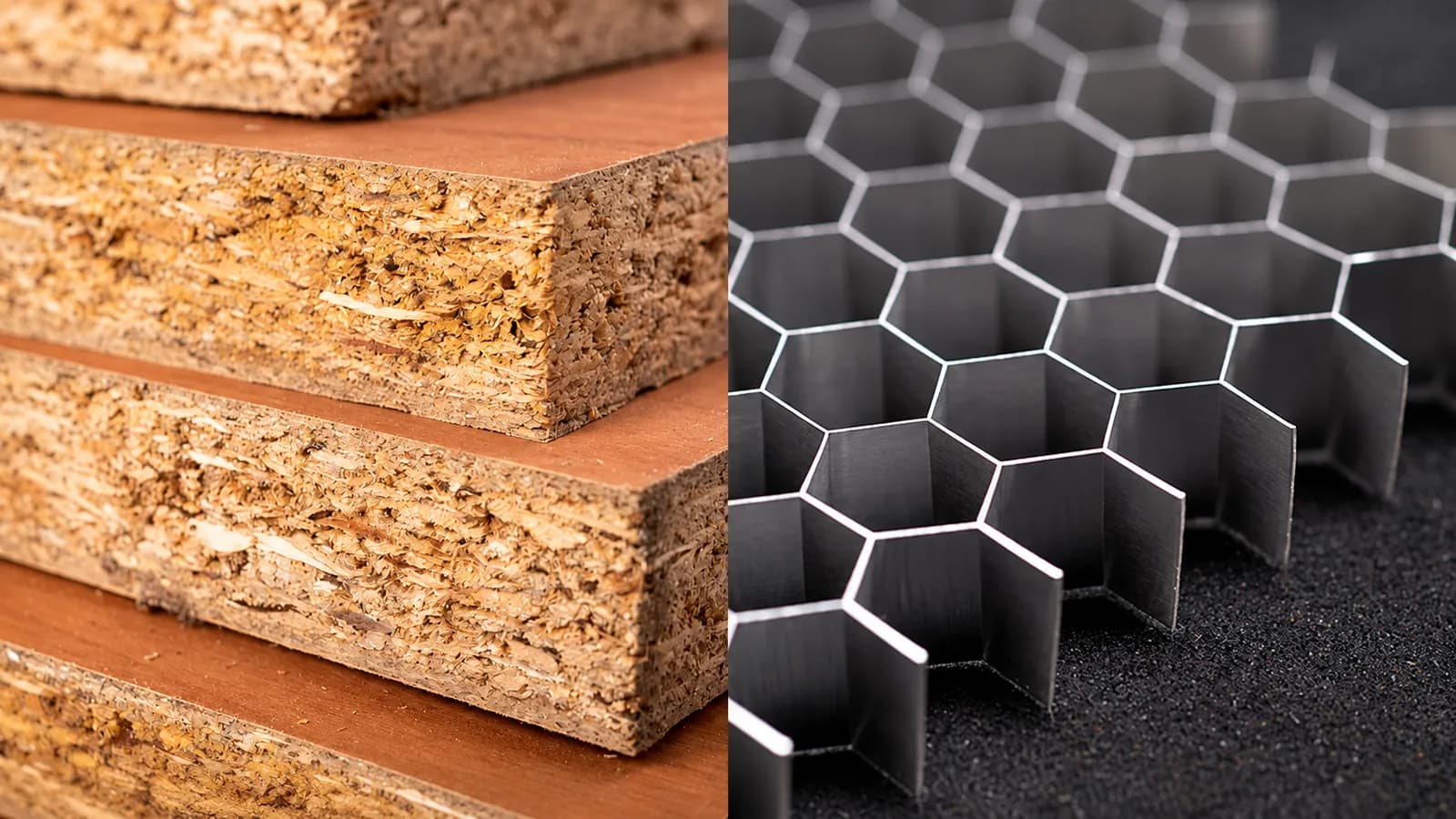
Aluminium honeycomb is a panel material with a core formed from numerous aluminium cells bonded in a honeycomb structure. When applied to interiors, the core is combined with surface layers and bonding systems to create a complete panel.
The value of this structure lies in providing rigidity to the panel while optimising the amount of material used. More importantly for residential environments, aluminium does not absorb water through the mechanism of wood fibres and does not contain cellulose – a component that can become a food source for termites.
It is this difference in the base material that gives aluminium honeycomb an advantage in high-humidity areas such as kitchen cabinets, vanity units, or storage systems placed near damp walls.
At first glance, many might imagine that aluminium furniture would feel cold or lean towards an industrial style. In reality, the appearance of the product depends largely on the surface finish. Depending on the material system and production specifications, options such as wood grain, solid colours, or surface textures can be used to suit various interior styles.
Also, due to its unique structure, aluminium honeycomb requires specific fabrication techniques and joining methods, especially at points where hinges, drawer runners, or concentrated load-bearing points are installed. This is a factor to evaluate when choosing a manufacturer, beyond just the quality of the panel itself.
[What is aluminium honeycomb? Construction, characteristics, and interior applications]
Engineered wood – not all are the same
“Engineered wood” is a broad term that does not represent a single material. In interiors, users may encounter MDF, HDF, particle board, and various other technical boards; these are then finished with Melamine, Laminate, Acrylic, Veneer, or other decorative surfaces.
Because their construction varies, the moisture resistance, stability, and price of each type also differ. Therefore, stating generally that “engineered wood is not durable” or “engineered wood is ruined by water” does not accurately reflect the current materials market.
The strength of this group of materials lies in an ecosystem that is already very popular in the furniture industry. Engineered wood is easy to shape, convenient to process, and has a rich library of colours and wood grains. This is why the material is widely used for wardrobes, desks, decorative shelves, and many residential storage systems.
The point to consider lies in the core and how areas at risk of moisture exposure are treated. For items near water sources, the quality of the board, the coating, the edge banding, and the construction techniques have a significant impact on longevity.
Therefore, when placing engineered wood alongside aluminium honeycomb, one should compare two specific material configurations rather than using a low-cost wood line to represent the entire engineered wood group.
Comparing aluminium honeycomb and engineered wood based on practical usage needs
Water resistance and adaptability to humid environments
This is the criterion that creates a clear distinction between the two groups of materials.
With engineered wood, moisture resistance depends on the type of board core, adhesives, surface layer, and edge-treatment techniques. Boards designed for humid environments are better adapted than standard types, but prolonged water ingress through edges or drilled holes remains a factor that needs to be controlled.
Aluminium honeycomb reacts differently because the core is metal. The aluminium core does not absorb water and swell like wood fibres. This is a significant advantage to consider for cabinets under sinks, vanity units, and areas at risk of water leaks.
This does not mean an entire aluminium honeycomb cabinet set can be submerged in water without any effect. The finished product also includes surfaces, fittings, adhesives, and joints. The water resistance of the cabinet system must therefore be evaluated based on the entire finished construction.
If the house is dry and the item is rarely exposed to water, this advantage may not be the deciding factor. Conversely, for areas that are frequently damp or if the homeowner has previously had to repair cabinets due to water damage to the core, the difference in the nature of the material becomes much more relevant.
Termite resistance and core stability
Termites use cellulose as a source of nutrition. Because aluminium does not contain this component, the aluminium honeycomb core is not a food source for termites and cannot be eaten away in the way that can happen with materials containing wood components.
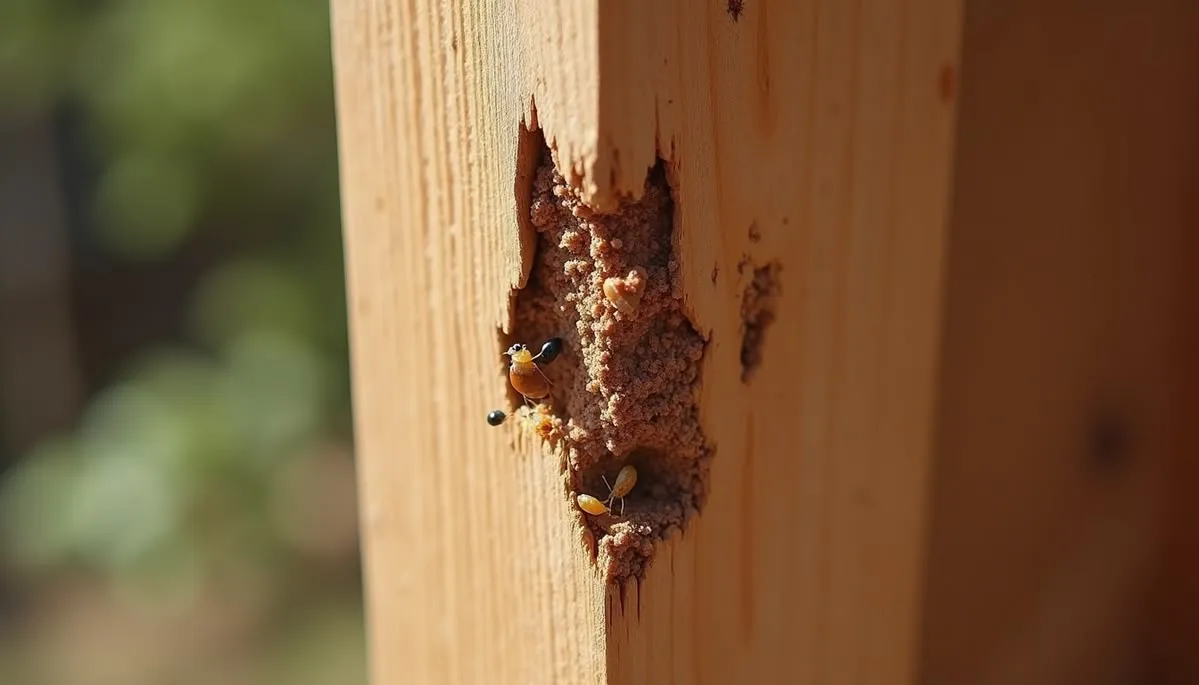
With engineered wood, the risk of termites depends on the type of material, the building environment, and preventive measures. A building that is well-protected against termites from the foundation and structure will significantly reduce the risk to the interior system.
The difference becomes noticeable in houses that have previously had termites, on lower floors, or for cabinets placed near entry points. In such cases, choosing a metal core can help eliminate a food source for termites within the cabinet structure itself.
Regardless of the material used, if a termite colony already exists in the building, treating the root cause is still a necessary step. Termites can continue to move through foundations, walls, and attack other cellulose-containing components in the house.
Therefore, the termite resistance of aluminium honeycomb should be viewed as a material advantage, not a termite treatment solution for the entire building.
Aesthetics and surface finishing capabilities
If considering only the richness of colours and surface systems currently available on the market, engineered wood possesses a clear advantage. Collections of Melamine, Laminate, Acrylic, or Veneer offer many choices from natural wood grains to solid colours, gloss surfaces, or material effects.
This helps architects and homeowners easily choose styles ranging from minimalist, Scandinavian, and Japandi to modern or luxurious.
Today, aluminium honeycomb does not only appear with a metallic surface. When combined with the appropriate surface system, the product can create wood grain effects, neutral tones, or many other types of finishes, helping the material blend into the interior space rather than creating the feeling of industrial equipment.
The significant difference lies in the actual sample sets that each provider can offer. Do not decide based solely on 3D renders, as the colour, gloss, grain, and surface feel can differ significantly when observed in person.
For projects that prioritise a cohesive design, homeowners also need to check the ability to maintain the same colour code or surface language between kitchen cabinets, wardrobes, decorative cabinets, and doors. This is a factor that directly affects the sense of unity in the entire space.
Investment cost: should you look at the initial price or the cost of ownership?
Comparing the price between aluminium honeycomb and engineered wood should not stop at a figure per square metre or linear metre.
Engineered wood has a very wide price range. A cabinet system using standard materials and basic fittings may have a significantly different investment level compared to a product using high-end board cores, high-quality finishes, and premium fittings.
Aluminium honeycomb is similar. The cost depends on the panel construction, surface, complexity of the product, fittings, and fabrication requirements. Therefore, two quotes are only truly meaningful when they are comparing equivalent finished configurations.
Homeowners should also look at the costs during the period of use. A solution with a low initial price but which requires replacing part of the cabinet system after water or termite damage will create a different financial equation than a solution with a higher initial investment but which is more suitable for the usage environment.
Conversely, choosing a high-cost material for an item that is rarely subjected to stress may not necessarily provide a commensurate return on investment.
The most reasonable approach is not “which material is cheaper”, but what level of investment is appropriate for the expected lifespan and usage conditions of each item.
Should you choose aluminium honeycomb or engineered wood for specific interior elements?
Kitchen and vanity cabinets: prioritising usage conditions over aesthetics
Kitchen cabinets are where material differences are most apparent. These units must function in environments exposed to steam, grease, heat, and various technical appliances. The space beneath the sink also carries the risk of leaks from plumbing.
If using engineered wood, prioritising a core board suitable for humid environments and ensuring high-quality edge sealing is essential. With the correct design and appropriate materials, engineered wood can still effectively meet the needs of many households.
Aluminium honeycomb offers a distinct advantage due to its core, which does not swell when exposed to moisture. For homeowners who have previously experienced swollen kitchen cabinet bases after plumbing issues or wish to mitigate risks in sink areas, this is a practical reason to consider the material.
Vanity cabinets have similar requirements but are situated in even more humid environments. In this case, water resistance may take precedence over other criteria.
Instead of habitually applying one type of material, it is better to start with the question: to what extent will this cabinet system be exposed to water, heat, and humidity? The answer will help narrow down your choices more effectively.
[Are aluminium honeycomb interiors water-resistant and termite-proof?]
Wardrobes and decorative cabinets: balancing durability, aesthetics, and budget
Wardrobes are generally not directly exposed to water, so the material selection process differs from that of kitchen cabinets.
Engineered wood has the advantage of a wide range of surface finishes and the ability to cater to various budget segments. For dry bedrooms, properties with effective termite prevention, and cases where the owner may wish to update the design after a few years, this remains a popular and sensible choice.
Aluminium honeycomb becomes more worth considering when cabinets are placed against damp walls, if the homeowner is concerned about termites, or if they wish to reduce risks associated with core moisture. Floor-to-ceiling cabinet systems also require careful calculation regarding door weight, hardware connections, and structural load-bearing capacity.
For living room decorative cabinets, aesthetics are usually prioritised. In this instance, the surface, colour, lines, and architectural harmony may be more important than water resistance.
There is no requirement that the entire house must use a single material. In some projects, prioritising aluminium honeycomb for high-moisture areas and selecting different materials for dry areas can be a sound investment strategy.
When should you prioritise aluminium honeycomb, and when is engineered wood more suitable?
If your primary needs are a rich variety of surface finishes, familiar material systems, flexible processing capabilities, and a wide range of budget options, engineered wood has clear advantages.
If the project prioritises adaptability to humid environments, limiting the risk of termite damage to the core, or if the homeowner prefers a metal material system for areas frequently exposed to water, aluminium honeycomb is a choice worth including in the design plan.
You can visualise the differences through a brief table:
| Criteria | Aluminium honeycomb | Engineered wood |
|---|---|---|
| Core nature | Aluminium honeycomb structure | Varies by type: MDF, HDF, particle board, etc. |
| Water exposure | Aluminium core does not swell due to water absorption | Depends on core type, coating, and edge treatment |
| Termites | Aluminium core is not a food source for termites | Requires consideration of board type and termite prevention measures |
| Surface | Can be finished in many colours/textures depending on the product line | Very diverse surface systems |
| Processing | Technical requirements suited to the core structure | Common processing systems |
| Cost | Depends on construction, surface, and installation method | Wide price range depending on core board and surface |
| Recommended applications | Kitchens, vanities, cabinets near damp areas, integrated cabinet/door systems | Wardrobes, shelves, desks, dry cabinet systems, and other applications |
The table above should only be used as a guide. Actual quality also depends on the specific material line and the expertise of the contractor.
Choose the right materials and interior solutions with Thiên Tín
Do not choose materials before determining usage conditions
A common mistake in interior design is choosing materials based on names or trends first, then trying to apply them to the entire house.
A more effective approach is to start from the usage conditions. For each element, determine the level of exposure to water, humidity, termite risk, load, frequency of use, and aesthetic requirements.
Cabinets under the sink should be viewed differently from living room decorative cabinets. A vanity cabinet does not share the same environment as a desk. A large door also poses completely different connection requirements compared to a small shelf.
Once these factors are determined, comparing aluminium honeycomb and engineered wood becomes more specific. Homeowners no longer need to find the “best” material, but simply identify the one most suitable for each location and investment level.
When receiving a quote, you should also ask the contractor to clarify the product configuration: material type, surface, hardware, connection methods, and warranty scope. The final price is only comparable when configurations are placed on an equal footing.
This is also a way to avoid choosing materials based on advertisements that are not suitable for actual usage needs.
Thiên Tín provides material advice based on needs, not a fixed formula
At Thiên Tín, material selection is placed within the overall design and functionality of each space.
One family may prioritise aluminium honeycomb for kitchen and vanity systems because these are high-humidity areas. Another project may want to standardise materials for kitchen cabinets, wardrobes, and doors to create consistency in use and aesthetics. Each plan must be calculated based on needs, rather than applying the same configuration to all clients.
With aluminium honeycomb panels, Thiên Tín aims to leverage the advantages of a metal core while addressing requirements for surface finishes, textures, fittings, and finished product design.
We recommend that clients view samples in person before making a decision. Experiencing the colour, grain, texture, and physical construction firsthand makes comparing them with engineered wood much clearer than viewing images on a screen.
When materials are selected based on the specific conditions of use, clients can better manage their budget: investing in areas that truly require durability and avoiding unnecessary expenditure on features that are not needed.
Aluminium honeycomb or engineered wood: which is the right choice for your home?
There is no universal answer as to whether aluminium honeycomb or engineered wood is always better.
Engineered wood offers a diverse product range, extensive surface finishing options, and various investment tiers. It remains a suitable material for many interior applications when selected and installed under the correct conditions.
Aluminium honeycomb provides an alternative for homeowners concerned about core moisture resistance, termite prevention, and those seeking new material solutions for cabinetry and doors. This advantage is particularly significant in areas such as kitchens, vanity units, or spaces with high humidity.
The key is not to replace one material entirely with another. A sound interior design approach must balance durability, functionality, aesthetics, and investment level.
THIÊN TÍN – A pioneer in providing integrated cabinet and door solutions using next-generation aluminium honeycomb panels in Vietnam.
From material consultation and design to production and finishing, Thiên Tín aims to help clients understand exactly what they are choosing and why that choice is suitable for their living space.
If you are undecided between aluminium honeycomb and engineered wood, you are welcome to view material samples directly at Thiên Tín to compare the construction, surface, and practical requirements before selecting the best solution for each application.
Thiên Tín Journal · Guides · Page 26