
Thiên Tín Journal · Guides
Aluminium honeycomb
How are aluminium honeycomb panels applied in interior design?
When aluminium honeycomb panels are mentioned, many people simply imagine a material sheet with a hexagonal core inside.
Page 16
Thiên Tín Journal · Guides
Page 17
When aluminium honeycomb panels, many people simply imagine a material sheet with a hexagonal core inside. However, when applied to interior furniture manufacturing, this material can be crafted into various components to create kitchen cabinets, wardrobes, shoe cabinets, vanity units, TV consoles, display cabinets or interior doors.
The key consideration, therefore, is not merely “is aluminium honeycomb good?”, but rather which categories the material's characteristics suit best and how it should be engineered into the finished product. Understanding its proper application enables homeowners to select materials based on genuine practical needs, rather than relying solely on a few advertised benefits.
Why can aluminium honeycomb panels be used across various interior applications?
From a single sheet of material to structural components of cabinets and doors
To understand its versatility, one must first look at the material's construction. Aluminium honeycomb panels employ a sandwich structure, featuring a metallic core formed into hexagonal cells—resembling a natural honeycomb—faced with surface layers on both sides. This architecture results in a versatile panel that can be further precision-crafted into bespoke furniture components.
What is aluminium honeycomb? Construction, characteristics, and interior applications
In cabinetry production, a raw panel is first dimensioned according to technical drawings into doors, side panels, shelves, bases, or other structural elements as required by the design. This is followed by sizing, edge-banding, joint preparation, and hardware fitting before the components are meticulously assembled into the final piece.
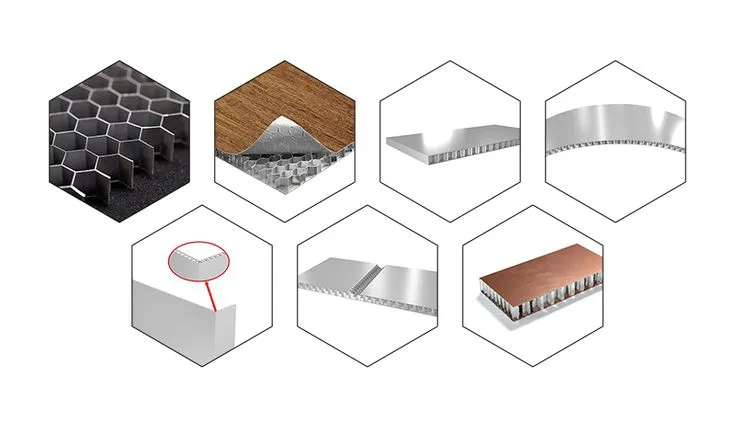
This also implies that an aluminium honeycomb panel is not an off-the-shelf furniture product. The ultimate quality of a cabinet set or door depends on the selected core structure, surface finish, architectural hardware, and crafting techniques.
In particular, the honeycomb core has a distinct structure compared to solid materials. High-stress points—such as hinges, drawer runners, and fixing locations—require tailored engineering solutions right from the design and manufacturing stages. Therefore, when evaluating aluminium honeycomb furniture, one should look beyond the raw material panel and examine how meticulously it has been engineered into the final piece.
Adaptability to residential living environments
One key reason aluminium honeycomb attracts interest in interior design is the inherent resilience of its metallic core when faced with common household challenges such as moisture and termite infestation.
Unlike timber-derived materials, the metal core does not absorb water or swell through organic capillary action. Furthermore, aluminium contains no cellulose—the primary food source for termites. These properties are particularly advantageous for kitchen cabinetry, vanity units, or residences subject to elevated humidity levels.
However, a clear distinction must be made between the material's intrinsic properties and the overall durability of the finished product. A complete cabinet system comprises edge-banding, joints, hardware, adhesives, surface finishes, and numerous fixing points. Long-term performance therefore relies on both the product engineering and craftsmanship quality, rather than being judged solely on the core material.
Similarly, specifying aluminium honeycomb furniture does not eliminate the need to address damp walls, plumbing leaks, or pre-existing pest infestations within the property. Such issues should always be rectified at their root source.
This realistic perspective ensures sound material selection: taking full advantage of aluminium honeycomb's strengths without expecting a single material to solve every structural issue in a home.
The surface finish defines the aesthetic appeal of the piece
A common misconception is that furniture made from aluminium invariably features a cold, metallic surface. In reality, what is visible on a daily basis is primarily the decorative surface finish, rather than the internal core structure.
Depending on the specification and manufacturing techniques, surfaces can be finished in a refined array of colours and textures. Light wood grains suit serene, minimalist interiors; rich walnut tones evoke warmth; while beige, taupe, or grey seamlessly complement contemporary palettes. In bespoke designs, the material can also be elegantly paired with glass, polished metal, or accent textures to create striking focal points.
This is a crucial consideration when transitioning aluminium honeycomb from an engineering material to luxury residential interiors. Homeowners seek not merely functional cabinetry, but pieces that harmonise effortlessly with flooring, wall finishes, lighting, and surrounding décor.
Therefore, when examining aluminium honeycomb samples, it is advisable to inspect both a cross-section sample to understand the structural engineering and a surface sample under natural lighting to evaluate its true aesthetic quality. These two perspectives provide clients with a comprehensive understanding of the material before making an informed decision.
Which interior items can be crafted using aluminium honeycomb panels?
Kitchen cabinetry and larders – applications requiring heightened moisture resilience
The kitchen environment subjects furniture materials to some of the most demanding conditions. Steam, frequent cleaning, sink wet zones, and high usage mean that material selection for kitchen cabinetry requires far greater consideration than standard decorative joinery.
Aluminium honeycomb panels can be engineered into wall units, base units, tall larders, and pantry cabinets according to the design brief. The metallic core eliminates water absorption and swelling typical of timber fibres, making it a highly compelling option for kitchen environments.
However, an exceptional kitchen system relies on more than just superior materials. The sink cabinet must accommodate plumbing feeds and drainage; hob and extractor placements must support an intuitive culinary workflow; while dishwasher, integrated oven, and refrigeration housings must be precisely tailored to appliance dimensions.
Fixing points for hinges, drawer runners, and architectural hardware must also be specially engineered for the panel structure. When all these elements are seamlessly integrated, aluminium honeycomb delivers true value as part of a complete, bespoke kitchen solution, rather than merely serving as a material alternative.
Is aluminium honeycomb kitchen cabinetry any good? Key considerations before commissioning a kitchen
Wardrobes – balancing storage requirements and architectural aesthetics
Bedrooms experience less direct water exposure than kitchens, yet wardrobes are typically substantial in scale, built for longevity, and positioned against perimeter walls. In properties prone to elevated humidity or seasonal dampness, the cabinet material remains a vital consideration.
Aluminium honeycomb can be specified for hinged-door wardrobes, floor-to-ceiling installations, or modular combinations. Depending on your lifestyle requirements, interior layouts can be tailored with hanging rails, folded garment shelving, bespoke drawers, luggage storage, and dedicated accessory compartments.
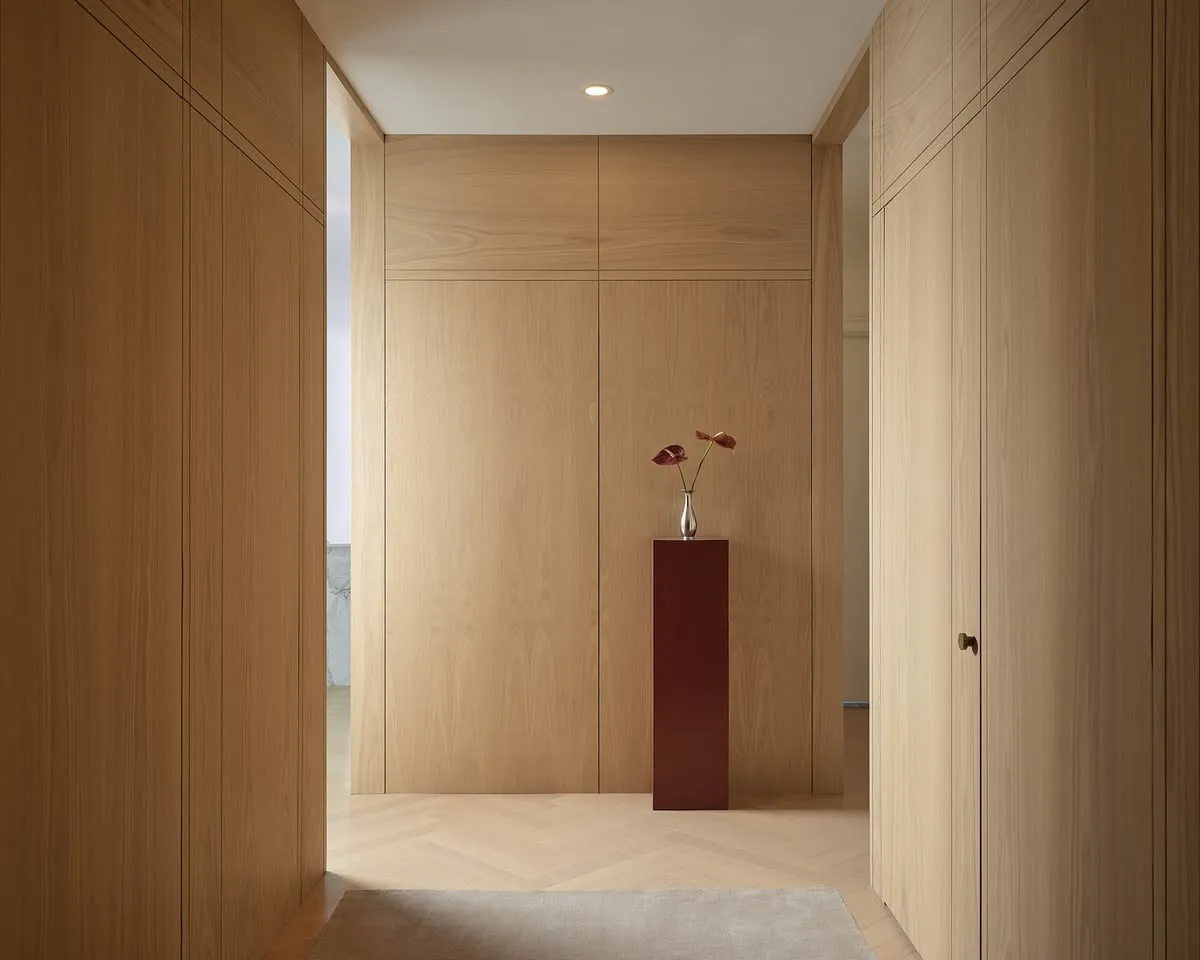
Unlike kitchen joinery, wardrobe design focuses heavily on refined storage organisation and aesthetic harmony within the bedroom suite. Consequently, surface finishes and colour palettes should be curated in alignment with the overarching interior design scheme.
For instance, a compact bedroom benefits from light tones and sleek, flush door fronts to maintain a sense of airiness. Larger master suites can combine warm timber veneers with glass-fronted doors or open shelving display units to introduce tactile depth.
More importantly, a wardrobe should not be chosen solely on exterior appearance. The proportions of hanging attire, folded items, bed linens, luggage, and personal routines should be defined first. Once internal functionality is expertly resolved, the materials and finishes elevate the remaining design.
Vanity units, shoe cabinets, and specialized utility areas
Beyond the kitchen, aluminium honeycomb is an ideal specification for joinery exposed to persistent moisture or daily wear.
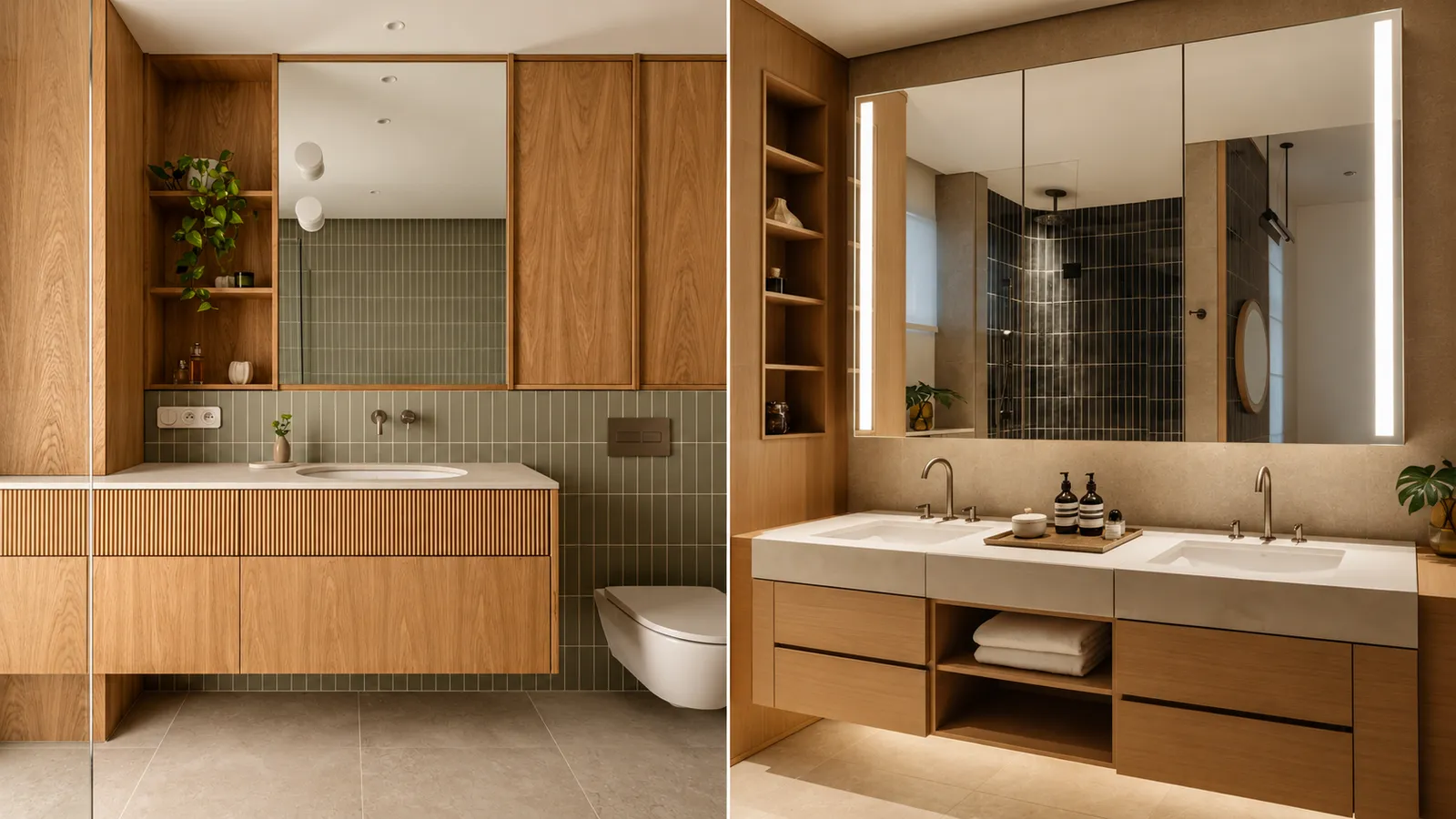
Bathroom vanity units are a prime example. Situated adjacent to water sources and subject to high humidity and integrated plumbing, the metallic core's moisture resistance offers a distinct advantage, provided that joints, hardware, and pipe penetrations are engineered to the highest standards.
Shoe storage presents a different requirement. Typically positioned near entrances, these units contend with dust, damp footwear, and frequent cleaning. Beyond material selection, thoughtful design must incorporate ventilation, custom shelf heights, and tailored storage configurations for the household's lifestyle.
These two examples demonstrate that while aluminium honeycomb panels are used in both applications, the engineering approach must be uniquely tailored. A vanity unit prioritises water-resistant detailing, whereas a shoe cabinet demands optimal ventilation and effortless daily interaction.
Consequently, selecting the material is merely the first step. The design must address the specific requirements of each location if the piece is to truly complement daily living.
Media units, display cabinetry, and living room furniture systems
In the living room, functional demands shift significantly. Humidity is rarely the primary concern; instead, the focus turns to architectural proportions, surface finishes, and the ability to integrate multiple elements into a cohesive whole.
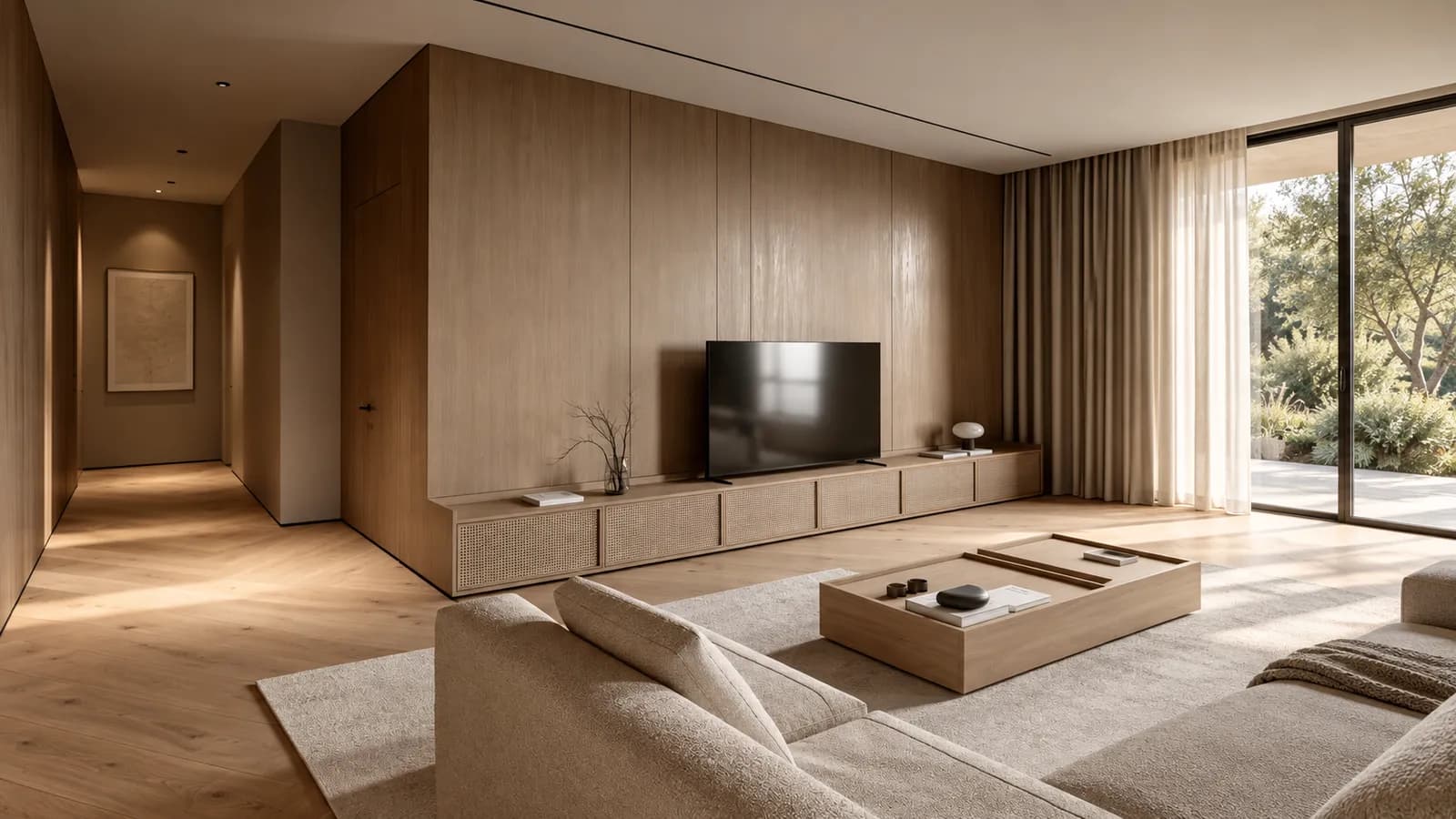
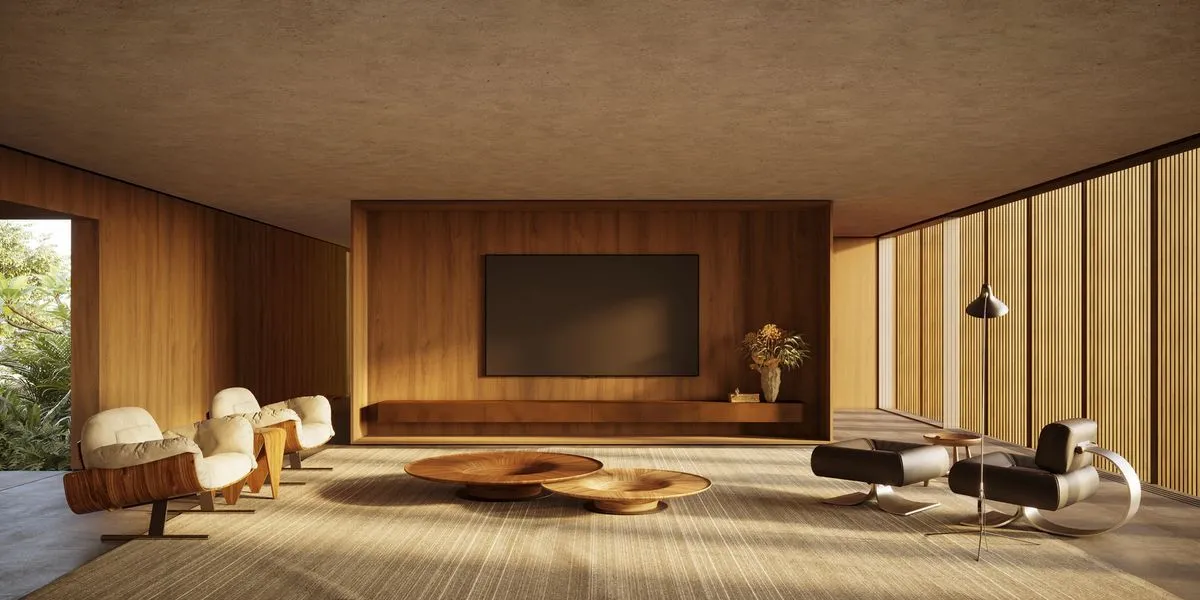
Aluminium honeycomb panels can be utilized for media units, display cabinets, wall-to-wall cabinetry, or living room storage modules. In contemporary designs, fitted cabinetry can span across a feature wall, combining concealed storage with open shelving and dedicated media alcoves.
This application particularly highlights the importance of surface selection. When finished in wood grain, refined neutrals, or combined with glass and ambient lighting, the underlying metallic structure will by no means impart an 'industrial' feel to the interior.
However, the living room is usually the focal point of the home. Door profiles, joinery gaps, modular proportions, and material transitions require meticulous, refined execution. Even high-grade materials can feel visually heavy if the modular layout lacks balance.
Thus, when applying aluminium honeycomb in this space, the consideration shifts from 'what can the material withstand?' to 'how is the material designed to integrate seamlessly into the interior architecture?'.
Interior doors – an application requiring precise structural engineering and tailored hardware
Doors represent another application for aluminium honeycomb panels, though their technical requirements differ markedly from cabinetry.
A door leaf is substantially larger than a standard cabinet door and subject to frequent movement. Consequently, beyond the panel itself, the leaf structure, subframe, hinges, latches, and structural joints must all be engineered as an integrated system.
The honeycomb core offers distinct structural advantages for door fabrication, yet panel specifications alone do not guarantee a superior door assembly. A complete door system performs flawlessly only when every component is meticulously selected and precision-engineered to work in harmony.
Aesthetically, doors should be viewed as an integral part of the space rather than isolated elements. Door finishes can be unified with cabinetry, wall panelling, or major architectural elements to maintain a restrained material palette throughout the residence.
This is the true advantage of a unified material philosophy: rather than specifying kitchens, wardrobes, and doors in isolation, homeowners can establish a cohesive palette and design language from the very beginning.
Where is aluminium honeycomb best specified to suit practical needs?
Not every application demands the same material
A common misconception when specifying interiors is seeking a single 'ideal' material and applying it universally across the home. In reality, the most suitable material always depends on its specific environment and usage.
Kitchen base units and bathroom vanities demand high moisture resistance due to proximity to water. Wardrobes require storage efficiency, refined aesthetics, and structural stability across large spans. Media units, meanwhile, prioritize architectural form and seamless integration within the living space.
Aluminium honeycomb excels in applications requiring a metallic core, moisture resistance, and complete protection against termites. However, where natural warmth or bespoke aesthetics take precedence, solid timber, engineered wood, stainless steel, glass, or other materials may prove equally suitable.
Consequently, a home can seamlessly incorporate a variety of materials. The key is that each choice is deliberate, harmonizing into a curated interior scheme.
This approach also prevents unnecessary expenditure. Rather than asking, 'Should the entire house be crafted from aluminium honeycomb?', a far more pertinent question is '“Which areas in the home truly benefit from the properties of this material?”'
Specifying by environment, functionality, and investment level
Before deciding on aluminium honeycomb panels, three key factors should be evaluated in tandem: environment, functionality, and budget.
The environment defines the conditions the material must endure. Wet zones, damp-prone walls, or properties susceptible to termites carry vastly different criteria than a dry living room.
Functionality dictates product engineering. Kitchen cabinetry demands specialized hardware and integrated appliances; wardrobes require tailored storage solutions; doors necessitate smooth, repetitive operation. While using the same core material, the fabrication techniques and joint detailing differ for each piece.
Investment parameters help define a sensible scope. The cost of a bespoke interior system reflects not merely the raw panels, but also the surface finishes, hardware, engineering complexity, craftsmanship, and installation.
When comparing estimates, it is advisable to evaluate like-for-like specifications rather than unit material costs. Two cabinetry systems labelled 'aluminium honeycomb' may feature vastly different finishes, fittings, and engineering, resulting in markedly different levels of quality and investment.
Reviewing both material samples and finished products prior to selection
A small swatch allows clients to inspect colour and structure, but it cannot fully convey the presence and quality of a completed furniture piece.
Where possible, we recommend examining three stages side by side: a cut panel sample, a component during fabrication, and a fully installed system. This provides complete clarity on the internal core, edge-banding precision, and how the finish behaves across expansive cabinetry runs.
For wood grains and neutral tones, lighting plays a pivotal role. A beige sample under showroom illumination may feel noticeably different when placed in a bedroom with warm ambient lighting or a light-filled kitchen.
A finished installation also allows you to inspect elements no sample swatch can reveal: reveal gaps, hinge alignment, drawer runners, tactile movement, and visual consistency across multiple modules.
This is why, when specifying aluminium honeycomb furniture, visiting a showroom or workshop is far more valuable than browsing a brochure. It provides a solid foundation to assess materials, craftsmanship techniques, and finished product quality before making a final decision.
Integrating aluminium honeycomb panels into interior solutions at Thiên Tín
Transforming raw materials into refined pieces demands a precision manufacturing process
An aluminium honeycomb panel becomes a finished piece of luxury furniture only after undergoing meticulous multi-stage fabrication.
At Thiên Tín, the process begins with a comprehensive spatial survey and client brief. From these insights, a tailored design concept is developed, materials and finishes are selected, and detailed technical drawings are decomposed into individual components for production.
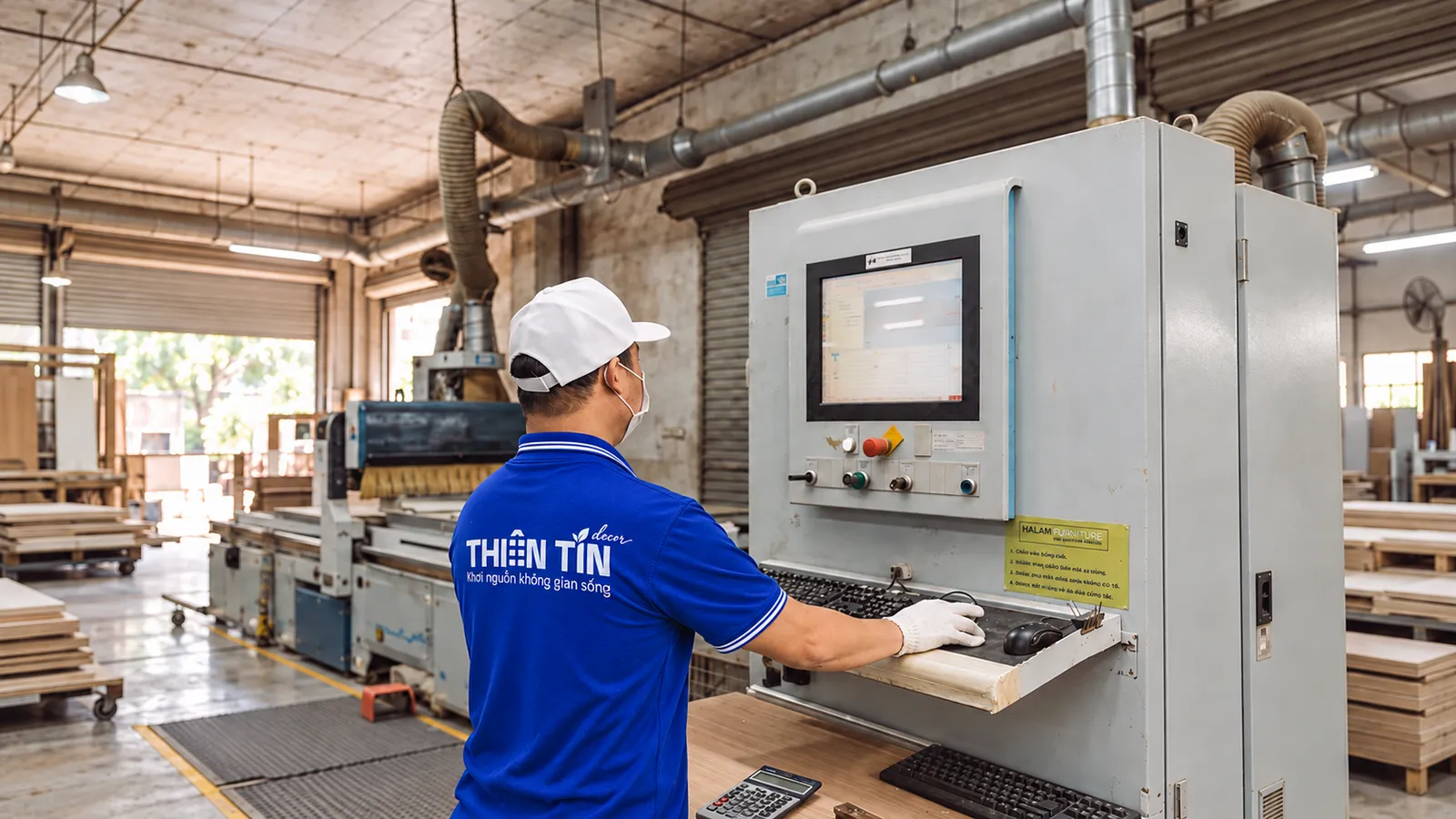
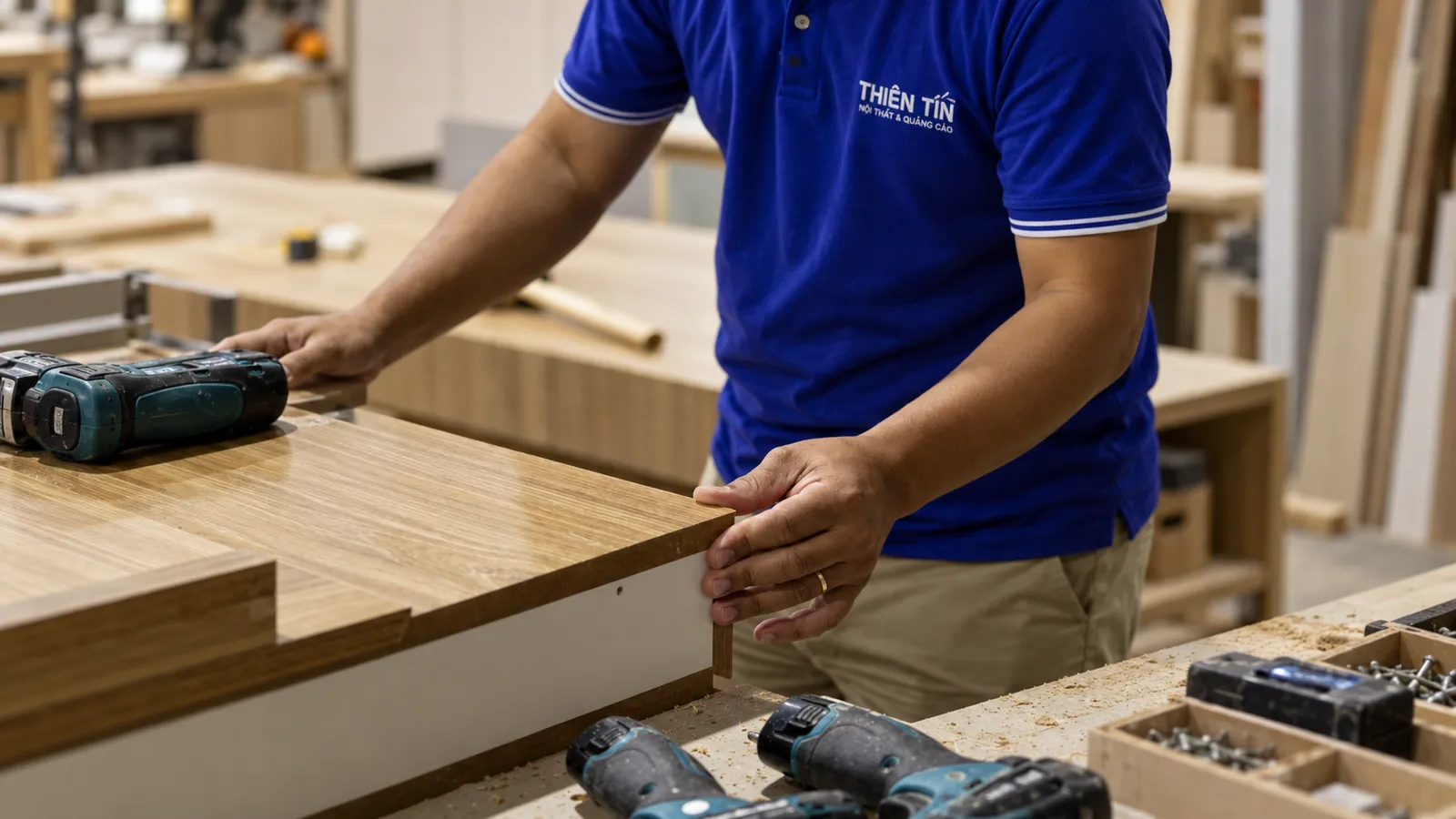
In our workshop, panels are precision-machined to exact dimensions and structural specifications. Thiên Tín utilizes advanced machinery, including dual-table CNC routers, PUR edge-banding technology, and sensor-driven drilling machines, enabling meticulous profiling, seamless edge-finishing, and precise joint preparation.
Following fabrication, components undergo rigorous assembly and quality inspection before delivery to site. On location, modules are tailored and fine-tuned to fit the exact contours of walls, floors, ceilings, and integrated services.
This thorough process highlights a fundamental principle: the true value of an aluminium honeycomb panel lies not in the raw material alone, but in how intelligently it is engineered, crafted, and finished into a functional masterpiece.
Harmonising cabinetry and doors through a unified material palette
When a single material versatilely adapts to multiple applications, the overarching benefit is the ability to curate a cohesive architectural language throughout the home.
Rather than misfitting a kitchen in one style, wardrobes in another, and doors in a contrasting system, every element can be specified from the outset using a unified tone and surface philosophy. Cohesion does not imply uniform repetition; rather, it creates a subtle dialogue between tonal depth, material textures, and spatial proportions.
For instance, a residence might feature warm wood grain as the primary theme for kitchen cabinetry and wardrobes, balanced by muted neutrals on internal doors or media units. Where focal points are desired, glass or tactile accents can be introduced rather than endlessly repeating a single finish throughout.
At Thiên Tín, offering a comprehensive suite of solutions—spanning kitchens, wardrobes, shoe cabinetry, vanities, media units, display pieces, and doors—allows us to approach consultations from a holistic spatial perspective rather than viewing items in isolation.
Consequently, the question is no longer simply 'can this be made with aluminium honeycomb?', but rather '“where should this material be specified, and how best to orchestrate it so the residence remains both highly functional and aesthetically unified?”'
Defining the application before selecting the material
Aluminium honeycomb panels offer versatile interior applications, spanning kitchen units, larder cabinets, wardrobes, shoe stores, vanities, media consoles, and doors. However, versatility does not mean every item demands the exact same architectural solution.
The true starting point must always be the home and its occupants. Which areas face frequent moisture? Where are termite concerns most acute? Which spaces demand expansive storage? Is the desired aesthetic minimalist bright, warm wood grain, or contemporary glass-accented? What are the allocated investment priorities for each zone?
Once these questions are addressed, selecting aluminium honeycomb, engineered wood, stainless steel, composite, or a curated combination of materials becomes a clear, well-founded decision.
This is precisely the ethos driving Thiên Tín during design consultations: we do not choose a material first and search for a purpose; we evaluate client needs first to specify the precise material for every location.
THIÊN TÍN – A pioneer in bespoke, unified cabinetry and door systems utilizing next-generation aluminium honeycomb panels in Vietnam.
Clients embarking on new builds or renovations are warmly invited to experience our raw aluminium honeycomb panels, surface finishes, and finished installations in person at Thiên Tín. Based on your spatial layout and lifestyle requirements, our team provides tailored guidance on materials, design, and manufacturing options before finalizing your specifications and proposal.
Thiên Tín Journal · Guides · Page 18