
Thiên Tín Journal · Guides
Products
Aluminium honeycomb wardrobes: benefits, design styles, and how to choose
A beautiful wardrobe when first installed is not enough to judge its quality.
Page 22
Thiên Tín Journal · Guides
Page 23
A beautiful wardrobe when first installed is not enough to judge its quality. After a few years of use, issues such as wall-mounted units affected by dampness, unstable doors, or termite infestations begin to emerge and prove difficult to repair.
That is why aluminium honeycomb is gaining attention as a new option for wardrobe systems. The metal core offers properties distinct from wood-based materials, while modern surface finishes allow these wardrobes to suit a wide range of bedroom styles.
To make the right choice, homeowners need to look beyond the question of “is it durable?” and evaluate the materials, structure, functionality, aesthetics, and quality of craftsmanship simultaneously.
How do aluminium honeycomb wardrobes differ from conventional ones?
How are aluminium honeycomb wardrobes constructed?
The defining feature of these wardrobes lies in the materials used for the frame, doors, and details, all crafted from aluminium honeycomb panels. The core is formed by a system of aluminium cells bonded in a honeycomb pattern, then combined with surface layers to create panels used in furniture production.
The metal core structure addresses several common concerns with wardrobes. Aluminium does not absorb water like wood fibres and contains no cellulose—the component that can serve as a food source for termites. This is a notable advantage for wardrobes placed against walls, in low-level rooms, or in spaces with high humidity.
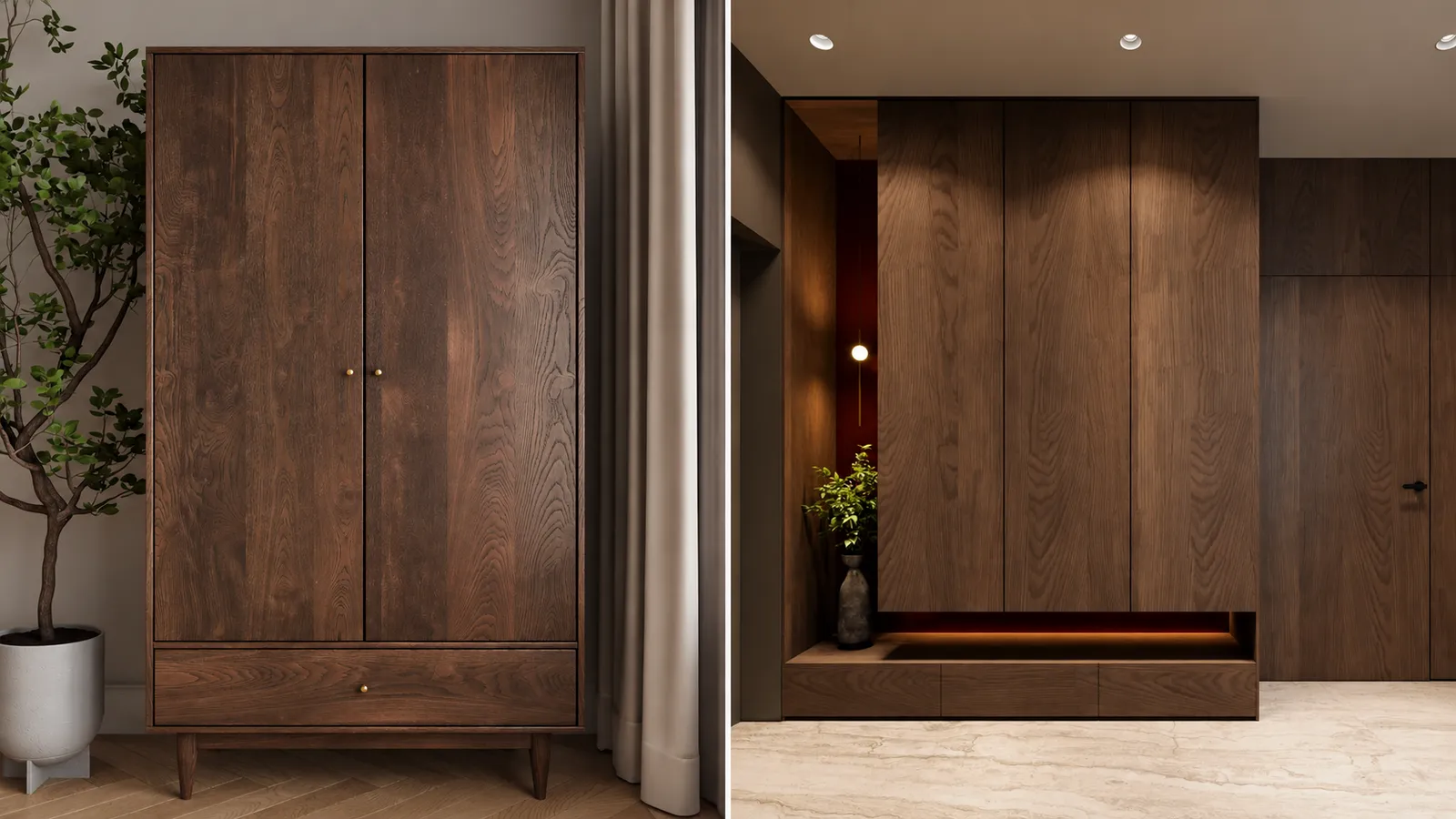
The surface finish handles the majority of the aesthetic requirements. Rather than imagining an “aluminium cabinet” with a cold, metallic look, homeowners can access options such as wood grains, neutral colours, or modern finishes depending on the material system used. As a result, the wardrobe can blend seamlessly with the bed, dressing table, flooring, and wall colours without feeling disconnected.
The quality of the finished product must still be assessed based on its entire construction. A good material panel must be paired with appropriate joining methods, hardware, and manufacturing techniques to create a stable, functional wardrobe system.
What is aluminium honeycomb? Construction, characteristics, and applications in furniture
Why should wardrobe materials be considered from the very beginning?
Wardrobes are among the furniture items with a long service life and are rarely moved once installed. Many designs are built flush against walls, floor-to-ceiling, or integrated directly with desks, shelves, and headboards.
It is this layout that makes issues behind the wardrobe difficult to detect early. Damp walls, condensation, or termites originating from the building structure can exist for some time before the user notices external signs.
The size of the wardrobe also places demands on stability. A tall system with many large doors, long hanging rails, and storage shelves must bear constant loads. If one focuses only on colour while ignoring the structure, the user experience after a few years may differ significantly from the time of installation.
Therefore, material selection should be carried out alongside functional design. Homeowners need to determine where the wardrobe will be placed, whether the wall is prone to dampness, how much storage is required, and which door style is suitable.
Based on this data, the design team has the basis to select the wardrobe structure, hardware, and finishing methods, rather than applying the same model to every bedroom.
Advantages of aluminium honeycomb wardrobes during use
Mitigating risks related to dampness and termites
Bedrooms are not exposed to as much water as kitchens or bathrooms, but humidity is still a factor to consider, especially in houses with exterior walls, rooms on lower floors, or during prolonged periods of damp weather.
With wardrobes placed against walls, the space behind is often difficult to clean and inspect. If the wall develops dampness, the wardrobe material must be able to withstand that environment over the long term.
The aluminium honeycomb core does not absorb water and swell like wood-fibre materials. This characteristic helps reduce a risk that often compromises wardrobe structures in high-humidity environments.
The issue of termites is also different. Because the aluminium core contains no cellulose, termites do not use this material as a food source. For properties that have shown signs of termites or for homeowners who want to mitigate risks from the material selection stage, this is a factor worth considering.
This does not mean that using an aluminium honeycomb wardrobe will solve the damp or termite issues of the entire house. If the wall is leaking or the building has an existing termite nest, the root cause must still be addressed separately. The value of the material lies in helping the wardrobe core itself be less dependent on these external impacts.
Are aluminium honeycomb interiors water-resistant and termite-proof?
Diverse surfaces make the wardrobe suitable for many bedroom styles
One common concern when hearing about aluminium furniture is the feeling that the product will be hard, cold, or difficult to integrate into a bedroom. This perception mainly stems from the image of traditional aluminium cabinets.
With aluminium honeycomb furniture, the core and the visible exterior should be treated as two separate issues. The metal core handles the structural role, while the colour and aesthetic feel are largely determined by the surface finish system.
Light wood grains can be used for bedrooms in minimalist, Scandinavian, or Japandi styles. Walnut or deep brown tones create a warmer feel for modern spaces. Beige, taupe, grey, and other neutral shades are suitable for apartments with a subtle, low-contrast design.
The ability to coordinate colours also helps the wardrobe system become part of the room's architecture rather than just an independent storage piece. The wardrobe can be synchronised with dressing tables, desks, decorative shelves, or headboards to reduce the feeling of a fragmented space.
When choosing a model, it is best to view the surface directly under lighting conditions similar to the actual room. The same colour code can look different under natural light, warm lighting, or neutral lighting.
Easy to build a synchronised wardrobe system according to usage needs
The value of a wardrobe does not lie in having as many compartments as possible. More importantly, each area inside must suit the user's storage habits.
People who frequently wear shirts and coats need a different hanging-to-folding ratio than those who primarily fold their clothes. Families with many suitcases need storage space above. Accessories, handbags, watches, or personal items require compartments with specific sizes and divisions.
Aluminium honeycomb can be incorporated into wardrobe systems designed for the actual space rather than being limited to freestanding units with fixed dimensions. This suits the trend of floor-to-ceiling wardrobes, wardrobes combined with dressing tables, or systems running across an entire wall.
With the honeycomb core structure, load-bearing connection points such as hinges, drawer slides, and hardware mounting positions must be handled with the correct technique. These are not details the user sees immediately, but they directly affect the opening/closing experience and the stability of the wardrobe.
Therefore, when looking at a beautiful wardrobe model, homeowners should pay attention to both the functional layout and the construction behind the surface. A well-thought-out design must address both.
Which aluminium honeycomb wardrobe model is suitable for the bedroom?
Floor-to-ceiling wardrobes – maximising height and creating a neat, flat surface
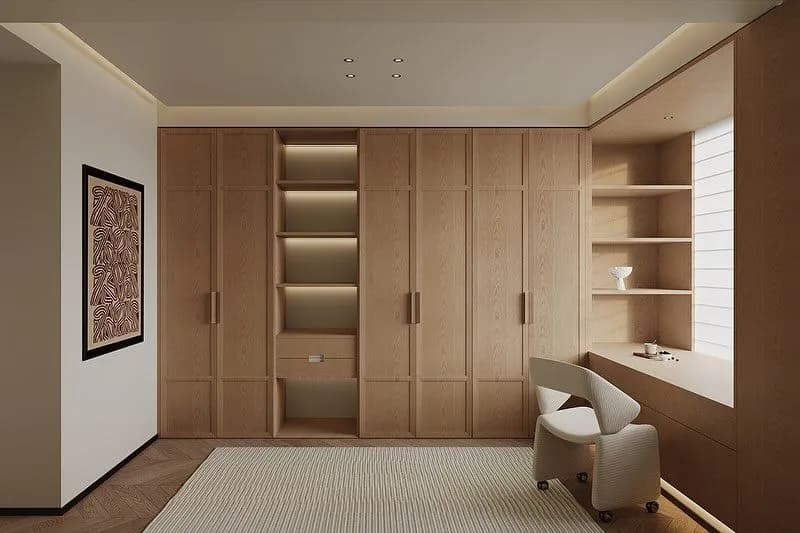
Floor-to-ceiling wardrobes are a suitable choice for apartments and townhouses looking to make the most of room height. Instead of leaving a gap above that easily collects dust, the entire wall is organised into a continuous storage system from floor to ceiling.
The upper area can be reserved for suitcases, winter blankets, or items used less frequently. The area at eye level is arranged with hanging rails, folding shelves, and drawers according to the homeowner's habits. This tiered approach helps increase capacity without needing to expand the width of the wardrobe.
Aesthetically, a floor-to-ceiling design makes the wardrobe feel like part of the architecture. Colours close to the wall colour help large wardrobe systems feel lighter; wood grains can be used as accents for a portion of the doors or decorative niches.
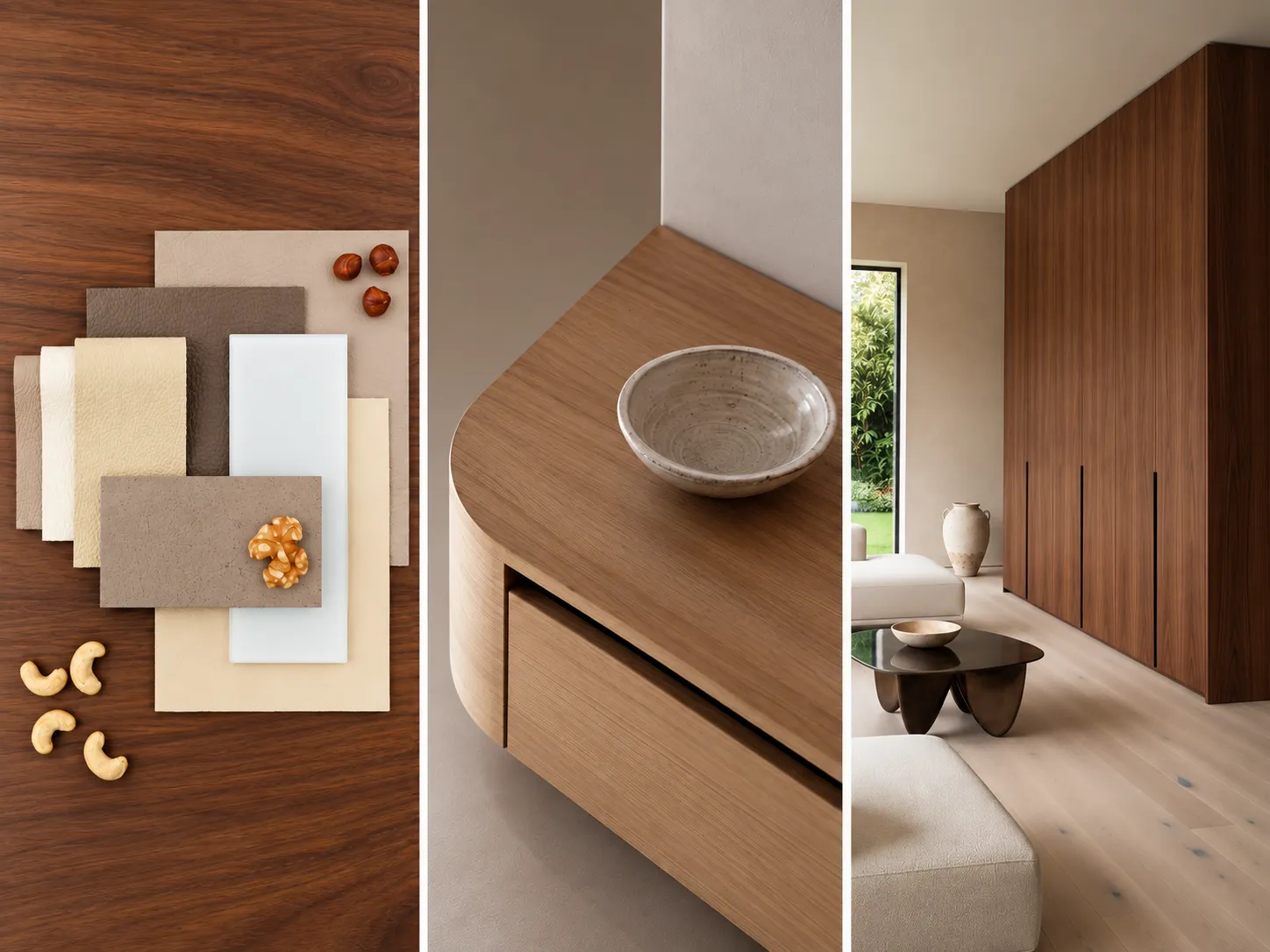
When using aluminium honeycomb for this type of wardrobe, calculating door dimensions and hardware placement must be done right from the design stage. The taller the door, the more carefully the connections and hinges must be considered.
This is a model suitable for modern bedrooms, families with many items to store, or rooms where one wants to limit hard-to-clean gaps.
Hinged doors, sliding doors, or a combination with glass doors?
The door style directly affects both the aesthetics and the space used in front of the wardrobe.
Hinged doors offer access to the entire wardrobe compartment and are suitable for most bedrooms with space in front. This design style is also flexible in dividing doors by module, making it easier to organise internal compartments.
For rooms with limited area, sliding doors help reduce the space required for the door's opening trajectory. In return, the rail system and door construction must be chosen carefully to ensure smooth operation over the long term.
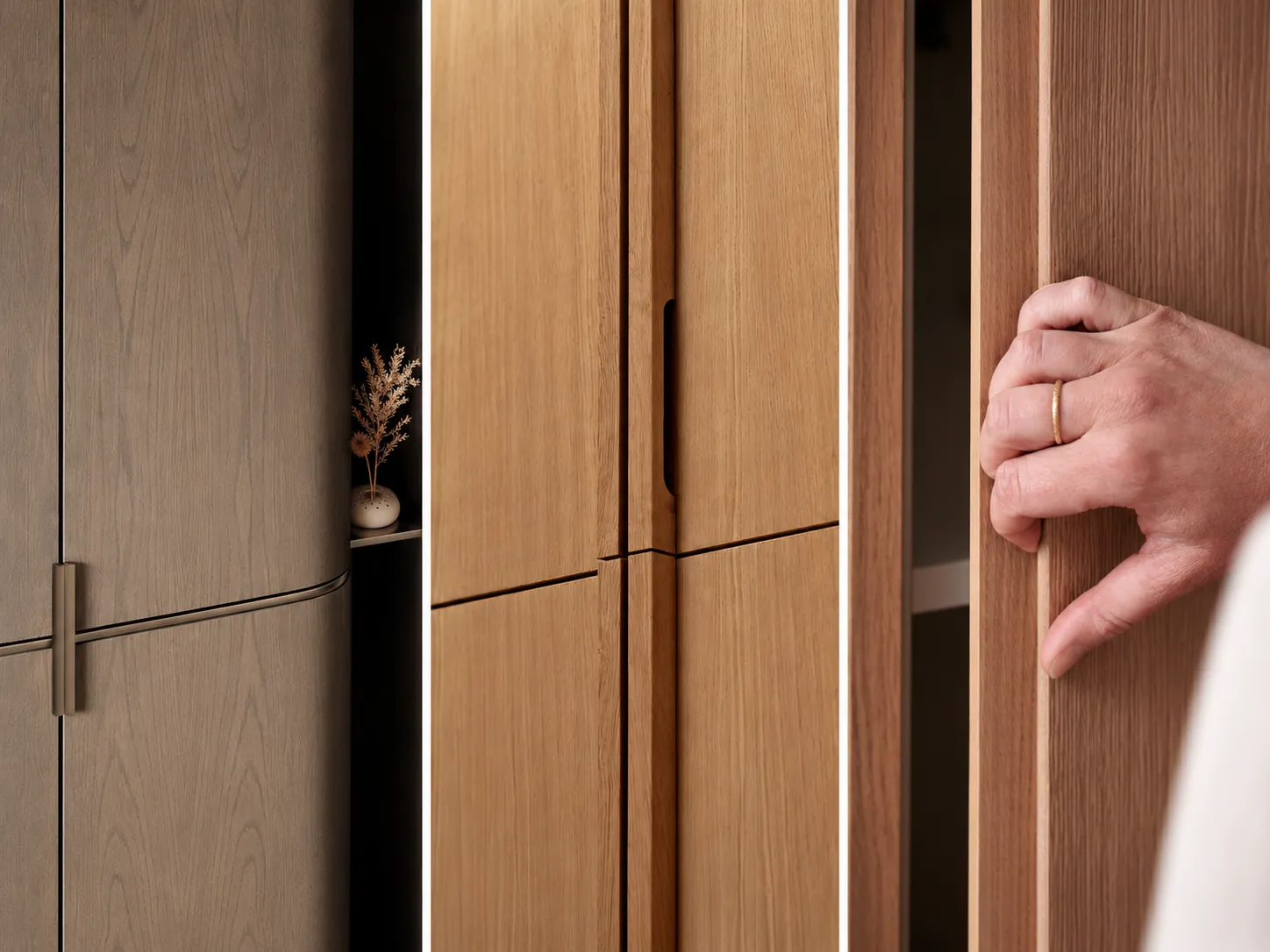
Glass doors are suitable for areas displaying handbags, accessories, or bedrooms that want to create a wardrobe-like feel. Instead of using glass for the entire wardrobe, one can combine a few glass compartments with solid doors to balance display and storage.
Aluminium honeycomb does not dictate that the homeowner must choose a specific door style. The material should serve the design, while the door type should be determined by the room area, usage habits, and desired style.
A good wardrobe system can combine multiple solutions in the same design as long as the proportions are handled consistently and do not make the wardrobe front look cluttered.
Wardrobes combined with dressing tables, desks, and decorative shelving systems
In bedrooms with small to medium areas, using individual pieces of furniture can make the space feel divided into many blocks. A wardrobe that incorporates other functions is a more effective solution.
One end of the wardrobe system can be converted into a vanity with a mirror and drawers. For bedrooms that double as workspaces, the desk module connects directly to the wardrobe, utilising the same wall space and maintaining a cohesive design language.
Open shelving can also be positioned at the end of the wardrobe to display books, decorative items, or to create a transition zone between spaces. This is an effective way to reduce the visual weight of large cabinetry.
When designing multiple functions into a single wardrobe system, the choice of surface finish becomes critical. Using too many colours or materials can easily lead to a cluttered look. A primary base colour combined with a single accent typically creates a more enduring aesthetic.
This approach is also well-suited to aluminium honeycomb panels when homeowners wish to develop the material into a unified interior system, rather than using it solely for the wardrobe carcass.
How to select an aluminium honeycomb wardrobe and solutions at Thiên Tín
Prioritise storage needs before selecting a style
A wardrobe that looks beautiful in a photograph may not be suitable for your home if the internal configuration does not align with your daily habits.
Before designing, determine the volume of hanging versus folded clothing, as well as the number of handbags, accessories, bedding, suitcases, and seasonal items. This will inform the proportions of hanging rails, shelves, drawers, and overhead compartments.
Room dimensions dictate the external form. Rooms with wide walkways can accommodate hinged doors; narrow spaces require careful calculation of door swing or consideration of alternative solutions. Floor-to-ceiling wardrobes are ideal for maximising capacity but require a well-proportioned door design.
Material selection is the next step. If the room is prone to humidity, the wardrobe is positioned against an exterior wall, or you wish to eliminate the risk of termites, aluminium honeycomb offers distinct advantages. For projects where aesthetics are paramount, viewing physical surface samples is essential before finalising the design.
This method ensures the wardrobe is built around actual needs rather than choosing a pre-made model and attempting to adjust your lifestyle to fit the design.
Check the structure, hardware, and finish quality before ordering
When inspecting an aluminium honeycomb wardrobe sample, do not just look at the door face. Small details often reveal more about the product's quality.
Joints and panel edges should be finished neatly. Doors should align evenly when closed, and gaps between modules should be consistent. When opening the wardrobe, test the operation of hinges, drawer runners, and frequently used hardware.
With a honeycomb core structure, the reinforcement at hardware mounting points must be calculated by the manufacturer according to the design. Large doors, long spans, or heavy-duty hardware should not be treated with the same construction methods as smaller modules.
Quotations should clearly outline the scope of the product. Two wardrobes of similar dimensions can still differ significantly in surface finish, number of drawers, hardware, door construction, and level of craftsmanship.
Finally, consider the warranty policy. The duration, scope, and conditions regarding materials, hardware, and the finished product should be clearly stated rather than relying on a generic figure.
Designing wardrobes with aluminium honeycomb panels at Thiên Tín
For wardrobes, material selection is only the first step. Long-term utility depends on how the wardrobe is designed to suit the room and the habits of each family.
At Thiên Tín, the consultation process begins with the actual space: the wardrobe location, room dimensions, storage requirements, desired style, and the specific concerns of the homeowner. From there, we develop a plan for dimensions, internal layout, surface finishes, and product construction.
With aluminium honeycomb panels, the material can be applied not only to wardrobes but also extended to cabinetry and doors to create a connection between areas of the home. This is ideal for projects that aim to control both functionality and design language, rather than selecting individual, disconnected pieces of furniture.
THIÊN TÍN – A pioneer in providing integrated wardrobe and door solutions using next-generation aluminium honeycomb panels in Vietnam.
Thiên Tín focuses on a comprehensive solution from material consultation and design to production and installation. Instead of starting with the question, “which wardrobe model is currently popular?”, our approach is built upon a more important question: what problems does your family need this wardrobe to solve over years of use?
Thiên Tín Journal · Guides · Page 24